Is TikTok safe to use?
TikTok has quickly become one of the most popular social media platforms in the world, with over one billion active users and a strong presence in more than 150 countries. Its short-form video format, catchy audio clips, and personalized algorithm have made it especially appealing to teenagers and young adults. From viral dance trends to educational content, TikTok has reshaped how a generation consumes and creates media.
However, as the app’s influence has grown, so have concerns about its safety. Governments, cybersecurity experts, and parents have raised alarms about data privacy, potential exposure to harmful content, and the platform’s impact on mental health. With increasing scrutiny from regulators and ongoing debates over its ties to China, many users are left wondering: Is TikTok safe to use?
This article takes a closer look at the platform’s privacy practices, security risks, and content moderation challenges to help you understand the potential dangers — and how to protect yourself while using the app.
What makes TikTok so popular?
TikTok’s explosive growth can largely be attributed to its unique format and user experience. The app centers around short-form videos — usually 15 to 60 seconds long — which are easy to create, consume, and share. The endless scroll feature keeps users engaged for hours, delivering a non-stop stream of entertaining, surprising, or relatable content tailored to individual preferences.
At the heart of TikTok’s success is its highly advanced algorithm. Unlike other platforms that prioritize content from friends or followers, TikTok’s "For You" page presents videos based on your behavior: what you watch, like, comment on, or skip. This level of content personalization makes the app feel intuitive and addictive — users often find themselves discovering creators and trends they didn’t even know they were interested in.
TikTok also resonates deeply with younger audiences. Its fun, fast-paced environment encourages creativity, humor, and authenticity. Viral challenges, dance routines, memes, and sound bites spread rapidly, often turning ordinary users into internet celebrities overnight. This culture of virality is a huge draw for Gen Z and younger millennials who crave both entertainment and self-expression.
With its global reach and over 1 billion active users, TikTok has become more than just a platform — it’s a cultural phenomenon. From influencing fashion and music to shaping social conversations, TikTok continues to play a major role in the digital lives of millions around the world.
Privacy and data collection issues
Like most social media platforms, TikTok collects a significant amount of information about its users, but the extent and nature of that data collection has raised serious privacy concerns. TikTok gathers standard data such as device information, including the model, operating system, and mobile carrier, as well as location data like IP address and GPS coordinates if enabled. It also tracks browsing and usage behavior, such as which videos are watched, how long they’re viewed, search history, and patterns of interaction. This enables TikTok to deliver highly personalized content, but it also means the app is constantly monitoring user activity—both within the app and potentially beyond it.
Additionally, past versions of the app have been scrutinized for more invasive practices. Researchers have reported that TikTok had access to users’ clipboards, allowing it to automatically read anything copied, including passwords or sensitive information. There have also been allegations that TikTok employs undisclosed facial recognition technology, which has raised concerns about the use and storage of biometric data.
While TikTok has denied improper use of personal data and claims to have resolved many of these issues, ongoing concerns remain due to a lack of transparency and unclear data-sharing practices, especially considering its connection to the China-based parent company. For users asking themselves “Is TikTok safe?” these concerns about privacy and surveillance continue to be a major deterrent. Engaging with TikTok is not just about entertainment—it also involves sharing a considerable amount of personal information, often without fully understanding how that data is used or where it is stored.
Where does the data go?
One of the most controversial aspects of TikTok's privacy practices centers on where user data is stored and who can access it. TikTok is owned by ByteDance, a technology company headquartered in Beijing, China. Although TikTok insists that its operations for international users are separate from its Chinese counterpart, Douyin, concerns persist about the potential for data to be accessed by the Chinese government under national security laws. Several governments and cybersecurity experts have warned that because ByteDance is a Chinese company, it could be compelled to share user data with Chinese authorities if requested. This possibility has triggered widespread unease, especially among Western governments, resulting in bans on installing or using TikTok on government-issued devices in countries like the United States, Canada, and across the European Union, as well as national security investigations and legislative proposals aimed at restricting or even banning the app entirely.
In response, TikTok has made efforts to reassure regulators and the public, claiming that international user data is stored on servers outside of China — including in the U.S., Singapore, and Ireland — and that it has implemented strict data access controls. For example, its “Project Texas” initiative, developed in collaboration with Oracle, aims to isolate U.S. user data and keep it under American oversight.
Despite these measures, skepticism remains high. The core concern is not just where the data is stored, but who ultimately controls it and whether that data can be accessed by foreign governments without user knowledge or consent. This makes many people wonder: “Does TikTok steal your information?” especially when so much user behavior is tracked both on and potentially off the app. For users, this raises an important question: even if TikTok provides fun, engaging content, is the potential loss of control over personal data a risk worth taking?
International response and investigations
TikTok’s handling of user data has sparked strong reactions from governments around the world, resulting in bans, restrictions, and regulatory investigations driven by concerns over national security, user privacy, and the platform’s ties to China. Several countries have imposed outright bans or limited the use of TikTok on government-issued devices. In the United States, federal agencies and many state governments have prohibited the app on official devices, citing risks of unauthorized data access. The European Union followed suit in 2023, directing employees of the European Commission to remove TikTok from their work phones. India, which was once TikTok's largest overseas market, banned the app entirely in 2020 due to national security concerns following geopolitical tensions with China — a ban that remains in effect to this day.
These actions reflect growing suspicion that TikTok could be used for surveillance or influence, despite the lack of publicly confirmed evidence of such activities. In addition to political restrictions, TikTok has faced legal scrutiny and fines, particularly in Europe. In 2023, Ireland’s Data Protection Commission fined TikTok €345 million for violating the General Data Protection Regulation (GDPR), citing mishandling of children’s data and the use of default public settings on teen accounts. The UK’s Information Commissioner’s Office also imposed penalties for allowing underage users on the platform and failing to obtain proper parental consent.
Meanwhile, regulators in Canada, Australia, and several EU countries have launched ongoing investigations into how TikTok collects and shares personal data, especially from minors. Together, these international actions underscore a growing perception that TikTok is more than just a light-hearted video platform — it is increasingly seen as a strategic and legal concern. So again, the question arises: is TikTok safe when so many governments around the world are taking steps to limit or regulate its use?
Security risks for content creators and users
TikTok’s explosive growth has made it a prime target for security threats, affecting everyone from casual viewers to high-profile creators. While the platform offers entertainment and creative expression, its design and user behavior patterns introduce significant risks—some universal, others magnified for those with larger audiences.
Technical vulnerabilities and cyber threats
Like any major app, TikTok has faced security flaws that expose users to hacking and data breaches. Researchers have identified vulnerabilities ranging from SMS spoofing (where attackers send fake system messages to hijack accounts) to insecure data transmission practices that could leak private information.
Phishing remains a persistent issue, with scammers distributing malicious links through comments, direct messages, or fake collaboration offers—a tactic that disproportionately targets creators. While TikTok has patched many of these issues, the platform’s massive user base ensures it remains an attractive target for cybercriminals. For creators, the stakes are even higher: a compromised account doesn’t just mean lost access—it can destroy carefully built audiences and revenue streams.
Additionally, coordinated attacks such as credential stuffing or social engineering campaigns are becoming more common, especially against verified or monetized accounts.
How user behavior increases risk
Many security issues stem from how people use TikTok rather than the app itself. Casual users, particularly younger ones, often unknowingly expose themselves by sharing personal details—posting videos in school uniforms, revealing home interiors, or enabling location tags. Linking TikTok to other social media accounts compounds the danger, as a breach on one platform can cascade to others.
For creators, digital visibility introduces indirect security risks. Public-facing accounts invite impersonation, where others steal videos or profile elements to scam followers or stage fake giveaways. Beyond impersonation, another serious threat is account takeover, when hackers or malicious actors gain unauthorized access to a creator’s account, potentially posting misleading content that harms their reputation. Account takeovers may lead to misleading posts that damage credibility. The more an influencer engages with their audience, the more data is potentially exposed—making it easier for bad actors to guess passwords, harvest clues for phishing, or build psychological profiles for targeted manipulation.
It’s not just technical breaches—routine online behaviors (such as oversharing, using predictable usernames, or engaging in public disputes) can be exploited for harassment or blackmail. Maintaining strict privacy practices is critical as follower counts grow.
Physical safety and reputation management
As creators’ presence expands, online activity increasingly intersects with real-world safety. Users who film identifiable surroundings—homes, schools, workplaces, or frequently visited public spots—can unintentionally reveal location data. This opens the door to stalking, unwanted encounters, or even physical threats.
Creators are especially vulnerable when documenting their daily routines or live-streaming in real time, as this can reveal habits and schedules. Even short clips might contain clues that allow someone to determine where a user lives or works.
Reputational damage is another concern: old posts may resurface out of context, and viral backlash can erupt overnight. Negative media coverage, amplified by algorithm-driven virality, can quickly spiral beyond a creator’s control. Creators also face unique financial risks, from hacked accounts held for ransom to fraudsters exploiting their brand deals. Even seemingly benign actions, like sharing contract details in a sponsored post, can expose sensitive business information.
To reduce both online and offline exposure, creators must treat personal branding as a security-sensitive activity—balancing openness with strong boundaries.
Harmful content and moderation challenges
Alongside platform security risks, TikTok also poses dangers through the nature of its content and the limits of its moderation systems. While the platform is known for its creative and entertaining videos, its scale and algorithmic design present persistent challenges in keeping harmful or inappropriate material away from users—especially minors.
Exposure to inappropriate or dangerous content
Although TikTok officially requires users to be at least 13 years old to create an account and applies automatic restrictions—such as enhanced privacy settings and limited features—for younger users, many children bypass these controls by entering false birthdates. As a result, teens and children can still be exposed to a wide range of harmful content despite TikTok’s community guidelines. This content includes misinformation, hate speech, discriminatory language, extremist views, and dangerous trends or challenges such as the "Benadryl challenge" or risky stunts that have resulted in injuries or even fatalities.
A key contributor is TikTok’s algorithm, which prioritizes engagement over safety. Content that provokes strong emotional reactions—shock, outrage, or curiosity—is often promoted regardless of whether it’s age-appropriate or safe. This means harmful content can appear in user feeds before moderation systems detect and remove it.
Even brief or accidental exposure may have long-term effects, influencing young users’ behavior, shaping harmful beliefs, or desensitizing them to risky actions. A further concern is the lack of effective age-appropriate filtering which leaves younger users vulnerable despite existing restrictions.
Many parents may falsely assume their children are encountering only lighthearted entertainment, when in fact they could be watching content involving violence, substance use, sexual innuendo, or mental health triggers — often without context, warnings, or support resources.
Content moderation limitations
To manage the enormous volume of content shared daily, TikTok relies on a combination of AI-driven tools and human moderators. While this system helps identify and remove many violations, it has notable limitations.
Automated moderation struggles with nuance: algorithms may flag harmless content while missing more subtle forms of harm — such as coded language or meme formats that disguise abusive or dangerous behavior. Enforcement can also be inconsistent, with similar content being treated differently depending on region, language, or context.
Response times are another weakness. Harmful videos can spread rapidly, particularly through trending hashtags or live streams, before they are reviewed and removed. In some high-profile cases, dangerous material—including conspiracy theories or self-harm content—has remained online for extended periods.
False positives are also a problem. Creators sometimes see legitimate content taken down without clear explanation, leading to frustration and distrust in the moderation process.
Ultimately, TikTok’s moderation system is reactive rather than preventive, often struggling to keep pace with the platform’s speed and scale. As long as engagement remains the platform’s top priority, users—especially younger ones—will continue to face exposure to inappropriate or harmful material.
TikTok’s safety features
In response to growing concerns about user safety, TikTok has introduced several in-app features and parental controls aimed at creating a more secure and age-appropriate experience. While these tools can be helpful, they also come with limitations that users and parents should understand.
In-app safety settings
TikTok offers a variety of settings designed to help users manage their privacy and reduce exposure to harmful content. One key feature is the ability to set an account to private, which TikTok automatically enables for younger users to enhance their privacy by restricting content visibility to approved followers.
The platform also provides controls over comments and direct messages, enabling users to choose who can interact with them by selecting from options like “everyone,” “friends,” or “no one.” For content filtering, TikTok includes a Restricted Mode, which aims to screen out material that may be inappropriate or mature, although its effectiveness is limited given the vast and constantly changing pool of user-generated content.
To support digital well-being, TikTok has built-in screen time management tools that allow users to set daily usage limits, receive break reminders, and add a passcode to prevent easy bypassing of those restrictions. While these features offer valuable ways to create a safer and more balanced experience on the app, they depend heavily on users — or their guardians — actively enabling and customizing them. Many younger users may not take advantage of these tools without guidance, which underscores the importance of parental involvement and digital literacy.
Family pairing and parental controls
To help parents manage their children’s use of TikTok, the platform provides a “Family Pairing” feature, which allows a parent’s account to be linked with their child’s. Through this feature, parents can set screen time limits, enable or disable direct messaging, restrict access to inappropriate content using Restricted Mode, and adjust settings related to search and discoverability.
While Family Pairing offers valuable oversight, it does come with limitations. It requires both the parent and child to have TikTok accounts and agree to be linked, which may not always be feasible or willingly accepted by the child. Additionally, tech-savvy teens may find ways to bypass or disable these controls if parents aren’t closely monitoring activity.
Restricted Mode, though helpful, is not foolproof and may still allow some inappropriate or harmful content to appear due to the limitations of automated filtering. Overall, TikTok has made meaningful progress in providing tools to protect younger users, but these features are most effective when used proactively and in conjunction with open communication between parents and children. Relying solely on in-app controls isn’t enough — ongoing education about online safety, digital boundaries, and responsible behavior remains essential to using TikTok safely.
Tips to use TikTok more safely
Whether you’re a casual viewer, an active creator, or a concerned parent, taking a few precautionary steps can significantly reduce your risks while using TikTok. Here are some practical tips to help you or your family use the platform more safely:
Adjust privacy settings. Start by exploring TikTok’s privacy and security options. Make your account private so only approved followers can view your content. Turn off location tracking by disabling location permissions in your phone’s settings. Limit who can comment, send messages, or duet with your videos. Avoid linking your TikTok account to other social media platforms unless necessary.
Be cautious about what you post and share. Think carefully before sharing personal information such as your full name, birthday, school, or home location. Avoid content that could unintentionally reveal where you live or work, like backgrounds, uniforms, or street signs. Be mindful of sensitive opinions or information that could attract harassment or cause reputational damage. Remember, once something is online, it can be impossible to fully delete or control who sees it.
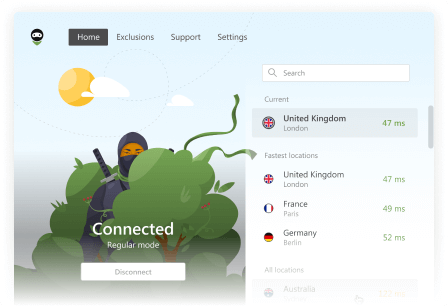
Use VPN for added security. Use a VPN (Virtual Private Network) to enhance privacy and reduce tracking from apps and websites. Also, keep the TikTok app updated to ensure you have the latest security patches.
Talk with teens about responsible digital behavior. If you're a parent or guardian, have open conversations about what your child watches, posts, and experiences on TikTok. Encourage them to report bullying, inappropriate content, or unwanted messages. Discuss how to spot fake news, scams, or manipulative trends. Use TikTok’s Family Pairing feature to monitor and guide their use of the app.
By taking these simple steps, users can enjoy TikTok’s creative and social benefits without putting their privacy, security, or well-being at unnecessary risk. Awareness and digital mindfulness go a long way in creating a safer online experience.
How AdGuard VPN can help to use TikTok safety
Using AdGuard can significantly enhance your safety and privacy while using TikTok in several key ways:
Encrypting your Internet connection. AdGuard VPN encrypts all data sent between your device and the internet, making it very difficult for hackers to intercept sensitive information such as passwords, personal data, or payment details. This is especially important when using TikTok on public or unsecured Wi-Fi networks, where cybercriminals often try to steal user information.
Protecting your privacy. While TikTok’s data collection within the app itself is governed by its own permissions and policies, AdGuard VPN can still help protect your privacy in meaningful ways. By masking your real IP address and location, it prevents TikTok and third-party trackers from linking your browsing habits across the web and targeting you with personalized ads. This not only enhances your overall online privacy but also reduces unwanted tracking outside the app.
Securing payment transactions. If you make purchases through TikTok or related services, AdGuard VPN secures your connection to payment gateways, lowering the risk of interception or fraud during financial transactions.
Final thoughts
So, is TikTok safe to use? The answer is not black and white. While the app itself isn’t inherently dangerous, it does carry genuine risks that users should not ignore. Concerns around data privacy, the potential for exposure to inappropriate or harmful content, and the impact on mental health — particularly among young users — make it important to approach TikTok with caution and awareness.
However, with the right settings, informed usage, and clear boundaries, TikTok can be a safe and positive space. Many of its risks can be reduced through careful management of privacy controls, mindful content consumption, and honest conversations, especially between parents and children. When used thoughtfully, TikTok can be a creative and entertaining platform that connects people around the world — without compromising their safety or well-being.