Anonymous browsing
In 2026, maintaining online anonymity has become more challenging than ever. With advanced tracking technologies, AI-driven profiling, and constant data collection by advertisers, staying invisible on the web requires more than just clearing cookies or turning on incognito mode. Complete, absolute anonymity is nearly impossible — every device and browser leaves small digital breadcrumbs that can reveal certain technical details about your activity. However, with the right combination of tools and good habits, you can significantly reduce the amount of data collected about you and minimize the risks of being tracked.
In this article, we’ll explain what anonymous browsing really means, explore the most effective ways to protect your identity online, and answer common questions about tools like VPNs, Tor, encrypted DNS, and more. Whether you’re concerned about privacy, or simply want to surf anonymously, this guide will help you understand how to stay one step ahead in the modern digital world.
Who tracks your activity online and why?
Whenever you go online, countless entities try to learn more about you. The biggest trackers are advertising networks, social media platforms, data brokers, and websites themselves. They build detailed profiles to understand your preferences, predict your behavior, and serve targeted ads.
Your Internet Service Provider (ISP) may also monitor which sites you visit, how long you stay there, and what devices you use. In some countries, ISPs are even required by law to store users’ browsing data for government or law enforcement access.
Beyond that, third-party analytics tools, cookies, browser fingerprinting scripts, and even mobile apps quietly collect information about your location, device, and habits.
The result is an enormous web of tracking that compromises your privacy — often without your explicit consent. Tools like AdGuard VPN help you escape this surveillance net by encrypting your traffic and hiding your IP address, making it much harder for anyone to follow your digital footsteps. This is particularly important for anonymous web surfing, where each step online can be traced otherwise.
Is there a difference between privacy and anonymity?
Yes — while they’re closely related, privacy and anonymity aren’t the same.
Privacy means keeping your personal information safe from unwanted access. You might share your identity with a website or service, but you decide what details they may see and how they’re used. For example, using encrypted messaging apps or secure storage protects your private data from outsiders.
Anonymity, on the other hand, means no one knows who you are in the first place. You can browse, post, or communicate without revealing your name, IP address, or any identifiers that could link actions back to you. Still, even with strong privacy tools, achieving perfect anonymity isn’t guaranteed — some technical traces of your activity may remain. The far more realistic goal is not to eliminate every trace, but to minimize what can be linked to you. True anonymous browsing practices are about reducing exposure, not eliminating it entirely.
Does “Incognito mode” make me anonymous?
Not quite. Incognito mode (or Private Browsing) only prevents your browser from saving data such as browsing history, cookies, and temporary files on your device. Once you close the window, that local information is deleted.
However, this mode doesn’t stop external tracking. Your Internet Service Provider, employer, or network administrator may still see which websites you visit. Those websites may also identify you through your IP address or browser fingerprinting techniques. So while incognito mode offers local privacy, it doesn’t make you anonymous online. For stronger protection, combine incognito mode with tools that hide your real IP address, encrypt your traffic, reduce fingerprinting, and carefully manage browser and site permissions. Using these techniques ensures better anonymous browsing and safer digital habits.
Is deleting cookies enough to hide my identity?
No, deleting cookies alone is not enough to make you anonymous. Cookies store small pieces of information about your browsing activity, so clearing them may prevent websites from tracking you across sessions.
Deleting cookies improves privacy, but it doesn’t fully hide your identity online. True anonymity requires additional measures that mask your IP and obscure your digital footprint.
Can ad blockers protect my anonymity?
No, a regular ad blocker cannot make you fully anonymous. They don’t hide your IP address, prevent browser fingerprinting, or stop your ISP from seeing which sites you visit. Ad blockers are a privacy tool, but for true anonymity, additional layers like encrypted connections or VPNs are needed.
Ad blockers are useful for blocking ads and some trackers, which helps reduce the amount of data websites can collect about you. They may stop third-party trackers, prevent some scripts from following your browsing habits, and make your online experience cleaner and faster, but anonymous browsing requires more comprehensive solutions.
Do privacy-focused browsers like Brave or Firefox ensure complete anonymity?
Not entirely. Privacy-focused browsers like Brave or Firefox include features such as blocking trackers, fingerprinting protection, and enhanced cookie controls, which significantly improve your privacy compared to standard browsers.
However, they cannot make you fully anonymous online. Even with anti-fingerprinting features, your device may still leave unique traces, and websites may sometimes bypass built-in protections with advanced tracking methods. Your activity may also be visible to your ISP or network administrator. These browsers are excellent for enhancing privacy, but for stronger anonymity, they should be used alongside tools that hide your IP, encrypt traffic, and minimize digital fingerprints.
What are the most common ways to hide your identity online?
There are several widely used methods to protect your identity and activity online:
VPNs: Encrypt your Internet traffic and mask your IP address, making it harder for websites and ISPs to track you.
Tor (The Onion Router): Routes your traffic through multiple servers worldwide, providing strong anonymity at the cost of slower speeds.
Proxies: They route traffic only from specific browsers or applications through another server to mask your visible IP, but they typically lack strong encryption and do not tunnel all device traffic.
Encrypted DNS and private search engines: Hide which websites you visit and reduce tracking from DNS requests and search queries.
Privacy-focused browsers: Browsers like Brave or Firefox with tracking protection, cookie controls, and anti-fingerprinting features.
Incognito or private browsing modes: Prevent local storage of browsing history and cookies, though they don’t hide your activity from ISPs or websites.
Clearing cookies and cache regularly: Reduces persistent tracking, but cannot prevent fingerprinting or IP-based tracking.
How do VPNs help you stay anonymous?
A VPN works by encrypting your Internet traffic and routing it through a remote server. This has two main effects:
Hides your IP address: Websites and online services see the VPN server’s IP instead of your real one, making it much harder to trace your activity back to you.
Encrypts your data: All the information you send and receive is scrambled, so your ISP, network administrator, or potential eavesdroppers cannot easily see what sites you visit or what you do online.
By masking your location and securing your connection, VPNs provide a strong layer of privacy and help reduce the risk of being tracked. This is especially important for those who want to maintain anonymous browsing without exposing identifiable data. However, no single tool can guarantee complete anonymity — even with a VPN, your browser can be uniquely identified through device fingerprinting, a combination of characteristics like your device type, browser version, screen size, and other technical details. Even combining multiple tools and good habits cannot provide 100% anonymity, but it can significantly reduce the likelihood of tracking.
Can I still be tracked while using a VPN?
Yes, using a VPN does not make you invisible online. Websites can still track you through other methods, such as browser fingerprinting, cookies, or logged-in accounts. Your activity might also be exposed if you accidentally reveal personal information, like signing into social media or using the same accounts across multiple services.
While using a VPN alongside privacy-focused browsers with anti-fingerprinting features, tracker blockers, and careful online habits can significantly lower the risk of tracking, it cannot guarantee total anonymity. Digital traces, or “breadcrumbs”, may still be left behind.
What happens if my VPN disconnects — will I be exposed?
If your VPN connection drops unexpectedly, your Internet traffic may revert to your regular connection, exposing your real IP address and online activity to websites, advertisers, or your ISP. This situation is often called a VPN leak.
To reduce this risk, many VPNs offer a kill switch feature, which automatically terminates all active Internet connections if the VPN disconnects. Using a VPN with a kill switch helps prevent accidental exposure, which is especially useful when you rely on anonymous surfing for additional privacy, but it still does not guarantee complete anonymity — other identifiers or habits may reveal information about you.
What is the difference between a VPN and a proxy?
Both VPNs and proxies route your Internet traffic through another server to hide your real IP address, but they work in different ways and offer different levels of protection. A proxy acts as an intermediary for your connection, usually only for a single app or browser. It may hide your IP, but the traffic is often unencrypted, leaving it vulnerable to eavesdropping, and it doesn’t protect your data from your ISP or network administrator.
A VPN, on the other hand, encrypts all your Internet traffic and masks your IP address and location. This makes it much harder to trace your activity back to you and protects your data from ISPs, hackers, and anyone monitoring public Wi-Fi. Even so, a VPN does not guarantee full anonymity — it only reduces the risk of tracking, especially when used in combination with other privacy tools and good online habits.
What is Tor and how does it compare to VPNs?
Tor, short for The Onion Router, routes your Internet traffic through multiple volunteer-operated servers around the world. Each server, or “node,” only knows the previous and next step in the chain, making it extremely difficult to trace your activity back to you. This layered routing provides a high level of anonymity, particularly for sensitive communications or accessing content anonymously.
Compared to VPNs, Tor generally offers stronger anonymity because your traffic passes through several nodes instead of just one server. However, Tor is usually much slower than a VPN, making it less suitable for streaming or heavy downloads. VPNs provide faster speeds and encrypt all your traffic through a single server, offering a balance of privacy, security, and performance.
Neither Tor nor VPN can guarantee 100% anonymity. Both tools leave potential digital breadcrumbs and unique identifiers that could be tracked. Using them wisely, and in combination with other privacy tools and careful habits, can substantially reduce the likelihood of being tracked.
What role do encrypted DNS (DoH, DoT) and private DNS services play?
Encrypted DNS technologies like DoH (DNS over HTTPS) and DoT (DNS over TLS) secure the process of translating website names into IP addresses. Normally, DNS requests are sent in plain text, which means anyone monitoring your network — including your ISP — can see which websites you visit. By encrypting these requests, DoH and DoT prevent outsiders from easily tracking your browsing habits.
Private DNS services take this a step further by handling DNS queries through servers that don’t log your activity and often include additional privacy protections. While encrypted and private DNS can’t hide your IP address or prevent all forms of tracking, they significantly reduce exposure to ISP monitoring and casual network snooping, making your online activity more private.
Does AdGuard DNS improve my online privacy?
Yes, AdGuard DNS can help improve your online privacy by preventing third-party trackers and malicious domains from collecting your data. When you use AdGuard DNS, your device sends DNS queries through servers that block known tracking and ad domains, reducing the amount of information websites and advertisers can gather about you.
Unlike standard DNS providers, which often transmit queries in plain text, AdGuard DNS also supports encrypted DNS protocols, such as DNS over HTTPS (DoH) and DNS over TLS (DoT). This ensures that your DNS requests are secure and private, making it much harder for ISPs or other third parties to monitor the websites you visit.
How does AdGuard VPN enhance anonymous browsing?
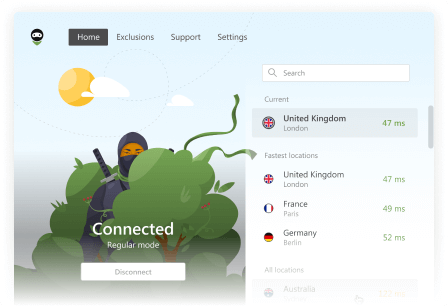
AdGuard VPN helps protect your identity online by encrypting your Internet traffic and masking your IP address, making it much harder for websites, advertisers, and your ISP to track your activity. It also includes a kill switch, which stops all Internet traffic if the VPN connection drops, preventing accidental exposure of your real IP.
Additionally, AdGuard VPN integrates with AdGuard’s ad-blocking technology to reduce tracking and block unwanted ads, further limiting the data that websites and third parties can collect about you. By combining encryption, IP masking, and tracker blocking, AdGuard VPN provides several strong layers of anonymity to ensure much safer browsing compared to a regular, unprotected connection.
Does AdGuard VPN log my activity?
No, AdGuard VPN follows a strict no-logs policy, meaning it does not record information that could reveal what you do online, such as your real IP address or the websites you visit.. As a result, even if authorities or third parties were to request user data, there would be no personally identifying browsing information available.
The VPN only collects minimal technical data necessary to maintain the service, such as connection timestamps or server load, but nothing that can be used to identify you personally. This approach helps maintain your anonymity while using the VPN.
Does mobile browsing need different privacy settings than desktop browsing?
Yes, mobile browsing requires extra attention because smartphones and tablets handle data differently than desktops. Mobile devices often share more personal information, such as location, device identifiers, and app usage, which can be used to track you across apps and websites.
Mobile browsers and apps may also rely heavily on built-in trackers and analytics, and operating systems often allow background data collection. To improve privacy on mobile, it’s important to adjust app permissions, use secure browsers, enable private or encrypted DNS, and consider a VPN. These steps help limit tracking and protect your activity beyond what standard desktop privacy measures provide.
What are good habits for staying anonymous daily?
Maintaining anonymity online isn’t just about using tools — it’s also about consistent habits. Since complete anonymity is unrealistic, the goal should be to reduce exposure and minimize the number of digital breadcrumbs you leave behind.
Start by using strong, unique passwords and avoid signing into personal accounts when you want to remain anonymous. Do not use your main Google, Facebook, Apple, or other personal accounts for anonymous browsing — either log out or create separate anonymous profiles.
Consider using an alternative identity when registering on websites — a separate email (you can even use a temporary email service like AdGuard Temp Mail), a pseudonym, and other details that are not linked to your real identity. This reduces the likelihood that your real information will be collected or cross-referenced across services. Regularly clear cookies, cache, and local storage to limit persistent tracking. Regularly check your browser and site permissions: reject unnecessary cookies, disable push notifications, and limit apps’ access to your device data.
Be mindful of what you share online, including social media posts, form entries, and location data from apps. Avoid posting on social media if you aim to remain anonymous, as any activity can be linked to your real profile and create a digital trail. Using privacy-focused browsers, enabling tracker blockers, and keeping software updated helps reduce the risk of your activity being linked to you.
Finally, consider combining multiple privacy tools — for example, using a VPN alongside encrypted DNS or private search engines. Avoid reusing the same email addresses, usernames, or passwords across different services when anonymity is a priority. Don’t sign into your accounts using Google, Apple, or similar single-sign-on options. Even with a combination of tools and careful habits, no setup can guarantee complete anonymity. However, thoughtful practices can significantly reduce the likelihood of being tracked and limit the amount of data that can be associated with you.