Cloud security is not enough: Why you also need AdGuard
As more of our personal and professional data moves to the cloud, the need for robust cloud security has never been greater. Services like Google Drive, OneDrive, Dropbox, and Microsoft 365 offer built-in protection — but even the most advanced cloud security systems can’t fully defend against human error, phishing scams, malware, or unsecured connections. That’s why more users are looking for cloud security solutions that combine provider-level protection with personal tools.
Cloud providers secure their infrastructure — but you are responsible for securing your own devices, connections, and actions. And that’s exactly where AdGuard comes in.
In this article, we’ll explore the most common threats to your cloud data, explain why traditional cloud security isn’t enough, and show how AdGuard tools like DNS filtering, VPN, and ad blocking can strengthen your overall cloud security.
What is cloud security, and why does it matter for everyday users?
Cloud security refers to the technologies, policies, and procedures used to protect data, applications, and systems that operate in the cloud. As more individuals and businesses rely on cloud-based services for storing files, managing emails, or running software, strong cloud security becomes essential.
For everyday users, cloud security matters because it helps protect personal information such as photos, documents, financial data, and communication records stored in services like Google Drive, iCloud, or Dropbox. Without reliable cloud security, this data could be exposed to cybercriminals, lost due to system failures, or misused by unauthorized parties. Cloud security ensures that data remains private and accessible only to authorized users. It also keeps data safe from threats like hacking, phishing, and malware.
What are the most common threats to cloud accounts and data?
Cloud accounts and data face several common threats that undermine cloud security. One of the most frequent dangers is phishing, where attackers trick users into providing their login credentials through fake emails or websites. Another widespread issue involves weak or reused passwords, which make it easier for hackers to gain unauthorized access. If an attacker does manage to take control of an account, known as account hijacking, they can steal information, alter data, or impersonate the user. Malware and ransomware also pose serious risks, as they can infect files stored in the cloud or lock users out of their data entirely. In some cases, the threat comes from within — authorized users might accidentally or intentionally expose sensitive information. Finally, accessing cloud services from unsecured networks or compromised devices can open the door to data interception and other forms of unauthorized access, directly impacting your cloud security.
Who is responsible for keeping your cloud data secure — you or the provider?
Both you and the cloud service provider share responsibility for cloud security, but the roles are different. The provider is usually responsible for securing the infrastructure, including the physical servers, network, and underlying software that powers the cloud. They implement protections against large-scale attacks, hardware failures, and unauthorized access to their systems.
However, you are responsible for what happens within your own account. This includes managing passwords, setting up two-factor authentication, choosing who has access to your data, and being cautious about phishing attempts or unsafe file sharing. If your login credentials are stolen or you accidentally grant access to a malicious app, the provider's protections can’t fully prevent a breach.
This shared responsibility model means that cloud security is a partnership — the provider secures the platform, while you secure your usage of it.
How can poor personal cybersecurity habits undermine even the best cloud provider defenses?
Even the strongest cloud security from providers can’t fully protect your data if your own cybersecurity habits are weak. For example, using simple passwords, ignoring software updates, or falling for phishing emails can completely undermine cloud security. Once someone gains access to your personal device or login information, they don’t need to break into the cloud provider’s systems — they’re already inside.
Cloud providers build strong defenses around their infrastructure, but they rely on users to manage their own access responsibly. If you don’t take steps like enabling two-factor authentication or avoiding suspicious links, you might unknowingly bypass those protections and expose your data. In short, personal cybersecurity is the first line of defense, and if it fails, even the best cloud security won’t be enough.
How do phishing attacks compromise cloud accounts like Google Drive, OneDrive, or Dropbox?
Phishing attacks compromise these accounts by tricking users into handing over their login credentials. Typically, this starts with a fake email or message that looks like it’s from a trusted source — maybe a notification about a shared file, a security alert, or a password reset request. The message often includes a link to a fake login page designed to closely mimic the real one.
If the user enters their username and password on that fake page, the attacker immediately gains access to their cloud account. From there, the attacker can view, download, delete, or share files. In some cases, they can even spread the phishing attack to others by sending similar fake messages using the compromised account. Since these attacks rely on deception rather than technical flaws, even users of well-secured cloud security platforms can fall victim if they’re not cautious.
What are the risks of downloading infected files or attachments from cloud services?
Downloading infected files or attachments from cloud services can expose your device and data to serious risks. Malware hidden in these files can install itself silently once opened, giving attackers access to your system, passwords, and personal information. In some cases, the malware might log your keystrokes, spy on your activity, or spread to other devices on your network.
Ransomware is another threat — it can encrypt your files and demand payment to unlock them. Even if an infected file comes from a trusted contact, their account may have been compromised, making the threat harder to detect. Additionally, downloading malicious files can lead to broader security breaches, especially if you're using a device connected to work systems or shared networks. Strong cloud security practices, such as endpoint protection and secure backup routines, reduce this risk.
Cloud platforms typically scan for known threats, but they can’t catch everything. That’s why it’s important to be cautious with unfamiliar files, keep your antivirus software updated, and avoid opening attachments or links unless you’re sure they’re safe.
Why is accessing cloud storage over public Wi-Fi a security risk?
Accessing cloud storage over public Wi-Fi is risky because these networks are often unencrypted and poorly secured, making it easier for attackers to intercept your data. When you connect to public Wi-Fi in places like cafes, airports, or hotels, anyone else on the same network can potentially monitor your online activity using simple tools.
If you log into your cloud account without proper protection — like using a VPN or ensuring the website uses HTTPS — attackers could steal your login credentials, session tokens, or sensitive information as it travels across the network. In some cases, they can even hijack your connection or redirect you to fake login pages to capture your details.
Even if the cloud provider has strong cloud security measures, your personal connection becomes the weak point. Using a VPN and cloud security best practices protects your login credentials and sensitive information from interception.
How do ads, trackers, and third-party scripts put your cloud data and privacy at risk?
Ads, trackers, and third-party scripts can quietly collect information about your online behavior, which may indirectly expose details related to your cloud accounts and personal data. These elements are often embedded in websites and apps you use, and while many serve marketing purposes, some can be maliciously exploited or carelessly managed by their operators.
Trackers can gather data like your IP address, location, browser details, and even the websites you visit or the files you access. Over time, this information can be pieced together to build detailed profiles or identify patterns — such as when and where you access your cloud storage. In more serious cases, malicious scripts can exploit browser vulnerabilities or trick you into interacting with fake login prompts, putting your credentials at risk.
Because these third-party elements often run without your direct knowledge, they can become a hidden threat to your privacy and security. Limiting unnecessary browser extensions and using DNS filtering tools strengthens overall cloud security.
How does AdGuard DNS protect against phishing websites that imitate cloud login pages?
AdGuard DNS protects your cloud security against phishing websites that imitate cloud login pages by blocking access to malicious domains before they ever load in your browser. When you try to visit a website, your device sends a DNS request to find the correct IP address. If you’re using AdGuard DNS, that request is checked against a constantly updated database of known phishing and malware domains. If the domain is flagged as dangerous — for example, a fake page pretending to be Google Drive or Dropbox — AdGuard DNS simply prevents it from resolving, so the website never opens.
Unlike traditional DNS servers, which only translate domain names into IP addresses without filtering harmful content, AdGuard DNS actively checks each request for security threats. In other words, it doesn’t just resolve domains — it evaluates them. If the domain is associated with phishing, malware, or tracking, it blocks the connection before any data is transferred.
This filtering happens automatically and doesn’t rely on browser extensions or apps. Since AdGuard DNS operates at the DNS level, it works across all apps and browsers on your device — not just inside the browser — making it especially effective at stopping threats early. It also uses encrypted DNS protocols, which keep your requests private and prevent attackers or your Internet provider from tampering with them. By stopping harmful websites at the DNS level, AdGuard DNS adds an extra layer of security that helps protect your cloud accounts from phishing attacks, even if you accidentally click a suspicious link.
In what ways does AdGuard block malware that can target cloud users?
AdGuard blocks malware that can target cloud users by filtering harmful domains at the DNS level, preventing dangerous content from reaching your device in the first place. When you try to access a website or download a file, AdGuard checks the destination against its database of known malware sources. If the domain is linked to malicious activity — such as spreading trojans, spyware, or ransomware — the connection is blocked before any harmful data is transferred.
This kind of protection is especially important for cloud users, since malware can infect files stored or synced through services like Google Drive or OneDrive. A single infected file can spread across devices or compromise sensitive data. Unlike traditional antivirus software, AdGuard stops threats before they even reach your system, reducing the risk of downloading malware through cloud-based apps or links.
Since filtering happens at the DNS level, AdGuard protection applies system-wide, covering every app and service that connects to the Internet. This ensures malware is blocked consistently, whether it tries to reach you through a browser, a desktop client, or a background cloud sync process.
How can AdGuard VPN secure your connection to the cloud on public or untrusted networks?
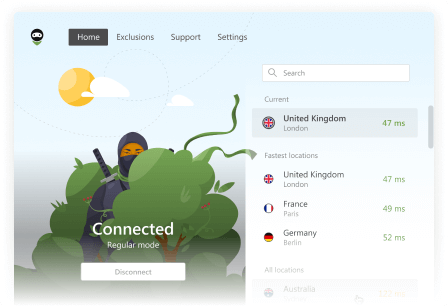
AdGuard VPN secures your connection to the cloud on public or untrusted networks by creating an encrypted tunnel between your device and the Internet. When you connect to public Wi-Fi in places like cafes, airports, or hotels, your data is especially vulnerable to interception. However, with AdGuard VPN, everything you send or receive, including login credentials and file transfers, is encrypted and hidden from anyone else on the network.
This means that even if someone tries to monitor traffic on the same public Wi-Fi network, they can’t see what you’re doing or steal sensitive information from your cloud sessions. AdGuard VPN also masks your IP address, which helps protect your identity and location, adding another layer of privacy.
For extra protection, AdGuard VPN includes a built-in kill switch that automatically blocks traffic if the VPN connection drops, preventing accidental data leaks. It also relies on strong AES-256 encryption and is already preparing for post-quantum security standards, ensuring that your cloud traffic remains protected against both current and emerging threats.
By combining encryption with IP protection, AdGuard VPN ensures that your access to services like Google Drive, Dropbox, or OneDrive remains private and secure, even on networks you don’t fully trust.
How does AdGuard help protect your privacy when using cloud services?
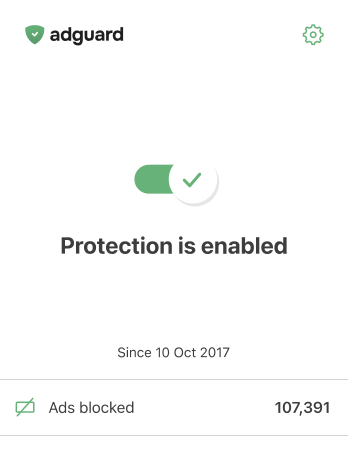
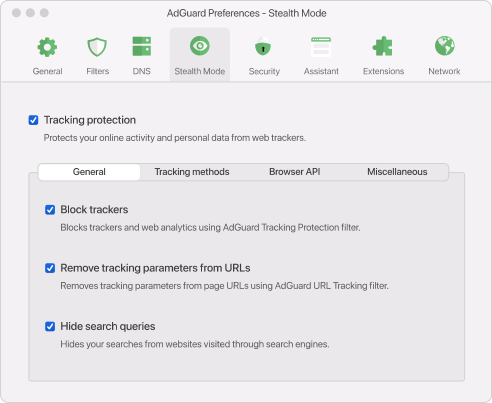
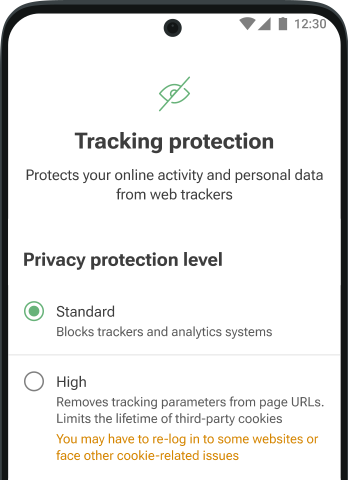
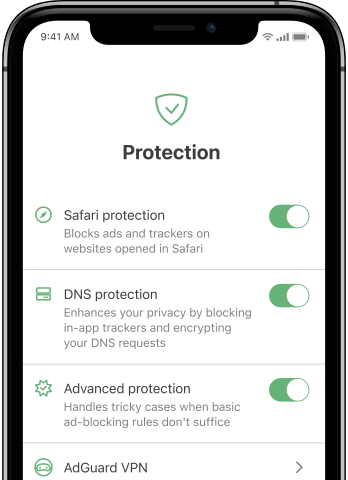
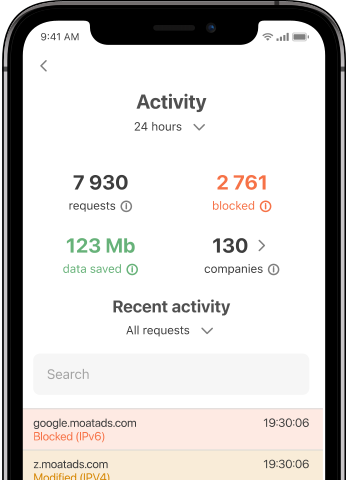
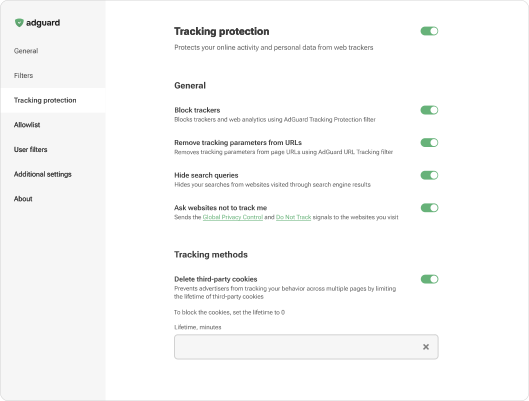
AdGuard protects your privacy when using cloud services by blocking trackers, ads, and malicious domains that can silently collect information about your online activity. Many cloud-based platforms, apps, and websites include third-party scripts that monitor user behavior — including how you interact with files, when you log in, and what devices you use. AdGuard filters out these hidden trackers, preventing them from gathering and sharing your data without your consent.
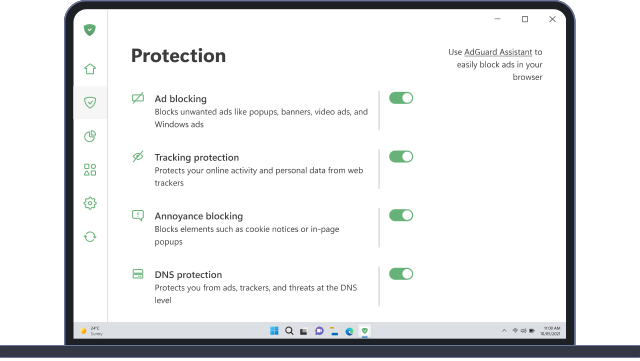
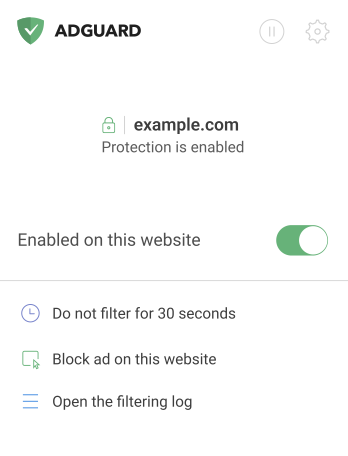
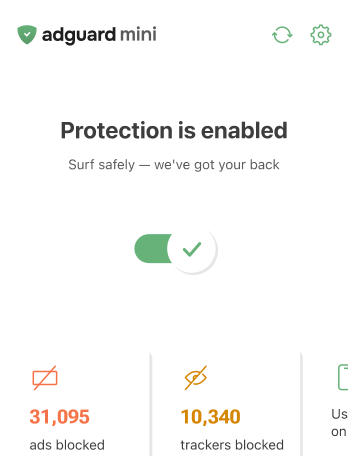
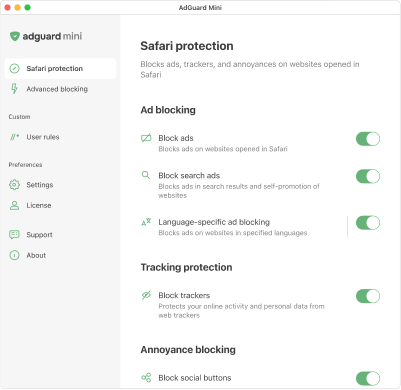
It’s important to note the difference between AdGuard DNS and AdGuard Ad Blocker: DNS blocks entire domains at the network level, which makes it easy to protect all devices on a network at once, while the Ad Blocker works more precisely on a specific device, filtering ads and trackers inside apps and browsers. Together, they provide both broad protection and fine-grained control.
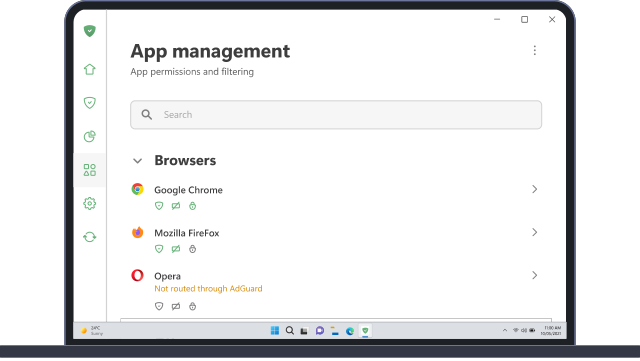
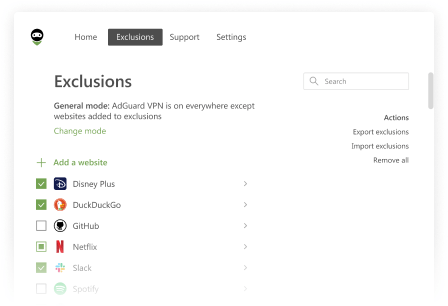
Additionally, AdGuard DNS and AdGuard VPN work together to keep your browsing activity private. DNS filtering blocks connections to known tracking and surveillance domains, and VPN encrypts your traffic and hides your IP address. At the same time, AdGuard VPN offers flexible exclusions, letting you choose which apps or websites bypass the VPN, so you can balance performance and privacy without sacrificing protection.
This combination makes it much harder for advertisers, data brokers, or potential attackers to create your profile based on your cloud usage.
How can AdGuard help protect family members’ or children’s cloud accounts?
AdGuard protects family members’ or children’s cloud accounts by providing tools that block harmful content, prevent access to phishing and malware websites, and reduce the risk of accidental data exposure. With AdGuard DNS, you can enable family protection settings that automatically filter out adult content, block tracking scripts, and stop known malicious domains — all without installing extra software on each device.
This is especially useful for younger users, who might be more likely to click on suspicious links, download unsafe files, or fall for phishing attempts. AdGuard prevents them from reaching dangerous websites that could compromise their cloud accounts or the personal data they store on platforms like Google Drive or iCloud.
Additionally, AdGuard VPN adds an extra layer of security by encrypting children’s traffic when they use cloud services on public or school networks, keeping their activity private and shielding them from network-based attacks. With these tools in place, parents can create a safer, more controlled online environment for the entire family while still allowing access to the cloud services they rely on.
Can AdGuard help if you use multiple cloud services across different devices?
Yes, AdGuard can help if you use multiple cloud services across different devices by providing consistent protection at the network level, regardless of the platform or app you’re using. Whether you access Google Drive on a laptop, Dropbox on a smartphone, or OneDrive on a tablet, AdGuard DNS and AdGuard VPN work in the background to block malicious domains, phishing websites, and trackers across all of them.
Because AdGuard’s protections are not tied to a specific browser or operating system, they extend to any cloud-related activity — including file syncing, sharing, and accessing data through third-party apps. This is especially useful for users who switch between devices frequently or use both personal and work accounts on the same network.
What are the top cloud security tips for individuals in 2025?
In 2025, staying secure in the cloud requires combining strong habits with smart tools. Here are the top cloud security solutions for individuals this year:
Enable multi-factor authentication (MFA) or passkeys on all cloud accounts to prevent unauthorized access.
Use strong, unique passwords and avoid reusing them across services.
Limit permissions by applying the principle of least privilege—only give apps or people the access they truly need.
Encrypt your data, both during transfer and while stored in the cloud. For sensitive files, consider end-to-end encryption.
Keep backups using the 3‑2‑1 rule: three copies of your data, stored on two different types of media, with one copy kept off-site in a separate physical location, such as the cloud or an external drive stored elsewhere. For even stronger protection, follow the 3‑2‑1‑1‑0 method which adds an offline or air-gapped copy to protect against ransomware and requires regular testing of backups to ensure zero errors during recovery.
Regularly update your devices and apps to close known security gaps.
Be wary of phishing attempts and educate yourself about online threats.
Use AdGuard DNS and AdGuard VPN to block malicious websites and trackers and to encrypt your traffic — especially on public networks.
Following these steps ensures your cloud security remains strong and reliable across all platforms.
What should you do if your cloud account is compromised?
If your cloud account is compromised, acting quickly is essential to minimize damage and regain control. Start by changing your password immediately, and if possible, log out of all active sessions to prevent unauthorized access. Next, enable multi-factor authentication if it wasn’t already turned on — this adds an extra layer of protection.
Check your account activity and file history for anything unusual, such as unauthorized downloads, changes, or shared links. If you find anything suspicious, restore deleted or altered files from backups and revoke access to any unfamiliar devices or third-party apps.
It’s also a good idea to scan your devices for malware, especially if the breach may have started with a phishing email or infected file. Once things are under control, notify any affected contacts and consider alerting the cloud provider’s support team — they may be able to offer additional tools or guidance.
Finally, take time to review your overall security setup so it doesn’t happen again. Strengthen your passwords, clean up unused access permissions, and stay alert for future threats.
How can you spot phishing attempts targeting your cloud login credentials?
Spotting phishing attempts targeting your cloud login credentials starts with knowing what to look for. Most phishing messages try to create a sense of urgency — for example, telling you that your account will be locked or that someone accessed your cloud storage. These messages often include a link that leads to a fake login page designed to look exactly like Google Drive, Dropbox, OneDrive, or another familiar service.
One red flag is the sender’s email address. It might look close to the real thing but usually includes slight misspellings or odd domains. The message itself may also contain awkward language, formatting issues, or logos that look slightly off. Always hover over links before clicking — if the URL doesn’t match the official domain of the cloud service, it’s likely a phishing attempt.
Be cautious with attachments and pop ups that ask for credentials. Reputable cloud providers will never ask you to log in through a shared document or external link. When in doubt, go directly to the cloud service’s website instead of clicking anything in the email.
Why should personal privacy tools like AdGuard become part of your long-term cloud strategy?
Personal privacy tools like AdGuard should be part of your long-term cloud strategy because they help protect not just your data, but also the way you access and interact with cloud services over time. While cloud providers work hard to secure their platforms, they can’t fully protect you from threats that come through your browser, apps, or network.
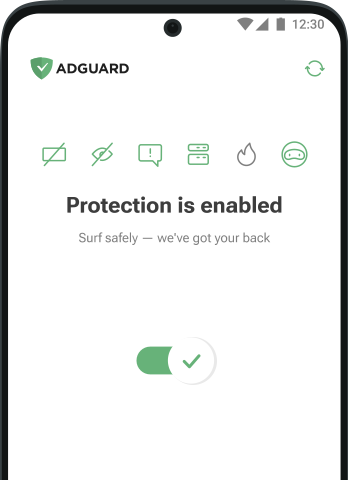
AdGuard adds a layer of defense by blocking trackers, malicious domains, phishing websites, and unwanted ads — many of which can compromise your privacy or trick you into giving up login credentials. Its DNS filtering works across all devices and apps, keeping you safer whether you’re accessing cloud storage from a phone, tablet, or computer. Combined with AdGuard VPN, it also encrypts your Internet traffic, protecting your data from interception on public or untrusted networks.
As cloud usage becomes more central to daily life — storing photos, documents, passwords, and more — tools like AdGuard help reduce long-term risks by keeping your digital activity private and secure.