Cookie consent popups have numbed Europe to the very issue of consent. They might go away soon

Cookie consent popups have been plaguing users in Europe for what feels like an eternity. After appearing in response to landmark pro-privacy EU regulations: first the e-Privacy Directive of 2009 and later the GDPR in 2018, these banners spread through the EU-governed internet sphere like wildfire. The intent behind their introduction was straightforward: make the user’s choice obvious to the user. The banners were supposed to alert users that the website they are on wants to collect data about them that could potentially be used for tracking.

Cookies themselves are small files placed on the user’s device. Technically, they store bits of information that websites need to function or wish to remember: login states, language preferences, analytics identifiers, advertising IDs, and more. Essential cookies are those strictly required to make a site work, things like keeping your shopping cart intact, stabilizing page navigation, or remembering that you’re logged in. Non-essential cookies, by contrast, are tied to analytics, personalization, and especially targeted advertising. These often involve sharing data with third parties and enabling cross-site tracking, essentially, the infrastructure of online surveillance.

Usually, users are presented with a choice: accept all cookies, reject non-essential cookies, or customize their preferences by trudging through an often labyrinthine “cookie settings” menu.

While in theory this approach should have supported more privacy and more user agency, which are both unquestionably good goals, in reality it created so much noise that the banners became a form of sort of digital buzzing in the background, like a persistent fly you want to swat away as fast as possible. Even worse, users have grown desensitized to them. What was meant to be a meaningful prompt turned into a blind spot, a background irritant to be cleared away. The act of clicking on any option has turned into a mindless, automatic gesture, and, more often than not, users tend to instinctively choose the first one, which is almost always “Accept all cookies”. Instead of introducing genuine privacy protection, the system presents an underwhelming choice: an illusion of consent wrapped in a mandatory user interface chore.

The ubiquity of cookie banners has given rise to a phenomenon now commonly referred to as cookie banner fatigue. Turning a blind eye to the very thorn lodged in its own eye can only work for so long, and the European Commission seems to have reached that limit. In its new Digital Omnibus Regulation Proposal, published on November 19, the Commission finally decided to ease the burden by introducing new rules for cookie consent forms and potentially moving them completely away into the browser.

What the Commission wants to change

The European Commission’s new Digital Omnibus Bill steps in with what feels like an overdue reality check. After years of pretending the cookie-banner mess would somehow sort itself out, Brussels now appears ready to intervene and strip away some of the performative theatrics around “consent.”

To begin with, the Commission wants to redesign how consent is asked in the first place. Websites would have to offer a genuine one-click choice: yes or no, which apparently would lower the cognitive load. And crucially, once a user makes that choice, the site must respect it for at least six months. It’s a direct attempt to stop the psychological grind we’ve all been subjected to, namely the endless questions if we really want to accept those cookies or not.

Next, the proposal shifts part of the burden away from individual websites and into the browser itself. In the future, users should be able to set their privacy preferences centrally, this way they decide what types of cookies they’re comfortable with. Websites will have to honour those settings automatically. If implemented, this could finally break the cycle of being asked the same question hundreds of times across sites that all pretend they’ve never heard your answer before.

The Commission also draws a line between cookies that meaningfully affect privacy and those that don’t. “Harmless”, first-party cookies used only for basic functions or simple audience counts would no longer require a popup at all. In theory, this should cut down the sea of banners that serve no purpose other than helping companies to avoid steep fines for not implementing them.

Today’s proposal modernises the ‘cookies rules’, with the same strong protections for devices, allowing citizens to decide what cookies are placed on their connected devices (e.g. phones or computers) and what happens to their data. The new rules give real choices to users, with simplified design and effective design requirements for asking for consent or for allowing users to refuse it. They also prepare the ground for technological solutions that will bring further simplification and central controls for users.

The change in rules is meant to benefit not only users but also businesses, which the European Commission predicts could collectively save more than €800 million a year.

What does it all mean

If rolled out across the EU, the new cookie-popup rules promise to strip away much of the visual clutter users have been forced to wade through for years, replacing it with a more straightforward, binary choice: yes or no. The real transformation, however, would come with the next step, that is with allowing users to set their cookie preferences directly in the browser. That shift would mark a genuinely meaningful move toward stronger, more stable privacy control. Even a simple “yes” or “no” on every website adds up and still feeds into the same old popup fatigue. But if that decision moves into the browser and websites have to respect it for at least six months the endless stream of prompts finally eases off.

Essentially, what the EU aims to achieve with a new set of rules have been successfully handled by ad blockers. The notion that cookie consent popups are indeed a source of irritation for users has been an open secret, forcing them to enable filters that block them.

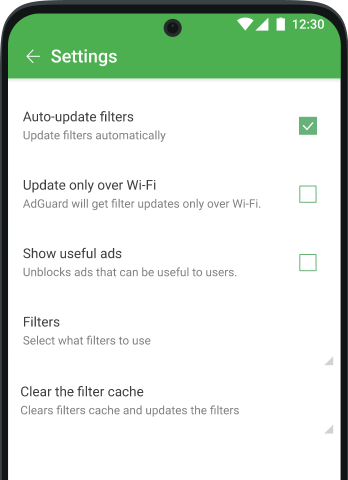
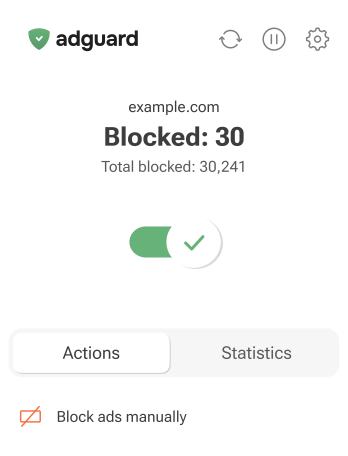
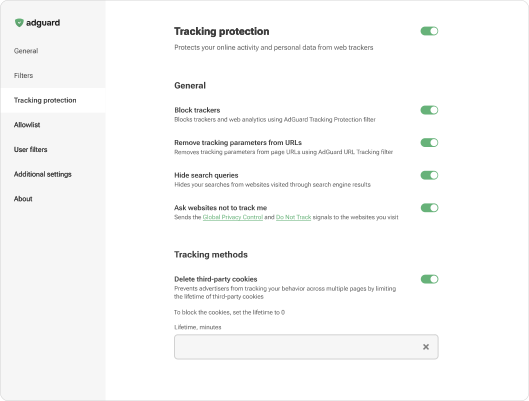
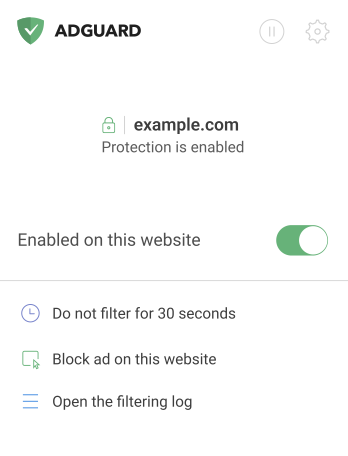
For example, AdGuard’s filters can block most cookie popups in real time, whether you’re using our browser extensions or standalone apps. You can hide annoying consent banners with the Cookie Notices filter or block tracking and advertising cookies selectively with the Tracking Protection filter, keeping your browsing smoother without breaking website functionality.

For more on the types of cookies, such as first-party, third-party cookies used for tracking and advertising, and harmful cookies that invade privacy, and how to block them effectively using tools like AdGuard’s Self-destruction of cookies and Tracking Protection filters, read this guide.

The European non-profit organization NOYB (None of Your Business), which specializes in defending privacy rights and challenging unlawful data practices across Europe, has long been critical of the widespread inefficiency of cookie consent mechanisms. In its analysis of the proposed cookie clause in the Digital Omnibus Bill, NOYB highlights it as a potentially positive step forward for companies not engaged in pervasive tracking practices.

As NOYB points out, “Most websites do not engage in online advertisement or tracking, but need a consent banner to be able to run (anonymous) statistics. Making this type of processing generally legal should, in theory, remove cookie banners from most “normal” websites in Europe.”

However, NOYB also rightly cautions that “other deceptive designs are not mentioned and some of the pain of cookie banners may just move to patterns that are not about the existence of a reject button.” We fully agree: simply removing banners does not automatically solve the broader problem of manipulative consent mechanisms. This is a real danger that users and regulators alike must remain aware of.


Podobał Ci się ten post?
AdGuard VPN AdGuard DNS AdGuard Mail AdGuard Wallet
Ekran główny AdGuard dla Windows
Ekran ochrony AdGuard dla Windows, pokazujący funkcje ochrony i ustawienia
Ekran statystyki AdGuard dla Windows, pokazujący statystyki zablokowanych reklam i trackery
Ekran Zarządzanie aplikacjami w AdGuard dla Windows, pokazujący opcje zarządzania ochroną dla aplikacji zainstalowanych na urządzeniu
20 751 20751 recenzji
Doskonały!

AdGuard dla Windows: bloker reklam na PC

AdGuard dla systemu Windows to coś więcej niż bloker reklam. To wielofunkcyjne narzędzie, które blokuje reklamy, kontroluje dostęp do niebezpiecznych stron, przyspiesza ładowanie stron i chroni dzieci przed nieodpowiednimi treściami
Pobierając program, akceptujesz warunki Umowy licencyjnej
Microsoft Store
Pobierając program, akceptujesz warunki Umowy licencyjnej
AdGuard na Windows v8.0, 14-dniowa wersja próbna
Ekran główny AdGuard dla Mac
Ekran Trybu ukrytego w AdGuard dla Mac
20 751 20751 recenzji
Doskonały!

AdGuard: bloker reklam na Maca

AdGuard dla Mac to wyjątkowy bloker reklam zaprojektowany z myślą o macOS. Oprócz ochrony przed uciążliwymi reklamami w przeglądarkach i aplikacjach chroni Cię przed śledzeniem, phishingiem i oszustwami
Pobierając program, akceptujesz warunki Umowy licencyjnej
Przeczytaj więcej
AdGuard na Mac v2.19, 14-dniowa wersja próbna
Ekran główny AdGuard dla Android
Ekran Ochrona przed śledzeniem w AdGuard dla Android
Ekran Zarządzanie aplikacjami w AdGuard dla Android, pokazujący opcje zarządzania ochroną dla aplikacji zainstalowanych na urządzeniu
Ekran statystyki AdGuard dla Android, pokazujący statystyki zablokowanych reklam i trackery
Ekran główny prywatnej przeglądarki AdGuard dla Android
Kod QR, aby pobierz AdGuard dla Android
20 751 20751 recenzji
Doskonały!

AdGuard: bloker reklam na Androida

Blokuje reklamy i moduły śledzące we wszystkich przeglądarkach, grach i innych aplikacjach. Chroni Twoją prywatność i pozwala kontrolować, w jaki sposób aplikacje korzystają z Internetu. Instalowane za pomocą pliku APK
Pobierając program, akceptujesz warunki Umowy licencyjnej
Przeczytaj więcej
Skanuj, aby pobrać
Użyj dowolnego czytnika kodów QR dostępnego w Twoim urządzeniu
AdGuard na Android v4.14, 14-dniowa wersja próbna
Ekran główny AdGuard dla iOS
Ekran ochrony AdGuard dla iOS, pokazujący funkcje ochrony i ustawienia
Ekran statystyki AdGuard dla iOS, pokazujący statystyki zablokowanych reklam i trackery
Kod QR, aby pobierz AdGuard dla iOS
20 751 20751 recenzji
Doskonały!

AdGuard na iOS: bloker reklam poza Safari

Najlepszy bloker reklam na iOS dla iPhone’a i iPada. AdGuard usuwa wszelkiego rodzaju reklamy i elementy śledzące w Safari oraz chroni Twoją prywatność we wszystkich aplikacjach na poziomie DNS
Pobierając program, akceptujesz warunki Umowy licencyjnej
Przeczytaj więcej
Skanuj, aby pobrać
Użyj dowolnego czytnika kodów QR dostępnego w Twoim urządzeniu
AdGuard na iOS v4.5
Ekran główny AdGuard Content Blocker
Ekran Filtry w AdGuard Content Blocker
Ekran ustawienia w AdGuard Content Blocker
20 751 20751 recenzji
Doskonały!

Blokada treści AdGuard

AdGuard Content Blocker eliminuje wszelkiego rodzaju reklamy w przeglądarkach mobilnych, które obsługują technologię blokowania treści — a mianowicie Samsung Internet i Yandex Browser. Jego funkcje są ograniczone w porównaniu z AdGuard na Androida, ale jest darmowy, łatwy w instalacji i wydajny
Pobierając program, akceptujesz warunki Umowy licencyjnej
Przeczytaj więcej
Blokada treści AdGuard v2.8
Ekran główny AdGuard Browser Extension
Ekran Ochrona przed śledzeniem w AdGuard Browser Extension
20 751 20751 recenzji
Doskonały!

Rozszerzenie przeglądarki AdGuard

AdGuard to najszybsze i najlżejsze rozszerzenie blokowania reklam, które skutecznie blokuje wszystkie typy reklam na wszystkich stronach internetowych! Wybierz AdGuard dla swojej przeglądarki i uzyskaj szybkie i bezpieczne przeglądanie Internetu pozbawione reklam.
Instalacja
Pobierając program, akceptujesz warunki Umowy licencyjnej
Instalacja
Pobierając program, akceptujesz warunki Umowy licencyjnej
Instalacja
Pobierając program, akceptujesz warunki Umowy licencyjnej
Instalacja
Pobierając program, akceptujesz warunki Umowy licencyjnej
Instalacja
Pobierając program, akceptujesz warunki Umowy licencyjnej
Przeczytaj więcej
Instalacja
Pobierając program, akceptujesz warunki Umowy licencyjnej
Przeczytaj więcej
Rozszerzenie przeglądarki AdGuard v5.5
Ekran główny Asystenta przeglądarki
20 751 20751 recenzji
Doskonały!

Asystent AdGuard

Towarzyszące rozszerzenie przeglądarki dla aplikacji desktopowych AdGuard. Umożliwia blokowanie niestandardowych elementów na stronach internetowych, dodawanie stron internetowych do listy dozwolonych i wysyłanie raportów bezpośrednio z przeglądarki
Asystent AdGuard v1.4
20 751 20751 recenzji
Doskonały!

AdGuard Home

AdGuard Home to sieciowe rozwiązanie do blokowania reklam i modułów śledzących. Zainstaluj go raz na routerze, aby objąć nim wszystkie urządzenia w sieci domowej — nie jest wymagane żadne dodatkowe oprogramowanie klienckie. Jest to szczególnie ważne w przypadku różnych urządzeń IoT, które często stanowią zagrożenie dla Twojej prywatności
AdGuard Home v0.107
Ekran główny AdGuard Pro dla iOS
Ekran Ochrona w AdGuard Pro dla iOS, pokazujący funkcje i ustawienia ochrony
Ekran statystyki w AdGuard Pro dla iOS, pokazujący statystyki zablokowanych reklam i trackerów
20 751 20751 recenzji
Doskonały!

AdGuard Pro dla iOS

AdGuard Pro na iOS oferuje wszystkie zaawansowane funkcje blokowania reklam. Oferuje te same narzędzia, co płatna wersja AdGuard na iOS. Doskonale blokuje reklamy w Safari i pozwala dostosować ustawienia DNS, aby dostosować poziom ochrony. Blokuje reklamy w przeglądarkach i aplikacjach, chroni dzieci przed nieodpowiednimi treściami i dba o bezpieczeństwo danych osobowych.
Pobierając program, akceptujesz warunki Umowy licencyjnej
Przeczytaj więcej
AdGuard Pro dla iOS v4.5
Ekran główny AdGuard Mini dla Mac
Ekran ochrony Safari w AdGuard Mini dla Mac
Ekran tworzenia reguły w AdGuard Mini dla Mac
20 751 20751 recenzji
Doskonały!

AdGuard Mini dla Mac — bloker reklam Safari

AdGuard Mini dla komputerów Mac to potężny bloker reklam w Safari. Ta lekka aplikacja usuwa reklamy, blokuje moduły śledzące i przyspiesza ładowanie stron. Umożliwia przeglądanie internetu w Safari bez rozpraszania uwagi i chroni prywatność danych
Instalacja
Pobierając program, akceptujesz warunki Umowy licencyjnej
Przeczytaj więcej
AdGuard Mini dla Mac v2.3
Ekran główny AdGuard dla Android TV z włączoną ochroną
Ekran blokowanie reklama AdGuard dla Android TV, pokazujący jego funkcje i ustawienia
Ekran ustawienia AdGuard dla Android TV
Ekran Zarządzanie aplikacjami AdGuard dla Android TV, pokazujący aplikacje, w których reklamy i trackery są zablokowane
20 751 20751 recenzji
Doskonały!

AdGuard dla Android TV

AdGuard dla Android TV to jedyna aplikacja, która blokuje reklamy, chroni prywatność i działa jak zapora sieciowa dla Smart TV. Otrzymuj ostrzeżenia o zagrożeniach internetowych, używaj bezpiecznego DNS i korzystaj z szyfrowanego ruchu. Zrelaksuj się i zanurz się w swoich ulubionych programach z najwyższej klasy zabezpieczeniami bez reklam!
AdGuard dla Android TV v4.14, 14-dniowa wersja próbna
Maskotka AdGuard, Agnar, trzymający pingwina Linux
20 751 20751 recenzji
Doskonały!

AdGuard dla Linux

AdGuard for Linux to pierwszy na świecie systemowy bloker reklam dla systemu Linux. Blokuj reklamy i elementy śledzące na poziomie urządzenia, wybieraj spośród wstępnie zainstalowanych filtrów lub dodawaj własne — wszystko za pośrednictwem interfejsu wiersza poleceń
AdGuard dla Linux v1.4
20 751 20751 recenzji
Doskonały!

AdGuard Temp Mail

Darmowy generator tymczasowych adresów e-mail, który zapewnia anonimowość i chroni prywatność. Brak spamu w głównej skrzynce odbiorczej!
20 751 20751 recenzji
Doskonały!

AdGuard VPN

75 lokalizacji na świecie

Dostęp do wszelkich treści

Silne szyfrowanie

Polityka braku logów

Najszybsze połączenie

Wsparcie 24/7

Wypróbuj za darmo
Pobierając program, akceptujesz warunki Umowy licencyjnej
Przeczytaj więcej
20 751 20751 recenzji
Doskonały!

AdGuard DNS

AdGuard DNS to alternatywne rozwiązanie do blokowania reklam, ochrony prywatności i kontroli rodzicielskiej. Łatwy w konfiguracji i darmowy, zapewnia niezbędną minimalną ochronę przed reklamami, śledzeniem i phishingiem, bez względu na platformę i urządzenie, z którego korzystasz.
20 751 20751 recenzji
Doskonały!

AdGuard Mail

Chroń swoją tożsamość, unikaj spamu i zabezpiecz swoją skrzynkę odbiorczą dzięki naszym aliasom i tymczasowym adresom e-mail. Skorzystaj z naszej bezpłatnej usługi przekazywania e-maili oraz aplikacji na wszystkie systemy operacyjne
20 751 20751 recenzji
Doskonały!

AdGuard Wallet

Bezpieczny i prywatny portfel kryptowalutowy, który daje Ci pełną kontrolę nad Twoimi aktywami. Zarządzaj wieloma portfelami i odkrywaj tysiące kryptowalut, aby je przechowywać, wysyłać i wymieniać
Rozpoczęto pobieranie AdGuard Kliknij przycisk wskazany strzałką, aby rozpocząć instalację Wybierz „Otwórz” i kliknij „OK”. Poczekaj aż plik zostanie pobrany. W otwartym oknie, przeciągnij ikonę AdGuard do folderu „Aplikacje”. Dziękujemy za wybrania AdGuard! Wybierz „Otrwórz” i kliknij „OK”. Poczekaj aż plik zostanie pobrany. W otwartym kliknij „Instaluj”. Dziękujemy za wybrania AdGuard!
Zainstaluj również AdGuard dla urządzeń mobilnych