Digital afterlife: a chance to live forever or never rest in peace?
Have you ever thought about what happens after your physical shell expires? What legacy will you leave and what will become of it with time? You can't control peoples' thoughts and actions, but you can leave your car to your nephew, your collection of action figures — to your friend. If your work is protected by copyright, the protection will usually extend well beyond your lifespan.
The law has, however, yet to catch up with the times as not only we hoard material objects during our lifetime, write books and create art, but also share, store and use tons of information online. That information encompasses our digital identity, which is often left unattended after death, lingering at the digital graveyard at the mercy of tech giants.
Our digital ashes will be scattered here and there, but for the most part they will find their final resting place in the overgrown and unkempt grounds of social media platforms. Social media have been a staple of our lives for less than two decades, which means that we are the first generation witnessing how the problem of digital afterlife is becoming, well, a problem. But we won't be the last: Gen-Zs are the true digital natives, and as they were born with a smartphone in hand, they will die with it as well.

But where there is a problem, there is a solution. Our increasingly digital lifestyle has given rise to a whole new industry — the death tech industry. It deals with digital wills, digital legacies and analog grief.
AI is now used as a crutch to help people grapple with the loss of their loved ones. It can breathe life into great-grandpa's photos, speak in dead grandma's voice or even allow us to chat with long-dead loved ones if we feed the machine enough data — the more, the better.
From chatbots to VR doppelgangers: how AI brings dead people alive
AI technologies have already revolutionized our lives. Home assistants, such as Amazon, Alexa, or Siri, use natural language processing to chat with their owners. Face-recognition software employs deep learning algorithms to identify people at airports. Self-driving cars rely on machine learning and neural networks to spot patterns in the data, like traffic lights, and predict what objects surrounding them will do next.
It was only a question of time when those very same technologies would revolutionize our death. An AI-powered chatbot called HereAfter aims to do just that. It preserves the "life story" of its customers so that after their death their relatives can reconnect with them. First, the app asks a person detailed questions about their childhood, family, career, and romantic relationships. Then that data is fed into the algorithm. Family members can query the "avatar" of the deceased through the app, and hear the responses in that person's voice. It's impossible to feed recordings of already dead people to the algorithm, however.
An app called Replika uses deep learning to process human-like text. The more you tell the chatbot, the more it is supposed to become you. Some Replikas reportedly claimed they were a spirit and even a human. Replika's backstory is even more fascinating (or unsettling, depending on your perspective). The start-up was founded by a woman, who lost her friend in an accident. To cope with the grief, she created a chatbot based on that friend's real text messages by feeding them into an artificial neural network. That chatbot is still available for download.
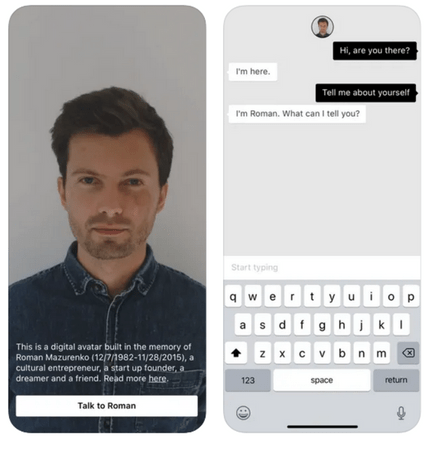
These tech startups may not be household names yet, but the technologies they pioneer are here to stay, and sooner or later will be picked up by big tech. In fact, it is already happening. The reason why big tech seems to be dragging its feet on them is not scalability, but ethical and reputational concerns they have to take into account due to their high profile.
Microsoftcaused a ruckus last year after patenting a "conversational chatbot" that could be modeled after a specific person who had already passed away. Faced with public backlash, Microsoft backed out from building the product, even calling the idea "disturbing". The Microsoft chatbot would harvest data, such as messages, voice recordings, social media posts, letters and images from a person and rely on that data as well as outside sources to communicate. Potentially, the bot could be turned into a 3D human model with the help of images and video data.
Ethical concerns may have thrown a spanner in the works, but the progress has not stopped dead in its tracks (pun intended). Earlier this year, genealogy site MyHeritage released an AI-powered DeepStory tool. Branded "creepy" by some, it animates portraits of dead people, making them move and speak. It's impossible to feed it voice recordings of a real person, instead one has to choose one of 140 default voices. Apparently, it was done on purpose, so that users won't abuse the feature to create deep fakes.
As for imitating the voices of real people, dead or alive, Amazon's Alexa voice assistant is the one to go to. Alexa's new feature will mimic the voice of a real person and supposedly help those who lost their relatives to savor memories of their loved ones.
But if any of these awe-inspiring sci-fi features are giving you chills, they will pale in comparison with the South Korean startup Vive Studios's attempt to create a virtual reality doppelganger of a dead girl so that her mother can meet her. The mother wore a VR headset and special gloves that allowed her to touch her "daughter" and chat with her. A huge amount of time and effort went into making the virtual simulacra. The process required recording an actor's movements, studying real videos and photos of the girl and interviewing family members.
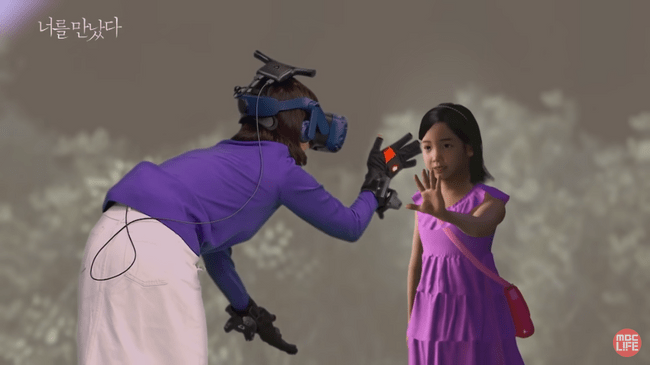
Such intricate AI-based tech is not yet scalable, but the time when it will be may be just around the corner.
A lot can be said about the ethical implications of the AI-powered products aiming to breathe life into the dead: some will argue that such products help families to cope with grief, while others will say that they exploit people when they are at their most vulnerable.
Another question to consider is the privacy of the dead. Should we use the data from the deceased to recreate them through AI without their consent? AI-powered tech mimicking real people is a double-edged sword and as the old saying goes: the road to hell is paved with good intentions.
Fakes, frauds and holograms
The very same tools that help relatives to "reconnect" with their loved ones pose security risks and can be abused to profit off a dead or a living person's likeness. This can be done either through fraudulent or by formally legitimate, but questionable means.
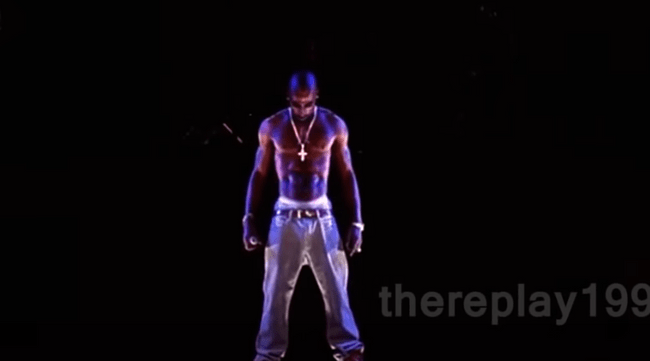
The technology has given rise to the phenomenon sometimes referred to as "musical necrophilia" or performances by dead artists' holograms. A hologram of the dead rapper Tupac Shakur performed at a music festival in 2012, while a hologram of the late singer Whitney Houstan did a whole six-month residency in Las Vegas this year. Prince's hologram appearance at the 2019 Super Bowl half-time show was reportedly scrapped last-minute after it was revealed that the late artist found the whole concept of digital reality "demonic".
Last year a heated public debate broke out after a famed filmmaker "recreated" the voice of late celebrity chef Anthony Bourdain for a documentary.
Bourdain's widow said he would not have approved of it. This shows that when it comes to digital afterlife, we are in legal and ethical murky waters.
While such uses of AI are morally and legally questionable, they are up for debate. The more dangerous phenomenon rapidly gaining traction is deep fakes. They can be created with various purposes: for deep fake porn, which has risen to become a disturbing genre of its own, for crypto scams that take advantage of star power the likes of Elon Musk, for laughs (remember Tom Cruise's deep fake antics on TikTok?) or even for social engineering attacks.
One of the first widely reported deep fake attacks took place in 2019, when AI-based software was used to mimic the voice of an executive who "directed" his colleague to transfer $243,000 to the fraudster's account.
What we should bear in mind is that this cutting-edge technology has a very ugly underside. The scariest and at the same time the most exciting thing about it is that we only witness it taking its first baby steps. While we can fantasize about what lies ahead, some AI-based creations have already offered us a glimpse into the future. One of them is a metaverse where digital avatars could live after death.
Living forever in the metaverse: next logical step or a step too far?
If it's possible to create a digital avatar of a dead or a living person, then where there's one, there are many. At one point there can be thousands of avatars of dead people roaming the digital universe. It sounds only logical that someone should try to put them together and allow them to interact with each other.
Metaverse — a collection of virtual worlds populated by 3D models — seems to be an ideal meeting place. While there are dozens of metaverse products, including by Microsoft and Meta, they bet on connecting living people with each other in one digital environment. However, some are going farther than that.
A metaverse called Somnium Space is to feature the 'Live Forever' option. While the feature is still in development, CEO Artur Sychov has claimed it will enable relatives to communicate with dead people's avatars long after they die. To build a proper avatar, Somnium Space needs a lot of data, which is collected while you are on your land plot in the metaverse. It records information about how you move, gesticulate, interact with others, and even your heartbeat. But that's not all. The company says it will also be collecting a second set of data from your avatar and its interactions with other people in virtual reality. According to Sychov, "this can go for an infinite loop, and maybe at the end of the day, your avatar can be a completely different person". That option is, thankfully, only opt-in, so if a person wants their avatar to be based only on their data, then the avatar's personality won't "evolve" with time.
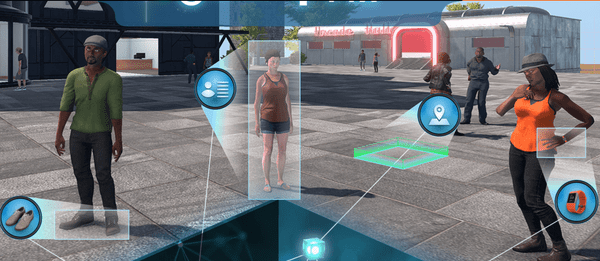
Still, the prospect of your digital alter-ego living a life of its own, and changing under the influence of other avatars, whose prototypes are perhaps also long dead in real life, is eerie. The big question is: do we need such capability at all and what is the guarantee it won't be abused?
Your data is at the mercy of tech giants after you die
We can indulge in discussing futuristic concepts, but the fact is that most people probably have never thought about what happens with their digital identity after they die. The existing legal void in that area certainly doesn't help.
GDPR (EU data protection regulation) does not apply to the deceased, and only a handful of countries have digital inheritance laws. The French law enables people to give instructions to the platforms about the way they want their data to be used after death and relatives to request the erasure of the data. In Germany a court has granted heirs full access to the social media accounts of the deceased. There is no federal law on post-mortem privacy in the US. States have passed their own laws allowing fiduciaries to manage some digital property, while restricting access to emails, text messages and social media accounts.
But with a few exceptions, users are at the mercy of online platforms that set their own rules and can change them at will.
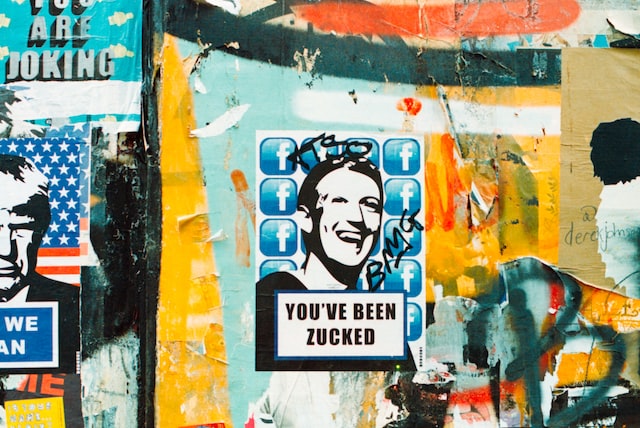
It is estimated that there are more than 30 million dead people on Facebook. It is projected that by 2070 the dead on the platform will outnumber the living, Facebook allows a user to request the platform to delete their accounts upon death or designate a legacy contact who can either request it to be deleted or take care of the memorial page. If an account is memorialized, it cannot be changed: legacy contact can only update profile and cover photos, write a pinned post, moderate tributes and approve friends requests. Instagram likewise "memorializes" an account if informed of its owner's passing. Only verified next of kin can ask to delete the account and they must prove they have the right to do so under local law. Twitter offers no memorialization feature despite a promise to create one. The only option for immediate family members if they do not want the account to be open to abuse is to request Twitter to delete it permanently. Google allows you to nominate up to 10 inactive account managers, who can receive various parts of your data linked to your Google account after a certian period of inactivity (3 to 18 months). You can choose for your family to receive photos, and for your colleague to access data from your business profile. By default, Google does not provide any content from accounts of deceased users, but may do so "under certain circumstances". From June 1, 2023 onwards, Google will enforce a new policy, according to which all Gmail, Google Drive and Google Photos data will be removed after 2 years of inactivity.
TikTok neither has features for memorialization, nor it allows relatives or representatives to request the deceased user's account deletion. If an account remains inactive for more than 180 days, the username is reset to a random set of numbers, but the content remains intact.
It's nice to think that social media behemoths are coming up with such features as memorialization, because they care about their users' legacy. However, the action might be more profit-driven. Memorialized accounts represent a giant pool of poorly-protected data that tech giants can tap freely into to train their AI applications since no law protects privacy post-mortem. The feature also helps attach still living users to the platform in the long run — nobody wants to lose access to a loved one's memorial. That leads to more time spent by the bereaved on social media, and the more time they spend there, the more they are exposed to targeted ads — the prime source of revenue for Facebook and the like.
Why care?
Planning for your digital afterlife may not be high on your priority list, but make sure to tick that box. Since tech companies can permit or forbid access to your personal accounts after your death on a whim, make sure your next of kin know how to access information you want them to have on their own.
You might want to pass some data to your children, spouses or friends — and not only that of sentimental value. Mundane household chores such as paying utility bills have migrated online and require logging into password-protected profiles. You might want your loved ones to have access to important documents stored on the cloud, retail accounts, photo sharing sites and so forth.
Getting your digital affairs in order is about sparing your relatives more pain, but also about protecting your digital identity post-mortem. Abandoned and seldom-used accounts are easy prey for scammers. Using publicly available information, including that from social media and obituaries, fraudsters can open digital accounts, access existing accounts, file tax returns and inflict debt on estate representatives while relatives have not yet reported the death to the government and banks. Theft of a digital identity of a dead person has become known as "ghosting".
While heavy bureaucratic machinery is still catching up with the reality of the digital world, the need to take care of one's digital assets has spawned a new industry, the one that promises to preserve your "digital legacy". A 'death tech' startup GoodTrust says that it will act on behalf of your "digital executor"to memorialize or deactivate social media accounts. GoodTrust also promises to help with closing accounts of already dead people and… offers to make a photo of your loved one "come alive and sing"with the help of AI. Another player on the 'death tech' market MyWishes (formerly DeadSocial) encourages users to create a "social media will" or a log of all social media accounts complete with elaborate instructions on what to do with them after you pass away.
It goes without saying that by entrusting virtually all your account data to third parties comes with very high risks to your privacy, so it’s only up to you whether to trust these services or not.
What can you do yourself to protect your identity from afterlife abuse?
Death wishes are a matter of personal choice, so what you do with your digital identity is ultimately up to you. Perhaps, you want to live in posterity as a "deadbot" or be recreated as a 3D avatar wandering the metaverse.
What we offer is advice that will help protect your name post-mortem and spare your loved ones unnecessary anguish and suffering.
Do not share anything that you might regret sharing, since one day your data can become your legacy
Protect your social media from digital scavengers that prey on poorly-protected abandoned accounts. Remember that passwords that were considered secure 10 years ago are now easily crackable. Make sure you use a really strong password and have two-factor authentication enabled.
Use existing features offered by social media to safeguard your account: appoint an inactive account manager for Google services, choose a legacy contact for Facebook who can request deletion of your profile after death, etc.
Leave your loved ones clear instructions on how to handle your online identity after your passing. You can do this with the help of third-party services who will act as an intermediary between online platforms and a person you'll appoint to settle your digital affairs.
Make a hard and digital copies of all your digital assets, including lists of logins and passwords for all your social media accounts, email accounts, photo sharing sites, utility bill sites and shopping sites and secure them in a law firm's vault.
Send your loved ones a letter from the future with a single master key for your password manager like KeePass, who will remember all the passwords for you. This approach, however, only works when you can guesstimate the time of your passing with a high degree of accuracy.
Do not include your logins and passwords in your will! It can become a public document due to probate, and as such, your account information can be exposed to anyone. It's far better to mention a separate document in your will to which your heirs should refer to for information about your accounts.