Research says extensions can steal your password from websites. Should you be worried?

Recent research by the University of Wisconsin-Madison found that “a significant percentage” of extensions in Chrome — about 12.5% — have received permissions from users that enable them to access sensitive personal information. The paper mainly focuses on passwords that the researchers say are often stored in plaintext within the source code of even reputable websites. These unprotected passwords, they argue, can become easy targets for malicious data-hungry extensions.

The researchers found that on 15% of the websites they studied — and these are not some obscure and unknown portals, but the likes of Google and Cloudflare (among others) — passwords were “present in plain text in the HTML source code.” In the researchers’ opinion, this careless attitude by website developers combined with relatively lax Chrome rules for extension developers leave the door wide open for attackers to exploit this vulnerability. During their research, they identified 190 extensions that were “directly accessing password fields,” including such popular extensions as AdBlockPlus and Honey — both of them boasting over 10 million downloads.

Exerpt from the research
Source

The researchers said:

“Analyzing the manifest files (the JSON-formatted files that provide important information about the extension’s capabilities and the files it uses), we find that 12.5% (17.3K) extensions have the necessary permissions to extract sensitive information on all web pages.”

While Google Chrome’s new platform for extensions, Manifest V3, has imposed constraints on what extensions can do, the researchers found that these measures did not mitigate risks to security in any substantial way. They said: “Despite MV3’s intended advancements in user privacy and security, content scripts’ operations remain unchanged. This maintains the lack of security boundary between the extension and web page and allows an extension to be loaded on the DOM tree and gain unrestricted access to the webpage, posing security risks for the users.”

Sounds ominous, doesn’t it? So, let’s set things straight.

It’s a trust issue, there’s no getting round it

While it might be true that ad blocking extensions (like many others) require some scary-sounding permissions, it’s not because they are inherently malicious or hell-bent on stealing your data. It’s just they have no other way to do their job. And you have to trust them to do it right.

In fact, it’s by far not the first time that alarm bells have been sounded about the extent to which extensions can access user data. The issue is not specific to Chrome — extensions for other browsers, such as Firefox, have the same capabilities and permissions. Nor is it just about ad blockers: all extensions that need to modify the content of web pages, such as password managers and productivity tools, require broad access to the information on these web pages. The technical reason behind this is that these extensions use JavaScript, a programming language that allows them to read and transform HTML elements on the web page to fulfill their purpose. For example, password managers use JavaScript to insert passwords and usernames into input fields, while productivity tools use it to block distractions, track time, save web pages, etc. So, what about ad blockers?

Ad blockers run JavaScript to scan web pages for ad scripts and other elements that match their blocklist, so that they can block them. It also allows them to hide “ad leftovers” — empty spaces and broken elements that may have been left behind by the blocked ads. This process is called “cosmetic processing.”

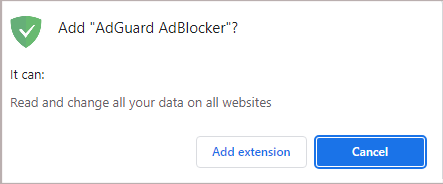
In the AdGuard extension description in the Chrome Web Browser Store, we try to be transparent about why we need certain permissions.
AdGuard permissions

Thus we explain that we need permissions to read and change all your data on all websites (“host permission” in Chrome) and to access tabs (“tabs permission”) in order to block ads, as well as apply cosmetic rules so that web pages look clean and tidy. We also need the webNavigation permission to catch the moment when to inject ad-blocking scriptlets, that is before the page loads any ads.

To sum it up, the AdGuard extension, as well as many others, may require intrusive-sounding permissions to work. Ultimately, it’s up to you if you trust their developers and their justifications for needing these permissions enough to grant them.

So, should you be worried?

Yes, in the grand scheme of things, you should. You should be mindful when installing extensions that can access your data on web pages. Even if rather slim, there’s a chance that the extension you want to install is a malicious one and will steal your password or banking details that are stored in plaintext in a website’s HTML source code. With additional functionality come additional risks, and this applies not only for add-ons, but also for other services and devices: take WiFi-enabled vacuums or modern cars with sensors, for example. So, to cut to the chase, you will have to accept a higher level of risk to your security and privacy when you allow your add-on to work its magic, such as blocking ads. Regardless of whether you think such a trade-off is fair or not, it is just unavoidable.

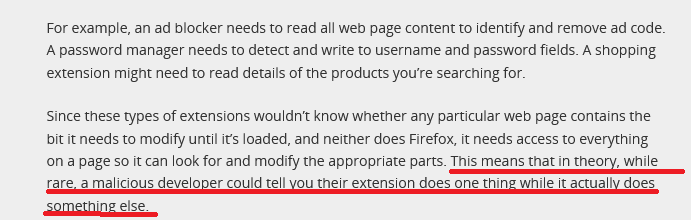
In 2018, Mozilla devoted an entire blog post to extension permissions, including “scary-sounding ones”, in which it explained why extensions like ad blockers need them for legitimate reasons, but also highlighted the risks of installing them.

However, the Firefox maker noted that such cases, when a malicious developer claims your extension does one thing while it actually does something else, while possible, are still “rare.”
Mozilla's blog

Source: Mozilla

You may argue that even “rare” is sometimes too often. And we agree wholeheartedly — downplaying this problem would do nobody good. A few years ago, we ourselves exposed several malicious ad blocking extensions that ripped off the code of legitimate ones and could change your browser’s behavior in any way. At the time we estimated that over 20,000,000 people could be affected by these fake ad blockers. So now the burning question is, how can you be a little more comfortable giving your extension the ability to see all of your browsing activity?

Well, here’s a checklist that the extension needs to meet to be considered safe in our eyes:

  • The author of the extension is clearly stated, has a physical address, and, ideally, has been in the industry for many years

  • The privacy policy is present, clear, and user-friendly

  • The reasons for permissions are clearly stated, and match the purposes of the extension

  • The extension is open source: you can see the list of all commits and it’s always available (for example, our trusted Chrome ad blocker is free and public)

  • The developer maintains online presence and can be easily contacted by users (via social media, website, or a dedicated support desk) and provides timely responses

  • The extension has positive ratings and favorable reviews. Although these are not an iron-clad guarantee of it being safe, as reviews can be manipulated by bots or left by non-inquisitive casual users who appreciate the fact that the extension works and don’t look any deeper — but that’s another story


Podobał Ci się ten post?
AdGuard VPN AdGuard DNS AdGuard Mail AdGuard Wallet
Ekran główny AdGuard dla Windows
Ekran ochrony AdGuard dla Windows, pokazujący funkcje ochrony i ustawienia
Ekran statystyki AdGuard dla Windows, pokazujący statystyki zablokowanych reklam i trackery

Ekran Zarządzanie aplikacjami w AdGuard dla Windows, pokazujący opcje zarządzania ochroną dla aplikacji zainstalowanych na urządzeniu

20 752 20752 recenzje
Doskonały!

AdGuard dla Windows: bloker reklam na PC

AdGuard dla systemu Windows to coś więcej niż bloker reklam. To wielofunkcyjne narzędzie, które blokuje reklamy, kontroluje dostęp do niebezpiecznych stron, przyspiesza ładowanie stron i chroni dzieci przed nieodpowiednimi treściami
Pobierając program, akceptujesz warunki Umowy licencyjnej
Microsoft Store
Pobierając program, akceptujesz warunki Umowy licencyjnej
AdGuard na Windows v8.0, 14-dniowa wersja próbna
Ekran główny AdGuard dla Mac
Ekran Trybu ukrytego w AdGuard dla Mac
20 752 20752 recenzje
Doskonały!

AdGuard: bloker reklam na Maca

AdGuard dla Mac to wyjątkowy bloker reklam zaprojektowany z myślą o macOS. Oprócz ochrony przed uciążliwymi reklamami w przeglądarkach i aplikacjach chroni Cię przed śledzeniem, phishingiem i oszustwami
Pobierając program, akceptujesz warunki Umowy licencyjnej
Przeczytaj więcej
AdGuard na Mac v2.19, 14-dniowa wersja próbna
Ekran główny AdGuard dla Android
Ekran Ochrona przed śledzeniem w AdGuard dla Android
Ekran Zarządzanie aplikacjami w AdGuard dla Android, pokazujący opcje zarządzania ochroną dla aplikacji zainstalowanych na urządzeniu
Ekran statystyki AdGuard dla Android, pokazujący statystyki zablokowanych reklam i trackery
Ekran główny prywatnej przeglądarki AdGuard dla Android
Kod QR, aby pobierz AdGuard dla Android
20 752 20752 recenzje
Doskonały!

AdGuard: bloker reklam na Androida

Blokuje reklamy i moduły śledzące we wszystkich przeglądarkach, grach i innych aplikacjach. Chroni Twoją prywatność i pozwala kontrolować, w jaki sposób aplikacje korzystają z Internetu. Instalowane za pomocą pliku APK
Pobierając program, akceptujesz warunki Umowy licencyjnej
Przeczytaj więcej
Skanuj, aby pobrać
Użyj dowolnego czytnika kodów QR dostępnego w Twoim urządzeniu
AdGuard na Android v4.14, 14-dniowa wersja próbna
Ekran główny AdGuard dla iOS
Ekran ochrony AdGuard dla iOS, pokazujący funkcje ochrony i ustawienia
Ekran statystyki AdGuard dla iOS, pokazujący statystyki zablokowanych reklam i trackery
Kod QR, aby pobierz AdGuard dla iOS
20 752 20752 recenzje
Doskonały!

AdGuard na iOS: bloker reklam poza Safari

Najlepszy bloker reklam na iOS dla iPhone’a i iPada. AdGuard usuwa wszelkiego rodzaju reklamy i elementy śledzące w Safari oraz chroni Twoją prywatność we wszystkich aplikacjach na poziomie DNS
Pobierając program, akceptujesz warunki Umowy licencyjnej
Przeczytaj więcej
Skanuj, aby pobrać
Użyj dowolnego czytnika kodów QR dostępnego w Twoim urządzeniu
AdGuard na iOS v4.5
Ekran główny AdGuard Content Blocker
Ekran Filtry w AdGuard Content Blocker
Ekran ustawienia w AdGuard Content Blocker
20 752 20752 recenzje
Doskonały!

Blokada treści AdGuard

AdGuard Content Blocker eliminuje wszelkiego rodzaju reklamy w przeglądarkach mobilnych, które obsługują technologię blokowania treści — a mianowicie Samsung Internet i Yandex Browser. Jego funkcje są ograniczone w porównaniu z AdGuard na Androida, ale jest darmowy, łatwy w instalacji i wydajny
Pobierając program, akceptujesz warunki Umowy licencyjnej
Przeczytaj więcej
Blokada treści AdGuard v2.8
Ekran główny AdGuard Browser Extension
Ekran Ochrona przed śledzeniem w AdGuard Browser Extension
20 752 20752 recenzje
Doskonały!

Rozszerzenie przeglądarki AdGuard

AdGuard to najszybsze i najlżejsze rozszerzenie blokowania reklam, które skutecznie blokuje wszystkie typy reklam na wszystkich stronach internetowych! Wybierz AdGuard dla swojej przeglądarki i uzyskaj szybkie i bezpieczne przeglądanie Internetu pozbawione reklam.
Instalacja
Pobierając program, akceptujesz warunki Umowy licencyjnej
Instalacja
Pobierając program, akceptujesz warunki Umowy licencyjnej
Instalacja
Pobierając program, akceptujesz warunki Umowy licencyjnej
Instalacja
Pobierając program, akceptujesz warunki Umowy licencyjnej
Instalacja
Pobierając program, akceptujesz warunki Umowy licencyjnej
Przeczytaj więcej
Instalacja
Pobierając program, akceptujesz warunki Umowy licencyjnej
Przeczytaj więcej
Rozszerzenie przeglądarki AdGuard v5.5
Ekran główny Asystenta przeglądarki
20 752 20752 recenzje
Doskonały!

Asystent AdGuard

Towarzyszące rozszerzenie przeglądarki dla aplikacji desktopowych AdGuard. Umożliwia blokowanie niestandardowych elementów na stronach internetowych, dodawanie stron internetowych do listy dozwolonych i wysyłanie raportów bezpośrednio z przeglądarki
Asystent AdGuard v1.4
20 752 20752 recenzje
Doskonały!

AdGuard Home

AdGuard Home to sieciowe rozwiązanie do blokowania reklam i modułów śledzących. Zainstaluj go raz na routerze, aby objąć nim wszystkie urządzenia w sieci domowej — nie jest wymagane żadne dodatkowe oprogramowanie klienckie. Jest to szczególnie ważne w przypadku różnych urządzeń IoT, które często stanowią zagrożenie dla Twojej prywatności
AdGuard Home v0.107
Ekran główny AdGuard Pro dla iOS
Ekran Ochrona w AdGuard Pro dla iOS, pokazujący funkcje i ustawienia ochrony
Ekran statystyki w AdGuard Pro dla iOS, pokazujący statystyki zablokowanych reklam i trackerów
20 752 20752 recenzje
Doskonały!

AdGuard Pro dla iOS

AdGuard Pro na iOS oferuje wszystkie zaawansowane funkcje blokowania reklam. Oferuje te same narzędzia, co płatna wersja AdGuard na iOS. Doskonale blokuje reklamy w Safari i pozwala dostosować ustawienia DNS, aby dostosować poziom ochrony. Blokuje reklamy w przeglądarkach i aplikacjach, chroni dzieci przed nieodpowiednimi treściami i dba o bezpieczeństwo danych osobowych.
Pobierając program, akceptujesz warunki Umowy licencyjnej
Przeczytaj więcej
AdGuard Pro dla iOS v4.5
Ekran główny AdGuard Mini dla Mac
Ekran ochrony Safari w AdGuard Mini dla Mac
Ekran tworzenia reguły w AdGuard Mini dla Mac
20 752 20752 recenzje
Doskonały!

AdGuard Mini dla Mac — bloker reklam Safari

AdGuard Mini dla komputerów Mac to potężny bloker reklam w Safari. Ta lekka aplikacja usuwa reklamy, blokuje moduły śledzące i przyspiesza ładowanie stron. Umożliwia przeglądanie internetu w Safari bez rozpraszania uwagi i chroni prywatność danych
Instalacja
Pobierając program, akceptujesz warunki Umowy licencyjnej
Przeczytaj więcej
AdGuard Mini dla Mac v2.3
Ekran główny AdGuard dla Android TV z włączoną ochroną
Ekran blokowanie reklama AdGuard dla Android TV, pokazujący jego funkcje i ustawienia
Ekran ustawienia AdGuard dla Android TV
Ekran Zarządzanie aplikacjami AdGuard dla Android TV, pokazujący aplikacje, w których reklamy i trackery są zablokowane
20 752 20752 recenzje
Doskonały!

AdGuard dla Android TV

AdGuard dla Android TV to jedyna aplikacja, która blokuje reklamy, chroni prywatność i działa jak zapora sieciowa dla Smart TV. Otrzymuj ostrzeżenia o zagrożeniach internetowych, używaj bezpiecznego DNS i korzystaj z szyfrowanego ruchu. Zrelaksuj się i zanurz się w swoich ulubionych programach z najwyższej klasy zabezpieczeniami bez reklam!
AdGuard dla Android TV v4.14, 14-dniowa wersja próbna
Maskotka AdGuard, Agnar, trzymający pingwina Linux
20 752 20752 recenzje
Doskonały!

AdGuard dla Linux

AdGuard for Linux to pierwszy na świecie systemowy bloker reklam dla systemu Linux. Blokuj reklamy i elementy śledzące na poziomie urządzenia, wybieraj spośród wstępnie zainstalowanych filtrów lub dodawaj własne — wszystko za pośrednictwem interfejsu wiersza poleceń
AdGuard dla Linux v1.4
20 752 20752 recenzje
Doskonały!

AdGuard Temp Mail

Darmowy generator tymczasowych adresów e-mail, który zapewnia anonimowość i chroni prywatność. Brak spamu w głównej skrzynce odbiorczej!
20 752 20752 recenzje
Doskonały!

AdGuard VPN

75 lokalizacji na świecie

Dostęp do wszelkich treści

Silne szyfrowanie

Polityka braku logów

Najszybsze połączenie

Wsparcie 24/7

Wypróbuj za darmo
Pobierając program, akceptujesz warunki Umowy licencyjnej
Przeczytaj więcej
20 752 20752 recenzje
Doskonały!

AdGuard DNS

AdGuard DNS to alternatywne rozwiązanie do blokowania reklam, ochrony prywatności i kontroli rodzicielskiej. Łatwy w konfiguracji i darmowy, zapewnia niezbędną minimalną ochronę przed reklamami, śledzeniem i phishingiem, bez względu na platformę i urządzenie, z którego korzystasz.
20 752 20752 recenzje
Doskonały!

AdGuard Mail

Chroń swoją tożsamość, unikaj spamu i zabezpiecz swoją skrzynkę odbiorczą dzięki naszym aliasom i tymczasowym adresom e-mail. Skorzystaj z naszej bezpłatnej usługi przekazywania e-maili oraz aplikacji na wszystkie systemy operacyjne
20 752 20752 recenzje
Doskonały!

AdGuard Wallet

Bezpieczny i prywatny portfel kryptowalutowy, który daje Ci pełną kontrolę nad Twoimi aktywami. Zarządzaj wieloma portfelami i odkrywaj tysiące kryptowalut, aby je przechowywać, wysyłać i wymieniać
Rozpoczęto pobieranie AdGuard Kliknij przycisk wskazany strzałką, aby rozpocząć instalację Wybierz „Otwórz” i kliknij „OK”. Poczekaj aż plik zostanie pobrany. W otwartym oknie, przeciągnij ikonę AdGuard do folderu „Aplikacje”. Dziękujemy za wybrania AdGuard! Wybierz „Otrwórz” i kliknij „OK”. Poczekaj aż plik zostanie pobrany. W otwartym kliknij „Instaluj”. Dziękujemy za wybrania AdGuard!
Zainstaluj również AdGuard dla urządzeń mobilnych