Overreliance on AI is growing, and this is a problem

From writing school essays to replacing customer service agents, AI is taking on a larger role in many people’s lives. And while some are swooning over the idea that AI will make things easier by taking over routine tasks and freeing us up for more creative pursuits and the things we’ve probably been neglecting — like meaningful communication with friends and family — that may not be what’s actually happening. At least, it’s not the whole picture.

What we’re seeing more and more is that people tend to rely on AI to a point where they abdicate responsibility. And while AI isn’t sentient and likely won’t rise against us any time soon (we don’t think it will at all), the prospect of this over-reliance is unsettling. But at the same time, it is not something we have not seen happening to the brand new tech before.

AI-generated recipe madness

Remember when we thought of generative AI more as a toy, trying to come up with the most creative prompt for sheer amusement and to flaunt our nascent image-creating skills online? Those early days of the generative AI revolution were all fun and games, but things have gotten a lot more serious since then. Today, both individuals and enterprises across various industries are increasingly relying on AI to do their work for them, often with results that range from hilarious to downright disturbing.

One of the companies that has embraced the ongoing AI craze is Instacart. The American grocery delivery behemoth announced back in May that it was partnering with OpenAI for AI-powered recipes. And the fruits and veggies of that collaboration turned out to be at best not pretty, and at worst somewhat vomit-inducing. A Reddit thread dedicated to Instacart has been inundated with images of odd-looking meals. Some are obviously not realistic (such as a sausage that bears an uncanny resemblance to a tomato in the recipe for a ‘hot dog stir fry’) and not appetizing in the least.

c4r8ninstacart_madness

What’s more — tech publication 404 has discovered that some of the AI-generated recipes Instacart put out did not make any sense. For instance, some of the recipes featured non-existent ingredients, such as “Monito” sauce, while other recipes included no ingredients at all or listed them in suspicious amounts.

2xn3y404media

Pizza or pie?

Uber Eats have been caught red-handed using AI in the same hands-free manner, yielding equally dubious results.

skyb7uber_eats

Thus, in an attempt to depict a “medium whole pie” which in this particular context should have been understood as “pizza,” AI took things quite literally, and produced an image of a dessert pie. And while you can feel for AI in that particular instance (after all, a pizza is commonly referred to by its name rather than as a “pie”), such a mix-up could have caused a potentially splitting headache for the pizza place involved had the blunder not been spotted by an inquisitive observer who called the place.

One could argue that these AI-powered models responsible for losing the plot simply need some extra tweaking in the form of supervised learning, and that had they been properly fine-tuned, the companies would have been spared the embarrassment. But it’s not that simple. Sometimes, too much fine tuning backfires. Just as under-adjusting can lead to errors like this one, over-adjusting can lead to unintended consequences as well.

Historical accuracy versus diversity

Take a recent case of Google’s Gemini AI, and its attempt to bring diversity…to historical images. When asked to depict a 1943 German Soldier, Google’s AI-powered chatbot produced an image showing a black man and an Asian woman, among others.

5trgjgerman_soldier

A request to generate an image of early French novelists also resulted in Gemini producing a picture of a black woman and what appears to be an Asian man.

am9nonovelists

These unorthodox results were a byproduct of Google’s desire to gear its AI model towards greater diversity. Following the ensuing controversy, Google put Gemini AI’s ability to generate images of people on ice. “We’ll do better,” they promised. “So what went wrong? In short, two things. First, our tuning to ensure that Gemini showed a range of people failed to account for cases that should clearly not show a range. And second, over time, the model became way more cautious than we intended and refused to answer certain prompts entirely — wrongly interpreting some very anodyne prompts as sensitive,”Google said in a statement.

As for AI models erring on the side of caution, Google knows what it’s talking about. In fact, Amazon has found itself on the receiving end of the same issue, when it was flooded with product listings with titles that read more like error messages. And while we’re used to seeing brands with quirky names that sound like word salad, the new wave that hit Amazon included peculiar-sounding items like: “I apologize but I cannot fulfill this request, it violates OpenAI use policy.”

j2i04amazon

Rude chatbots and fake prophesies

To add to this already impressive list of examples of AI-generated nonsense, there is an AI-powered chatbot that was used by the parcel delivery company DPD to provide customer support instead of actual customer agents. Not only was the chatbot reportedly useless at answering questions, but it also criticized its own company and told the customer to stop bothering it in no uncertain terms. DPD ended up shutting down the chatbot after it saw it going off the rails.

7818cparcel_delivery

And despite all the talk about AI-powered chatbots potentially replacing traditional search engines… well, both Microsoft’s Copilot and Google’s Gemini were seen answering questions about the outcome of the recent Super Bowl before it even took place. Not only did they (incorrectly) give the final tally (in the case of Microsoft’s Copilot, they also provided incorrect links to sources to back up their claims), but they also provided detailed player statistics, all if it made-up.

Is the overreliance on AI just a phase?

We can go on and on with examples of when AI has missed the mark and humans have not stepped in to help as they should. After all, each AI-driven tool, be it a chatbot or just an image generator, comes with a disclaimer that it still requires human oversight and double-checking. But time and again, people tend to overlook such advice. And AI is not the first and probably not the last example of such a laissez-fair stance.

Enter VR helmets. While there is still simmering debate about whether VR can replace reality, such as real travel, real-life education, or real-life entertainment, it has subsided somewhat. VR helmets now have largely been used for gaming, and even there they are not proving to be a superior option, mostly because of safety issues. Despite warnings to remove all furniture within striking distance and to take breaks, people still suffer serious injuries while playing video games, either from bumping into objects in the heat of the moment, or from cumulative injuries they inflict on themselves by repeating the same motions multiple times without realizing it.

Another prime example of faith in an objectively still raw technology is so-called self-driving cars. In 2015, Elon Musk, CEO of Tesla and pioneer of the autonomous vehicle industry in general, suggested that we could have a fully autonomous vehicle that can drive itself in 2 years. Around the same time, Google and Toyota were both hoping to put the driverless car on to the market by 2020, while BMW eyed a 2021 target. Since then, Musk backed down, admitting that getting the car to drive itself fully without human supervision is harder than he thought, and the hype around the fully autonomous cars have died down. At present, all the “autonomous” cars that exist are not fully autonomous. In fact, all the cars on the market with assistant driving features only qualify for Level 2 of vehicle autonomy out of 6.
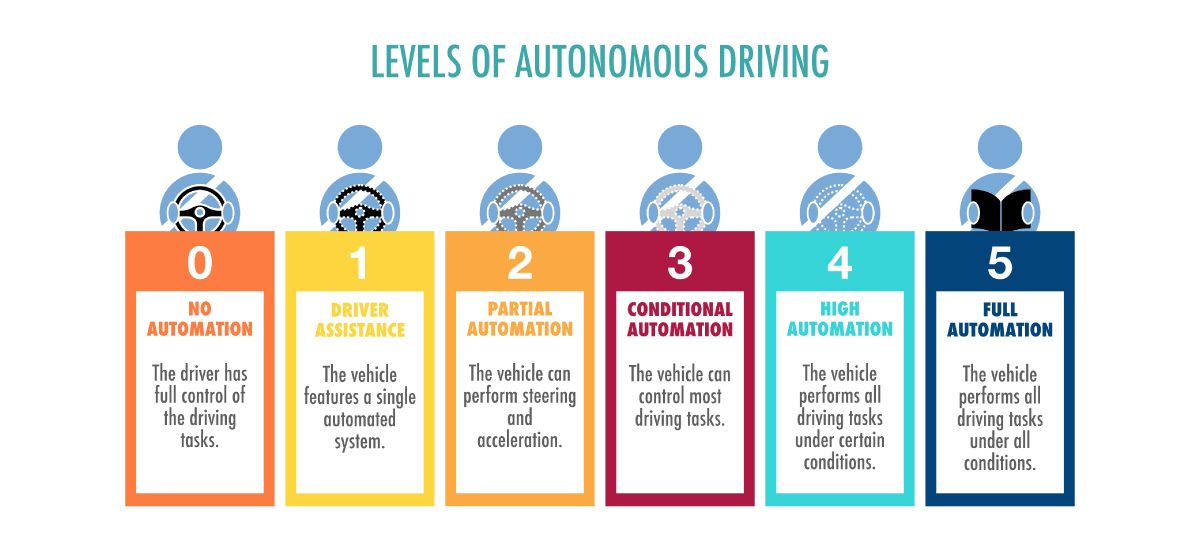
vc2fdlevels

And the first Level 3 system was approved for production only last year — a far cry from the dream of driverless reality by early 2020s. Some even suggest it’s now time to throw in the towel, and that “self-driving cars aren’t going to happen” and it’s better to focus on developing public transport.

Still, despite all the warnings and classifications, drivers would assume that they can blindly rely on their cars for driving, while busying himself with… playing patty-cake, cards, or even reading books. Some of the actual accidents involving partially autonomous vehicles also reportedly saw people watching TV and taking naps at the wheel.

Conclusion

The fascination with generative AI, much like the allure of virtual reality and the dream of autonomous vehicles, reflects our quest for technological utopias. Yet, as history has shown, the journey from groundbreaking innovation to reliable everyday utility is often longer and more complex than anticipated. Cutting-edge technology, no matter how advanced, typically requires a ripening period that can span years, if not decades. This allows for the refinement of technology, the establishment of safety protocols, and the alignment with societal needs and ethical standards.

AI’s mixed bag of a record is a reminder that the path to integrating new technologies into the fabric of daily life is a marathon, not a sprint. Whether these technologies will ever fully deliver on their promises remains to be seen, but one thing is certain: the balance between human oversight and technological advancement will continue to shape our future.


Gostou desta postagem?
AdGuard VPN AdGuard DNS AdGuard Mail AdGuard Wallet
O ecrã principal do AdGuard para Windows
O ecrã de proteção do AdGuard para Windows, que mostra as funcionalidades e definições de proteção
O ecrã Estatísticas do AdGuard para Windows, que mostra as estatísticas dos anúncios bloqueados e dos rastreadores
A tela de gerenciamento de aplicativos do AdGuard para Windows, mostrando as opções de gerenciamento de proteção para aplicativos instalados no dispositivo
21 482 21482 comentários de utilizador
Excelente!

AdGuard para Windows: bloqueador de anúncios para PC

O AdGuard para Windows é mais do que um bloqueador de anúncios. É uma ferramenta multifuncional que bloqueia anúncios, controla o acesso a sites perigosos, acelera o carregamento de páginas e protege as crianças de conteúdo inadequado
Ao fazer a transferência do programa, aceita os termos do Contrato de licença
Microsoft Store
Ao fazer a transferência do programa, aceita os termos do Contrato de licença
AdGuard para Windows v8.0, 14 dias período de teste
A tela principal do AdGuard para Mac
O ecrã do Modo Invisível do AdGuard para Mac
21 482 21482 comentários de utilizador
Excelente!

AdGuard para Mac: bloqueador de anúncios em todo o sistema

O AdGuard para Mac é um bloqueador de anúncios único, desenvolvido pensando no macOS. Além de protegê-lo contra anúncios irritantes em navegadores e aplicativos, ele o protege contra rastreamento, phishing e fraudes
Ao fazer a transferência do programa, aceita os termos do Contrato de licença
Ler mais
AdGuard para Mac v2.19, 14 dias período de teste
A tela principal do AdGuard para Android
O ecrã de proteção contra rastreio do AdGuard para Android
A tela de gerenciamento de aplicativos do AdGuard para Android, mostrando as opções de gerenciamento de proteção para aplicativos instalados no dispositivo
A tela de Estatísticas do AdGuard para Android, mostrando estatísticas de anúncios e rastreadores bloqueados
A tela principal do navegador privado do AdGuard para Android
O código QR para baixar o AdGuard para Android
21 482 21482 comentários de utilizador
Excelente!

AdGuard para Android: ad blocker para todas as apps

Bloqueia anúncios e rastreadores em todos os navegadores, jogos e outras aplicações. Protege a sua privacidade e permite-lhe controlar a forma como as suas aplicações utilizam a Internet. Instalado através de APK
Ao fazer a transferência do programa, aceita os termos do Contrato de licença
Ler mais
Scan para descarregar
Utilize qualquer leitor de código QR disponível no seu dispositivo
AdGuard para Android v4.14, 14 dias período de teste
A tela principal do AdGuard para iOS
O ecrã de proteção do AdGuard para iOS, que mostra as funcionalidades e definições de proteção
O ecrã Estatísticas do AdGuard para iOS, que mostra as estatísticas dos anúncios bloqueados e dos rastreadores
O código QR para descarregar o AdGuard para iOS
21 482 21482 comentários de utilizador
Excelente!

AdGuard para iOS: ad blocker além do Safari

O melhor bloqueador de anúncios para iOS, para iPhone e iPad. O AdGuard elimina todos os tipos de anúncios e rastreadores no Safari e protege a sua privacidade em todas as aplicações ao nível do DNS
Ao fazer a transferência do programa, aceita os termos do Contrato de licença
Ler mais
Scan para descarregar
Utilize qualquer leitor de código QR disponível no seu dispositivo
AdGuard para iOS v4.5
O ecrã principal do bloqueador de conteúdo AdGuard
O ecrã Filtros do bloqueador de conteúdo AdGuard
O ecrã de Configurações do bloqueador de conteúdo AdGuard
21 482 21482 comentários de utilizador
Excelente!

Bloqueador de conteúdo do AdGuard

O AdGuard Content Blocker elimina todos os tipos de anúncios em navegadores móveis que suportam a tecnologia de bloqueio de conteúdos, nomeadamente o Samsung Internet e o Yandex Browser. As suas funcionalidades são limitadas em comparação com o AdGuard para Android, mas é gratuito, fácil de instalar e eficiente
Ao fazer a transferência do programa, aceita os termos do Contrato de licença
Ler mais
Bloqueador de conteúdo do AdGuard v2.8
A tela principal da Extensão de Navegador AdGuard
Tela de proteção contra rastreamento da extensão de navegador AdGuard
21 482 21482 comentários de utilizador
Excelente!

Extensão de navegador AdGuard

O AdGuard tem a extensão de bloqueio de anúncios mais leve, rápida e que efectivamente bloqueia todos os tipos de anúncios em todas as páginas da internet! Escolha o AdGuard para o navegador que usa e obtenha uma navegação gratuita, rápida e segura.
Instalar
Ao fazer a transferência do programa, aceita os termos do Contrato de licença
Instalar
Ao fazer a transferência do programa, aceita os termos do Contrato de licença
Instalar
Ao fazer a transferência do programa, aceita os termos do Contrato de licença
Instalar
Ao fazer a transferência do programa, aceita os termos do Contrato de licença
Instalar
Ao fazer a transferência do programa, aceita os termos do Contrato de licença
Ler mais
Instalar
Ao fazer a transferência do programa, aceita os termos do Contrato de licença
Ler mais
Extensão de navegador AdGuard v5.5
A tela principal do Assistente do AdGuard
21 482 21482 comentários de utilizador
Excelente!

Assistente do AdGuard

Uma extensão para navegadores complementar para aplicações de ambiente de trabalho AdGuard. Permite-lhe bloquear itens personalizados em websites, adicionar websites à lista de permissões e enviar relatórios de erro diretamente a partir do seu navegador
Assistente do AdGuard v1.4
21 482 21482 comentários de utilizador
Excelente!

AdGuard Home

O AdGuard Home é uma solução baseada na rede para bloquear anúncios e rastreadores. Instale-o uma vez no seu router para proteger todos os dispositivos da sua rede doméstica, sem necessidade de software cliente adicional. Isto é especialmente importante para diversos dispositivos inteligente (Internet of Things) que representam frequentemente uma ameaça à sua privacidade
AdGuard Home v0.107
A tela principal do AdGuard Pro para iOS
A tela de Proteção do AdGuard Pro para iOS, mostrando os recursos e as configurações de proteção
A tela de Estatísticas do AdGuard Pro para iOS, mostrando estatísticas de anúncios e rastreadores bloqueados
21 482 21482 comentários de utilizador
Excelente!

AdGuard Pro para iOS

AdGuard Pro para iOS vem com todas as características avançadas de bloqueio de anúncios ativadas. Oferece as mesmas ferramentas da versão paga do AdGuard para iOS. Destaca-se ao bloquear anúncios no Safari e permite customizar as definições de DNS para customizar a sua proteção. Bloqueia anúncios em navegadores e aplicações, protege os seus filhos de conteúdo impróprio e mantém os seus dados pessoais seguros
Ao fazer a transferência do programa, aceita os termos do Contrato de licença
Ler mais
AdGuard Pro para iOS v4.5
A tela principal do AdGuard Mini para Mac
A tela de proteção do Safari do AdGuard Mini para Mac
A tela de criação de regra do AdGuard Mini para Mac
21 482 21482 comentários de utilizador
Excelente!

AdGuard Mini para Mac — bloqueador de anúncios para Safari

O AdGuard Mini para Mac é um poderoso bloqueador de anúncios para o Safari. Esta aplicação leve remove anúncios, bloqueia rastreadores e acelera o carregamento de páginas. Ajuda-o a navegar na Web no Safari sem distrações e a manter os seus dados privados
Instalar
Ao fazer a transferência do programa, aceita os termos do Contrato de licença
Ler mais
AdGuard Mini para Mac v2.3
O ecrã principal do AdGuard para Android TV com a proteção activada
O ecrã de bloqueio de anúncios do AdGuard para Android TV, mostrando as suas funcionalidades e definições
O ecrã Definições do AdGuard para Android TV
O ecrã de gestão de aplicações do AdGuard para Android TV, que mostra as aplicações onde os anúncios e os rastreadores estão bloqueados
21 482 21482 comentários de utilizador
Excelente!

AdGuard para Android TV

O AdGuard para Android TV é a única aplicação que bloqueia anúncios, protege a sua privacidade e actua como uma firewall para a sua smart TV. Receba avisos sobre ameaças da Web, utilize DNS seguro e aproveita o tráfego encriptado. Relaxe e mergulhe nas suas séries favoritas com segurança de alto nível e zero anúncios!
AdGuard para Android TV v4.14, 14 dias período de teste
A mascote do AdGuard, Agnar, segurando o pinguim do Linux
21 482 21482 comentários de utilizador
Excelente!

AdGuard para Linux

O AdGuard para Linux é o primeiro bloqueador de anúncios do mundo para todo o sistema Linux. Bloqueie anúncios e rastreadores no nível do dispositivo, selecione entre filtros pré-instalados ou adicione seus próprios filtros, tudo através da interface de linha de comando
AdGuard para Linux v1.4
21 482 21482 comentários de utilizador
Excelente!

AdGuard Temp Mail

Um gerador gratuito de endereços de e-mail temporários que o mantém anónimo e protege a sua privacidade. Sem spam na sua caixa de entrada principal!

21 482 21482 comentários de utilizador
Excelente!

AdGuard VPN

75 locais em todo o mundo

Aceder a qualquer conteúdo

Encriptação de alto nível

Nenhuma política de registo

Conexão mais rápida

Assistência 24/7

Experimente gratuitamente
Ao fazer a transferência do programa, aceita os termos do Contrato de licença
Ler mais
21 482 21482 comentários de utilizador
Excelente!

AdGuard DNS

O AdGuard DNS é uma solução alternativa para bloqueio de anúncios, protecção de privacidade e controlo parental. Fácil de configurar e de usar, oferece uma protecção mínima necessária contra anúncios, monitorizadores e phishing. Independentemente da plataforma e dispositivo que estiver a usar.

21 482 21482 comentários de utilizador
Excelente!

AdGuard Mail

Proteja a sua identidade, evite o spam e mantenha a sua caixa de entrada segura com os nossos aliases e endereços de correio eletrónico temporários. Desfrute do nosso serviço gratuito de reencaminhamento de correio eletrónico e das nossas aplicações para todos os sistemas operativos
21 482 21482 comentários de utilizador
Excelente!

AdGuard Wallet

Uma carteira de criptomoedas segura e privada que lhe dá controlo total sobre os seus ativos. Faça a gestão de múltiplas carteiras e descubra milhares de criptomoedas para armazenar, enviar e trocar
A transferir o AdGuard Clique no botão indicado pela seta para iniciar a instalação Seleccione "Abrir" e clique em "OK", depois espere que o ficheiro seja transferido. Na janela aberta, arraste o ícone AdGuard para a pasta "Aplicações". Obrigado por escolher o AdGuard! Seleccione "Abrir" e clique em "OK", depois espere que o ficheiro seja transferido. Na janela aberta, clique em "Instalar". Obrigado por escolher o AdGuard!
Instale o AdGuard no seu dispositivo móvel