Can you get hacked by opening an email?
Almost everyone today has their own email account, and many have more than one. People use email addresses to create accounts, to register in and to log into various services, and for personal and professional correspondence. Often, email is listed as one of the contact options in social networking profiles and on various websites. This is why getting your email address compromised by scammers can lead to very severe consequences.
Good news is, simply opening an email is often not very dangerous, however it may reveal some information such as your IP address or location, potentially leading to more serious attacks such as doxxing or targeted phishing. But the real threat comes from phishing links included in scam emails and malware-infected attachments. These can lead to compromised personal information or viruses getting onto your device, so it is important to be careful about what you click on or download from emails.
In this article, we'll explore whether you can get hacked by opening an email, the risks associated with interacting with emails, and how to protect yourself from scammers.
The dangers of email attachments
Sending spam with malicious attachments is a very popular way to spread malware and infect people's computers on the Internet. Many years ago, it was laughably easy to catch a virus via email — all you had to do was open the email. The thing is, in those years you could use javascript in email, and mail clients had vulnerabilities that could be used to gain access to the user's PC. You could also get a virus by viewing mail in a browser — thanks to the same scripts.
But now all that has changed. It is highly unlikely to catch a virus simply by opening an email or visiting a website. Major email services use antivirus software that scans emails for phishing and attachments for malicious code. If you use a modern browser or mail client, it is virtually impossible for a simple email to infect your device with a virus.
But emails may include attachments that can contain viruses. In this case, the email is the carrier of malware to the user's device. Popular services scan attachments for viruses, but any antivirus can fail. Email attachments should be treated with caution. We will discuss the types of malicious attachments that can be found in emails later in this article.
Types of malicious email attachments
Email attachments such as ZIP and RAR archives, Microsoft Office documents, PDF files, and ISO and IMG disk images pose a significant security risk. Attackers and spammers often use these formats to distribute malware and conduct cyber attacks.
ZIP and RAR archives
ZIP and RAR archives are often used to compress data to make it easier to transfer. However, attackers often send archives that contain malware, such as Trojans or spyware. The main threat posed by these archives is that they can disguise malicious files as innocent documents or applications. A user who unzips the archive and opens a file inside can silently install malware on their device. Some archives can be password-protected, making it difficult for antivirus programs to automatically scan their contents and giving the recipient a false sense of security.
Microsoft Office documents
Microsoft Office files are popular with cybercriminals, especially Word documents (.doc, .docx), Excel spreadsheets (.xls, .xlsx, .xlsm), and presentations (.ppt, .pptx, .pps, .ppsx) and templates (.pot, .potx, .xlt, .xltx). These files may contain embedded macros — small programs that run directly within the file. Attackers use them as scripts to download malware, for example. Most often, these attachments are targeted at office workers. They are disguised as contracts, invoices, tax notices, and urgent messages from management.
PDF files
While many are already aware of the risks associated with macros in Microsoft Office documents, the dangers lurking in PDF files often go unnoticed. Malicious code can also be embedded in PDF documents because the format supports the creation and execution of JavaScript scripts.
In addition, scammers often use PDF documents to place phishing links. For example, in one spam campaign, scammers tried to convince users to go to a "protected view" page that required them to log in to their American Express account. As a result, the user's credentials ended up in the hands of the scammers.
ISO and IMG
While not as common as other types of attachments, ISO and IMG files have recently attracted more attention from cybercriminals. These files are disk images that are essentially virtual copies of CDs, DVDs, and other storage media.
Attackers used such attachments to distribute malware, such as the Agent Tesla Trojan designed to steal login credentials. The disk image contained a malicious executable that, when opened, activated and installed spyware on the victim's device. Interestingly, in some cases the criminals used two types of attachments at once — ISO and DOC — apparently to increase the reliability of the attack.
File extension masking
Even if the attachment is a file with an extension not listed above, it's important to remain cautious to avoid the risk of infection. Seemingly innocuous file types can still be used to hide malware. Sometimes attackers can change the file extension to hide the true file type.
For example: a file containing malicious code may be named "image.jpg" (with a .jpg extension), but may actually be an executable file (such as .exe). A text file may be named "document.pdf" but actually be a script that can run malware. So never let your guard down and avoid opening any files that look suspicious.
How to protect your email from malicious attachments?
As with many things in life, the best defense against malware infection is prophylaxis. If you don’t download any viruses, you won’t need to fight them later. To ensure your safety, follow these guidelines:
Don't open suspicious attachments. Even if you know the sender, if you unexpectedly receive an email with a random .exe or other potentially dangerous attachment, it's best not to open it. Even with seemingly more innocuous file attachments like PDFs, think twice before downloading and opening them (especially if your PDF reader is not up to date).
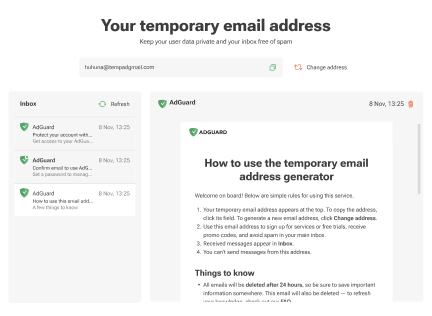
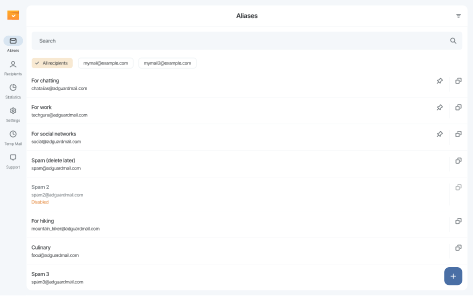
Use a disposable email for risky sign-ups. To avoid getting spam and malicious attachments in your main inbox, never share your personal email address on platforms you don’t fully trust. Instead, generate a temporary or disposable email address to register safely.
Update your email client, web browser, and operating system regularly. Software updates are important because attackers are constantly looking for vulnerabilities to exploit. Installing updates will help close these vulnerabilities and protect your system. Using outdated versions of browsers and email clients can compromise your security.
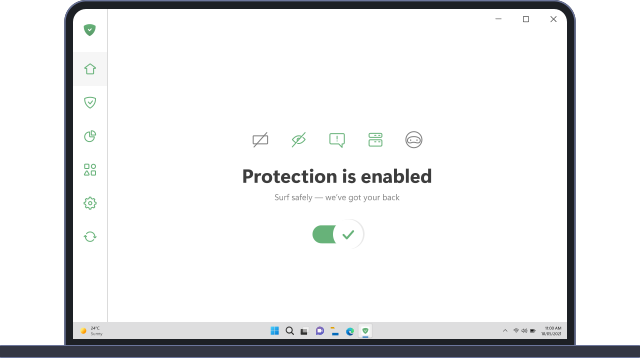
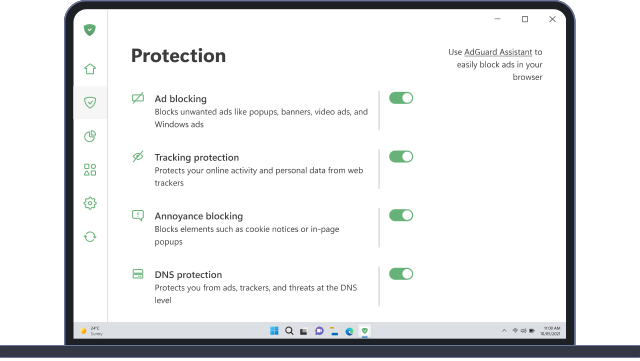
Use antivirus software. Antivirus programs play a key role in protecting your operating system. They can help you avoid the consequences of software vulnerabilities that would allow malware to run without your knowledge, or mitigate the damage if a virus manages to find its way onto your device.
Why are phishing links dangerous?
Another potential threat source in emails, aside from attachments, are phishing links. They can take you to bogus websites where attackers will try to trick you into sharing your personal information, such as passwords or banking details. But even just clicking on such a link can in some cases download malware onto your computer, giving attackers access to your devices and information.
Phishing differs from other forms of hacking in that criminals actively exploit human emotions such as curiosity and fear, often backed up by information about the victim gathered from open sources. Phishing attacks can be carried out through email, SMS, instant messengers, and social networks. The attack usually looks like this: the victim receives a message or a letter allegedly from a trusted service, such as their bank, Internet provider, or a store where they recently made a purchase. The message threatens to block their account or cause other problems, urging them to provide or update personal information, which then falls right into the attacker’s hands.
How to find out if you have followed a phishing link?
Avoiding all links in emails is not a practical solution. So how to find out if the site is fake? Here are some signs that may point towards the website being a phishing one:
No SSL certificate. A Secure Sockets Layer (SSL) certificate is a standard security technology that provides an encrypted connection between a web server and a browser. It ensures the privacy of all information transmitted between these two components. URLs of websites that use SSL certificates usually begin with "https://" instead of "http://". To check if a website has an SSL certificate, you can look in your browser's address bar — there should be a lock icon next to the URL. Depending on your browser, the certificate information may be in different places. The absence of an SSL certificate on a site, especially on pages that require you to enter personal information, may indicate that the site is insecure and vulnerable to data phishing.
No additional pages. Phishing sites are usually single-page resources or have a limited number of pages, while legitimate sites usually have many pages. The main goal of such sites is to get the user to enter their confidential information immediately. A lack of additional pages may indicate that the site was created solely for the purpose of phishing.
Low-quality content or spelling mistakes. Phishing sites are often characterized by low-quality content that is riddled with spelling and grammatical errors. The design of such resources may look unprofessional, with unusual layouts, inappropriate fonts, or images that do not load properly. These flaws occur because cybercriminals usually prioritize speed and functionality over aesthetics. If you encounter low-quality content or strange design choices, it may be a sign that the site is fraudulent.
Lack of contact information. Legitimate websites typically offer users a variety of ways to contact them, including email addresses, phone numbers, physical addresses, and contact forms. In contrast, phishing sites often do not provide this information, making it difficult for users to verify their authenticity.
Request for personal information. One of the most common strategies used by phishing sites is to ask for sensitive personal information such as your name, address, or bank account. Legitimate sites, especially those belonging to well-known companies, will never ask for this information without your permission.
Pop-up windows demanding immediate action. Phishing sites often use pop-ups to get users to make quick decisions, such as entering personal information or clicking on links. These pop-ups may inform you that your account has been compromised, that you have won a contest, or that you need to take immediate action to avoid negative consequences. Legitimate websites rarely, if ever, use these methods.
What to do if you open a phishing email?
Luckily, just opening a phishing email is practically harmless — Nigerian princes have become a meme for a reason. What’s worse is actually following the phishing links that may be inside that email. If you think you clicked on a phishing link and ended up on a phishing site, follow these steps:
Disconnect your device from the Internet. The first step after clicking on a phishing link is to disconnect your device from the Internet. This will help prevent the malware from being fully downloaded to your device and reduce the risk of infecting other devices that may be connected to the same network.
Use antivirus software to scan your device. Antivirus software is a program installed on your computer or mobile device that protects you from known malware and viruses by detecting and eliminating them. It is best to have antivirus software already installed on your devices, otherwise you will need to download it, which requires an Internet connection. Before reconnecting to the network, make sure that no other devices are connected and that your router software is up to date.
Monitor your online accounts for suspicious activity. Although antivirus programs can remove malware from your device, there is always a risk that an attacker could have performed some activity undetected. Regularly monitoring your accounts will help you quickly identify any anomalies or unusual transactions. The sooner you spot suspicious activity, the sooner you can take action. It is also a good idea to place a fraud alert with one of the credit reporting agencies to prevent attackers from accessing your credit and opening accounts in your name.
If you notice any suspicious activity on your accounts, you should immediately change your passwords to stronger ones. To ensure that your passwords follow best practices for password creation, we recommend using a password generator. In addition, if possible, enable multi-factor authentication for your accounts, which provides an extra layer of security by preventing logins without additional verification.
FAQ
Can I really get hacked just by opening an email?
No, simply opening an email is usually not dangerous. Modern email services and browsers block most harmful scripts. However, emails can still reveal limited information, such as your IP address or location, to the sender.
What are the main dangers hidden in emails?
The real risks come from malicious attachments and phishing links. Clicking links or downloading infected files can result in installing malware or exposing your personal data to theft.
How can I recognize a suspicious email attachment?
Look for unexpected or oddly named files, password-protected archives, or files with double extensions (e.g., “photo.jpg.exe”). Always be skeptical of unexpected attachments, even from known senders.
Which email attachments are the most dangerous?
Be cautious with archives in attachments, like ZIP or RAR files. Microsoft Office files can also indicate danger, especially Word documents (.doc, .docx), Excel spreadsheets (.xls, .xlsx, .xlsm), PowerPoint presentations (.ppt, .pptx, .pps, .ppsx), and templates (.pot, .potx, .xlt, .xltx). Among other types of files often used to spread malware are PDF, ISO, EXE and IMG files. All in all, it’s best not to open or download any attachments unless you are 100% sure about the sender, and even then you should exercise caution.
What should I do to protect myself from malicious attachments?
Don’t open or download suspicious files.
Keep your email client, browser, and OS updated.
Use reliable antivirus software and scan attachments before opening.
Why are phishing links dangerous?
Phishing links lead to fake websites that mimic real ones to steal your credentials or banking information. Sometimes, simply clicking the link can download malware onto your device.
How can I tell if a website is a phishing site?
Watch for these red flags:
No SSL certificate (“http” instead of “https”)
Poor grammar or design
No contact information
Pop-up windows demanding immediate action
Requests for personal or financial information
Suspicious domain names, or domains that mimic legitimate sites but with small differences
What should I do if I accidentally click a phishing link?
Disconnect from the internet immediately.
Run a full antivirus scan.
Monitor your online accounts for suspicious activity and change your passwords.
Enable multi-factor authentication for extra security.
How can I stay safe when using email?
Don’t trust unknown senders, avoid clicking on suspicious links, use strong passwords, enable two-factor authentication, and keep your software up to date.
Conclusion
Can you get hacked by opening an email? Not really. Does engaging with its content, particularly through actions such as clicking on links or downloading attachments, increase that risk? Yes, absolutely. Cybercriminals are using advanced strategies to exploit vulnerabilities in various file formats and embedded hyperlinks, so caution when interacting with them is essential. By recognizing potential threats and following safe email practices, such as avoiding questionable links and ensuring that your software is regularly updated, you can significantly reduce the likelihood of becoming a victim of an email-related cyberattack.