Google's new feature, ad-free Instagram app and Meta's tracking issue. AdGuard’s Digest
In this edition of AdGuard’s digest: Google helps remove personal data from its own search, an ad-free Instagram clone feels the wrath of Big Tech, Meta works to outfox privacy protections, Amazon attempts to make surveillance family-friendly, as Chrome delays the transition to Manifest V3.
Google makes it easier to hide personal info from search
A new feature that Google started rolling out in late September makes it much easier for users to request the removal of their personal information from the search results.
While before you had to jump through hoops to file a removal request for information such as home address, phone number or email from the Google search, now you will only need to tap a three-dot menu that appears alongside each search result.
Once you open the tab, you’ll see the new option called “Remove result.” From there, Google will guide you through the submission process.
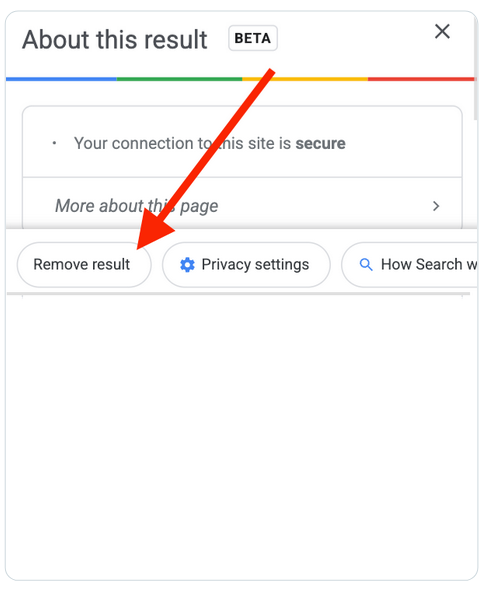
To monitor the progress of your removal requests, you can tap the new “Results about you” menu item under the profile avatar in your Google app. There you’ll see the complete list of requests and their statuses. The new feature has become available for some Android users in the US and Europe.
Starting next year, Google users will also be able to opt into alerts that the tech giant will send if their personal contact information pops up in the search results.

You should keep in mind, though, that Google erases information only from the search, meaning that it still might store it somewhere else. Google remembers everything. Besides, while your personal information will be harder to find, it will still remain on the web.
App that promised ad-free Instagram faces crackdown from Apple & Meta
Barely a day after the ad-free Instagram client OG app launched in the App Store, Apple yanked it over violation of Meta’s policy.
The app offered Instagram home feed without ads, suggested posts and made reels an opt-out feature.
Apple said that the app was pulled for accessing the Instagram content without permission, which may be true — developers acknowledged they reverse-engineered the Instagram API. They also apparently awoke a beast in Meta, which took personal revenge on the OG app team. The developers said that Meta not only banned them from Instagram, but also removed their personal Facebook profiles (not linked to the OG app).
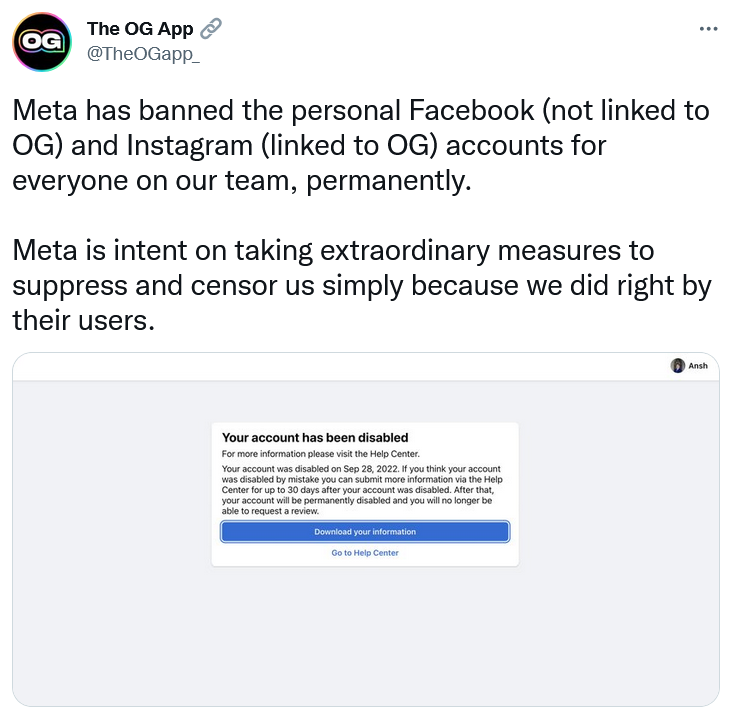
Such a vindictive move on Meta’s part is made possible due its dominant position on the market. At their core, Facebook and Instagram are two separate services, and Meta’s decision to punish individuals that wronged one service by denying them access to the other is a worrying precedent.
Data-grabbing exercise? Google account will be a must to use its fitness tracker
For users of the popular fitness tracker Fitbit logging into the app with a Google account will soon become the default option. Google bought the company for $2.1 billion in 2019, but Fitbit currently provides its products separately from the tech giant. You must have a Fitbit account to use the Fitbit app, though it’s possible to sign in with Google.
Fitbit has announced that it would launch Google accounts on Fitbit “sometime in 2023.” From then on, users will need a Google account to access new features and set up newly-released devices. Google plans to sunset support of Fitbit accounts in 2025, which automatically would make a Google account a must to use the fitness tracker.
Google promises “not to use Fitbit health and wellness data for Google Ads” — an acquisition requirement set by the European Commision. However, this data can be used for other Google services (e.g., Google Maps) if the user consents to it. Given that Google has repeatedly been caught tracking user data, such as location, without consent, there are doubts that Google makes good on its promise. After all, Google has to come up with new ways to keep tabs on users after Apple made it easy for them to opt out of third-party tracking and personalized adveritisng.
Apple’s privacy feature, Anti-Tracking Transparency (ATT), has brought losses on a bunch of big tech companies greedy for user data, including Meta. Speaking of which…
Facebook accused of skirting Apple’s anti-tracking protection
A pair of Facebook users have filed a lawsuit against Meta in California, accusing the company of continuing to track iOS users even after they specifically opted out of tracking. Instagram and Facebook apps for iOS open all third-party links and ads in a custom web browser as opposed to the default Safari browser. Research has shown that Meta injects code into each website users visit while in the in-app browser. This potentially allows Meta to track users’ online activity, making Apple’s privacy feature effectively pointless.

Photo: Joshua Hoehne/Unsplash
Meta says that it’s in compliance with Apple’s App Tracking Transparency (ATT), and that its in-app browser was designed to “respect users’ privacy choices”. Even if it turns out that Meta obeys the letter of ATT, it does not seem to obey it in spirit. On the other hand, it would be naive to think that big companies will give up their data-collecting aspirations at the first or even second sign of trouble, so we are likely to see more attempts from Big Tech to work around anti-tracking features in the future.
Amazon: Surveillance is cool! (it is not)
Amazon has caught flak for repurposing videos captured by its Ring doorbell and home security cameras for a family-friendly TV show. The show, called “Ring Nation,” premiered late September despite protests from privacy advocates. A petition to cancel the show earned support from dozens of rights groups and has racked up over 69,000 signatures.
The activists argue that the show is a deliberate attempt by Amazon to “normalize surveillance”. Amazon has defended “Ring Nation”, noting that it asks for permission to use the footage from anyone caught on camera before airing it.
Privacy advocates’ anger is understandable given that Amazon is known as a de-facto enabler of the surveillance state. We previously wrote about how Amazon-owned Ring allows police to access private user videodata without consent or a warrant in case of an “emergency.” Under US law, companies may comply with warrantless requests for video footage, but they don’t have to. The fact that Ring chose to do so at its own volition is worrying, since it means that the interpretation of what constitutes an “emergency” rests with Amazon — a private company.
Delaying the inevitable: Google lets Manifest V2 extension live a bit longer
Chrome has extended by six months the deadline for ending support of the extensions built on the Manifest V2 platform. Since its launch two years ago, the new platform, Manifest V3, has courted criticism primarily for severely restricting the functionality of ad-blocking extensions.
Since January 2022, it became impossible to add new extensions based on Manifest V2 to the Chrome Web Store. Chrome previously said that it would discontinue support for Manifest 2 extensions for most users in January 2023. Now, Chrome has announced that it will extend the deadline to June 2023. For those using the Manifest V2 enterprise policy the old extensions would stop working in January 2024.
Chrome’s new timeline for phasing out Manifest V2 is not a sea change of its plans and AdGuard had never intended to wait till the last minute anyway. In a world first, we have already released an experimental ad blocking extension compatible with Manifest V3. It may have its limitations, but it will still protect you against trackers and adds rather well. We’ve discussed in detail what we did to comply with the new rules and how Manifest V3 will impact ad-blocking in our new article.