Paramètres
Cet article parle de AdGuard pour Windows, un bloqueur de contenus multifonctionnel qui protège votre appareil au niveau du système. To see how it works, download the AdGuard app.
Paramètres est la section qui nécessite un maximum d'attention. C'est ici que vous pouvez configurer l'application pour qu'elle réponde pleinement à vos exigences : bloque uniquement ce qui vous dérange, utilise le serveur DNS du fournisseur de confiance, supprime les cookies tiers, etc.
Paramètres généraux
Here you can set the language and theme (Dark or Light), enable AdGuard launching at system start-up and silent automatic updates, choose the update channel and filter update check interval. Les paramètres sont également l'endroit où aller si AdGuard pour Windows ne fonctionne pas correctement et si l'équipe d'assistance vous a demandé de collecter les journaux de débogage.
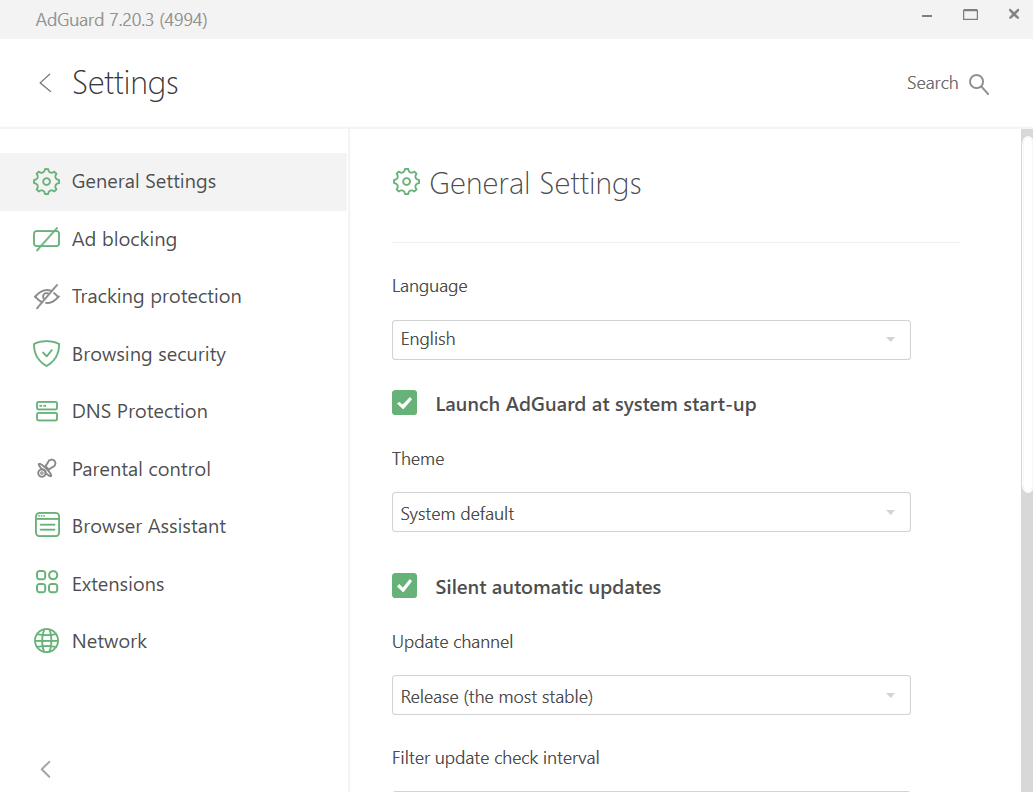
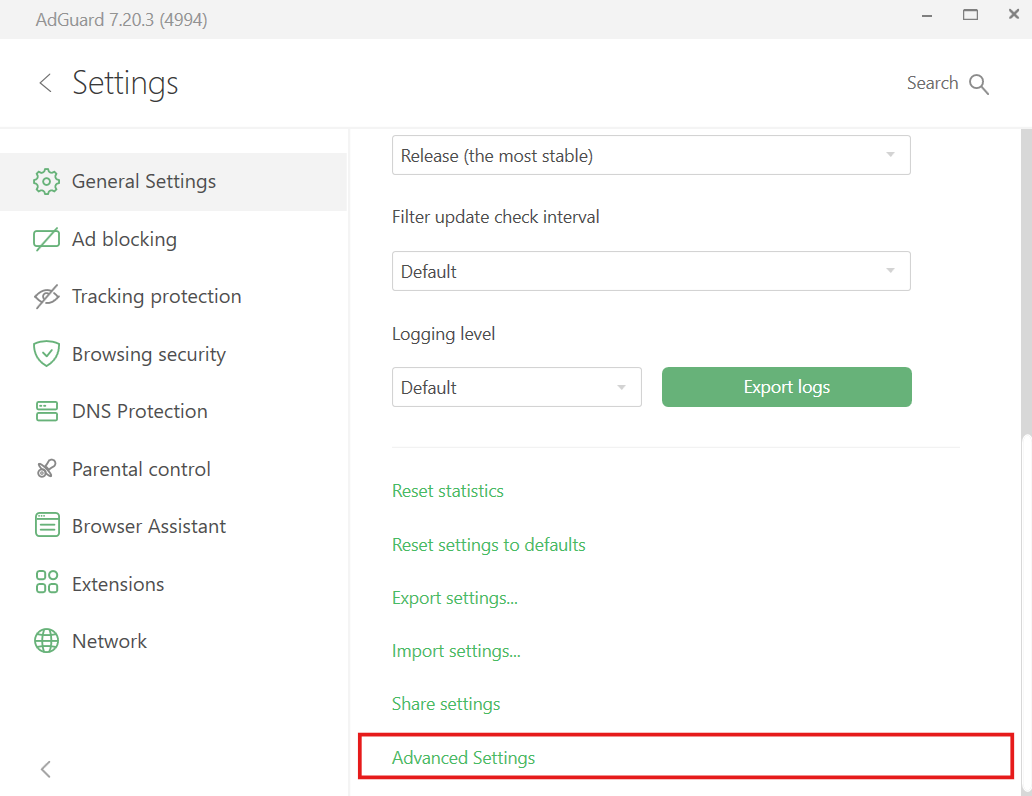
At the very bottom of the screen you will find Advanced Settings. Changing some of them mindlessly may potentially cause problems with AdGuard’s performance, break the Internet connection or compromise your security and privacy. That’s why we suggest you open this section only if you are sure of what you are doing or our support team has asked you about it. Si vous souhaitez savoir ce qui peut être configuré dans Paramètres avancés, lisez l'article dédié.
Ad blocking
C'est le module principal d'AdGuard pour Windows qui supprime les publicités des sites web que vous visitez et des applications installées sur votre appareil. Pour filtrer la publicité et les contenus menaçant la vie privée tels que les bannières, les pop-ups ou les traqueurs, AdGuard utilise des filtres différents — des groupes de règles ayant un objectif similaire écrites avec une [syntaxe spéciale](/general/ad-filtering/create-own- filtres). Pour comprendre ce que sont les filtres et comment ils fonctionnent, lisez cet article.
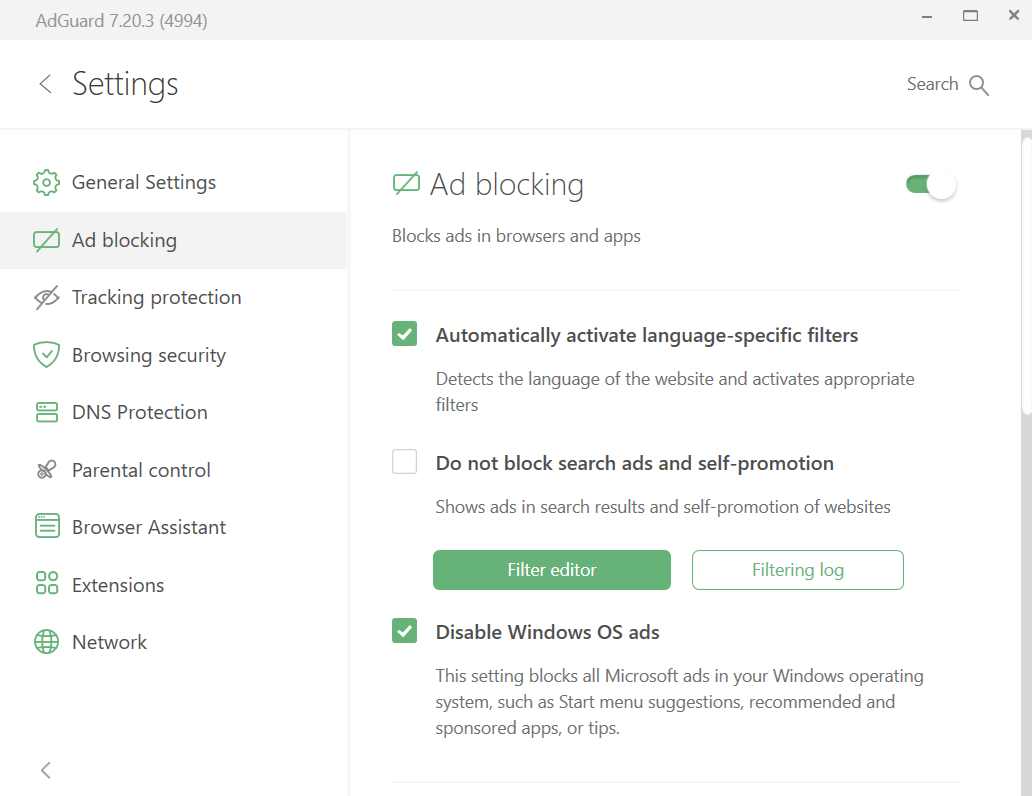
In the Ad blocking module you can:
- permettre l'activation automatique des filtres spécifiques à la langue,
- désactiver le blocage des annonces de recherche et auto-promotion,
- désactiver les publicités dans le menu Démarrer sous Windows 11,
- activer les filtres préinstallés tels que AdGuard Base filter,
- installer des filtres de la liste ou ajouter un filtre personnalisé en cliquant sur le bouton Ajouter un filtre,
- apporter des modifications aux groupes de règles existants à l'aide du bouton Éditeur de filtres,
- consulter toutes les requêtes envoyées par les navigateurs et les applications installées sur votre ordinateur en cliquant sur le bouton Journal de filtrage. À partir de là, vous pouvez également bloquer ou débloquer n'importe quelle requête en créant une règle personnalisée,
- composer un filtre à partir de vos propres règles écrites manuellement, importées ou créées avec l'extension AdGuard Assistant.
Avant de commencer à écrire vos propres règles manuellement, lisez notre guide détaillé sur la syntaxe.
Tracking protection
Many websites gather information about their visitors, such as their IP addresses, browser and operating system details, screen resolution, and the webpage from which the user came or was redirected. Some websites use cookies to mark and identify your browser, save your personal settings and preferences. This allows them to “recognize” you on your next visit. Tracking protection safeguards your personal information from these data- and statistics-gathering systems.
You can adjust the Tracking Protection settings as needed. For example, you can prevent websites from receiving the search request that you used to find them on the Internet, automatically delete third- and first-party cookies, and disable location sharing in your browser, to prevent tracking of your whereabouts.
Pour tout savoir sur la Protection contre le suivi et ses nombreuses options, lisez cet article.
Navigation sécurisée
Browsing security gives strong protection against malicious and phishing websites. No, AdGuard for Windows is not an antivirus. It will neither stop the download of a virus when it’s already started, nor delete the already existing ones. But it will warn you if you’re about to proceed to a website whose domain has been added to our “untrusted sites” database, or to download a file from such website. Vous trouverez plus d'informations sur le fonctionnement de ce module dans l'article dédié.
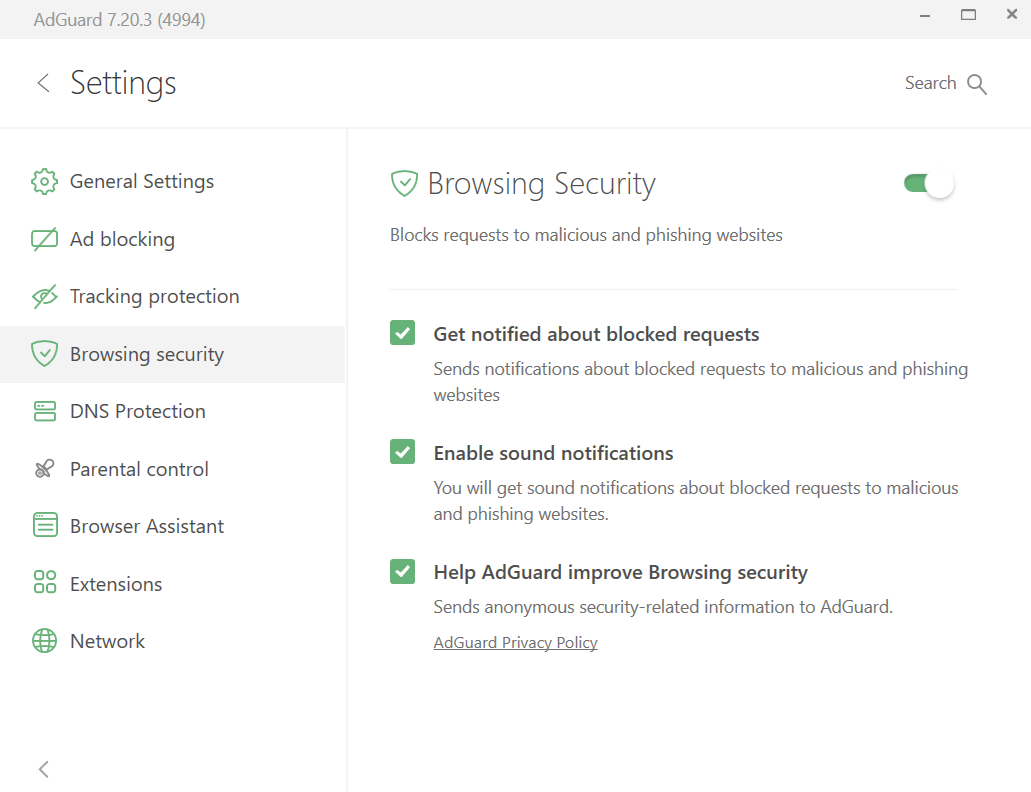
In this module, you can:
- enable notifications to block requests to malicious and phishing sites,
- activate sound notifications,
- agree to submit anonymous security-related info to the AdGuard server to help us keep the malicious and phishing websites database up to date.
Si vous souhaitez en savoir plus sur la Navigation sécurisée, lisez cet article.
DNS Protection
There are three significant reasons why you might want to explore the DNS protection settings. First, to avoid being tracked by your ISP. Chaque fois que vous ouvrez un site web, par exemple google.com, votre navigateur envoie une requête à un serveur DNS pour obtenir en retour l'adresse IP du site web. Usually, the DNS server belongs to your ISP, which allows them to track your online activity. Second, to encrypt you DNS traffic. And the third one is to block content on DNS level.
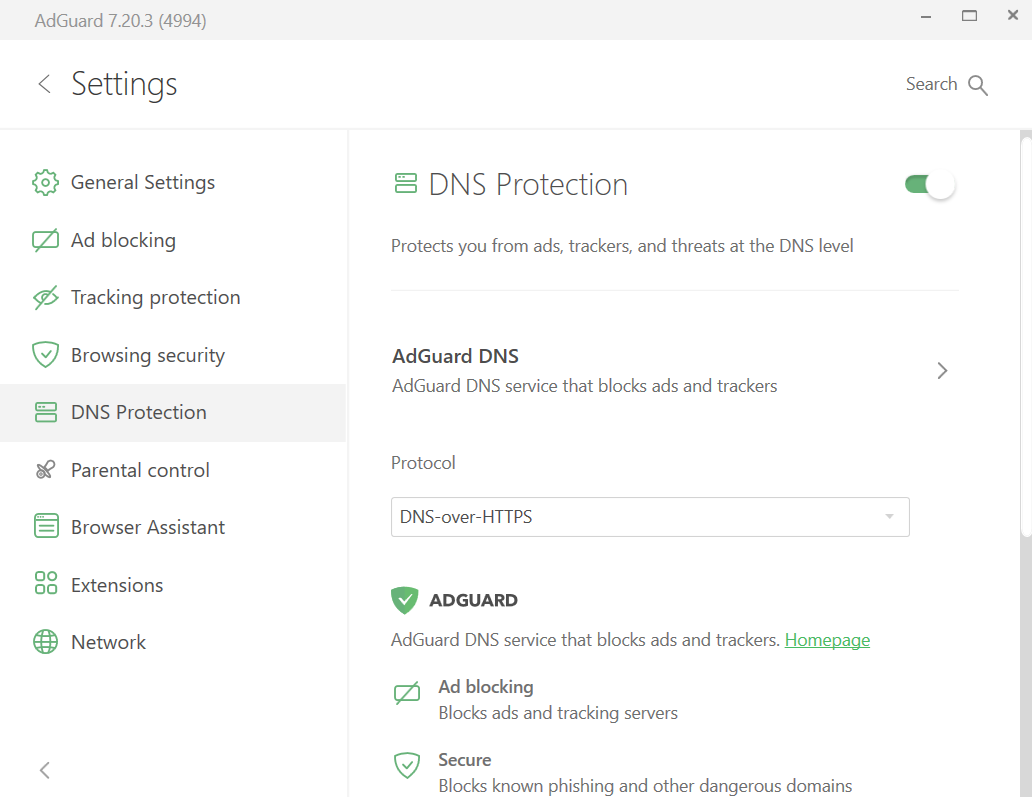
In the DNS protection module of AdGuard for Windows, you can choose DNS servers from known DNS providers, including AdGuard DNS, which blocks ads and trackers, AdGuard DNS Family Protection, which also blocks adult content, or AdGuard DNS Non-filtering, which provides a secure and reliable connection but doesn’t filter anything. You can even add custom DNS servers and rules using DNS rule syntax. If necessary, you can add DNS filters of your choice.
Starting with v7.20, you can also add filters by simply selecting them from a list of pre-built, trusted filters. They are grouped into four categories for your convenience:
- General: block ads and trackers
- Regional: block ads and trackers on language-specific websites
- Security: block phishing and unreliable websites
- Other: cover special use cases that don’t fit into the above categories

Contrôle parental
There are several websites to which access should be restricted from a PC used by children. This task is accomplished by Parental control.
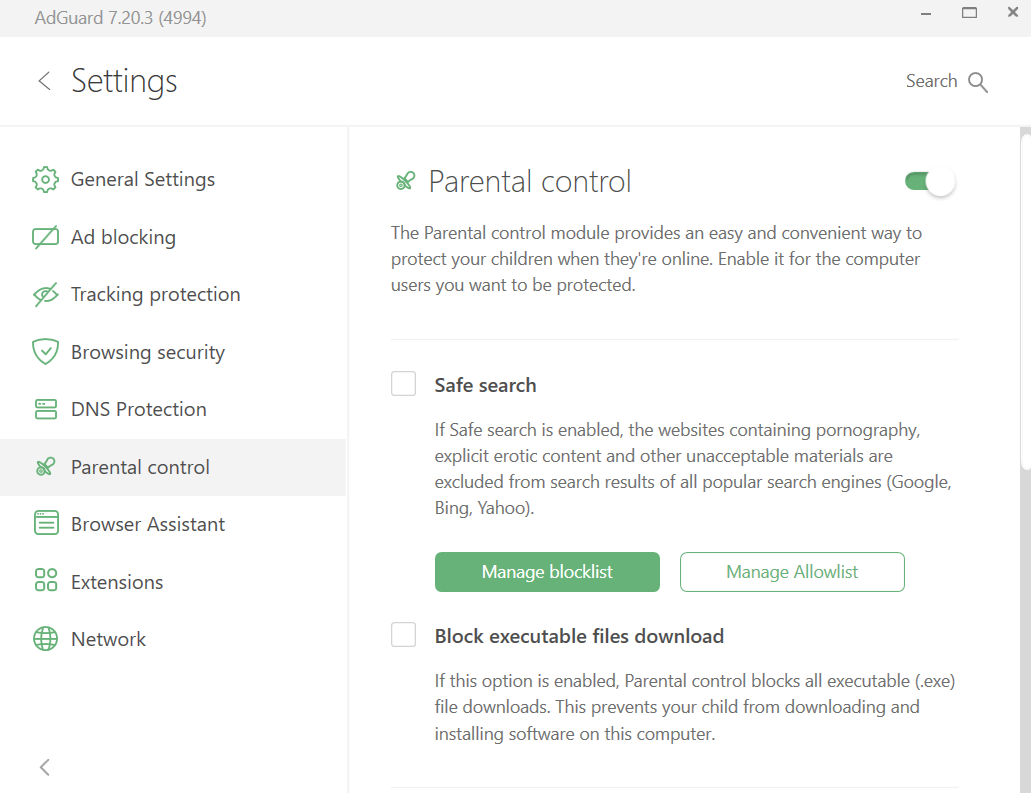
The module checks the contents of webpages opened in the browser and filters those with content undesirable for children: images and texts for adults, crude language, violence, drug propaganda, etc. Parental control settings are password-protected so that the child is not able to go round the restrictions. This module not only blocks directions to undesirable sites but can also delete the links that are inappropriate for children from the search results.
In the Parental control module you can enable the Safe search and manage the blocklist and the allowlist to customize how this option works. You can also check the Block executable files download box to prevent your child from downloading and installing software on the computer. There are two more options in the Parental control module: you can select a specific Windows user to be protected by Parental control and set a password to protect AdGuard settings from change.
Assistant de navigateur
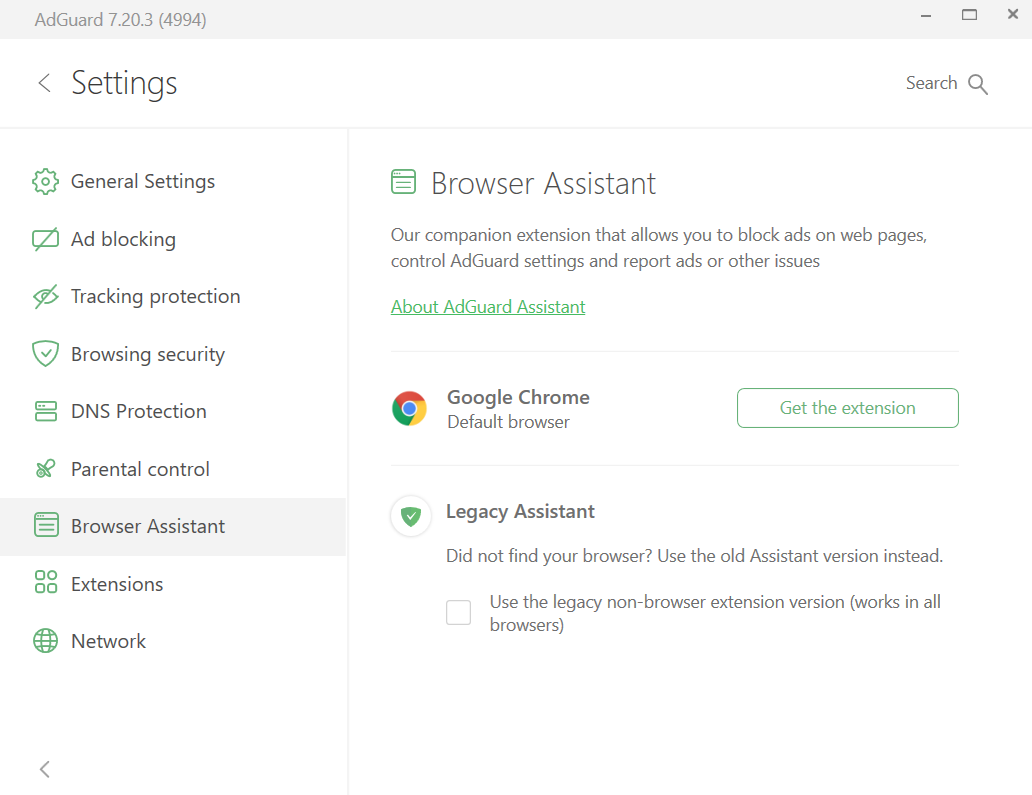
From this tab you can easily proceed to install AdGuard Browser Assistant, which primary function is to manage filtering directly from the browser. Nous avons expliqué plus en détail comment l'utiliser et que faire s'il n'y a pas d'Assistant de navigateur pour votre navigateur dans l'article séparé.