Installation
Dieser Artikel behandelt AdGuard für Windows, einem multifunktionalen Werbeblocker, der Ihr Gerät auf Systemebene schützt. Um zu sehen, wie es funktioniert, laden Sie die AdGuard-Appherunter.
Systemanforderungen
- OS version: Microsoft Windows 10 or higher
- RAM: at least 6 GB
- Processor: 2-core, 2.0 GHz (or faster)
- Free disk space: at least 4 GB
So installieren Sie AdGuard
-
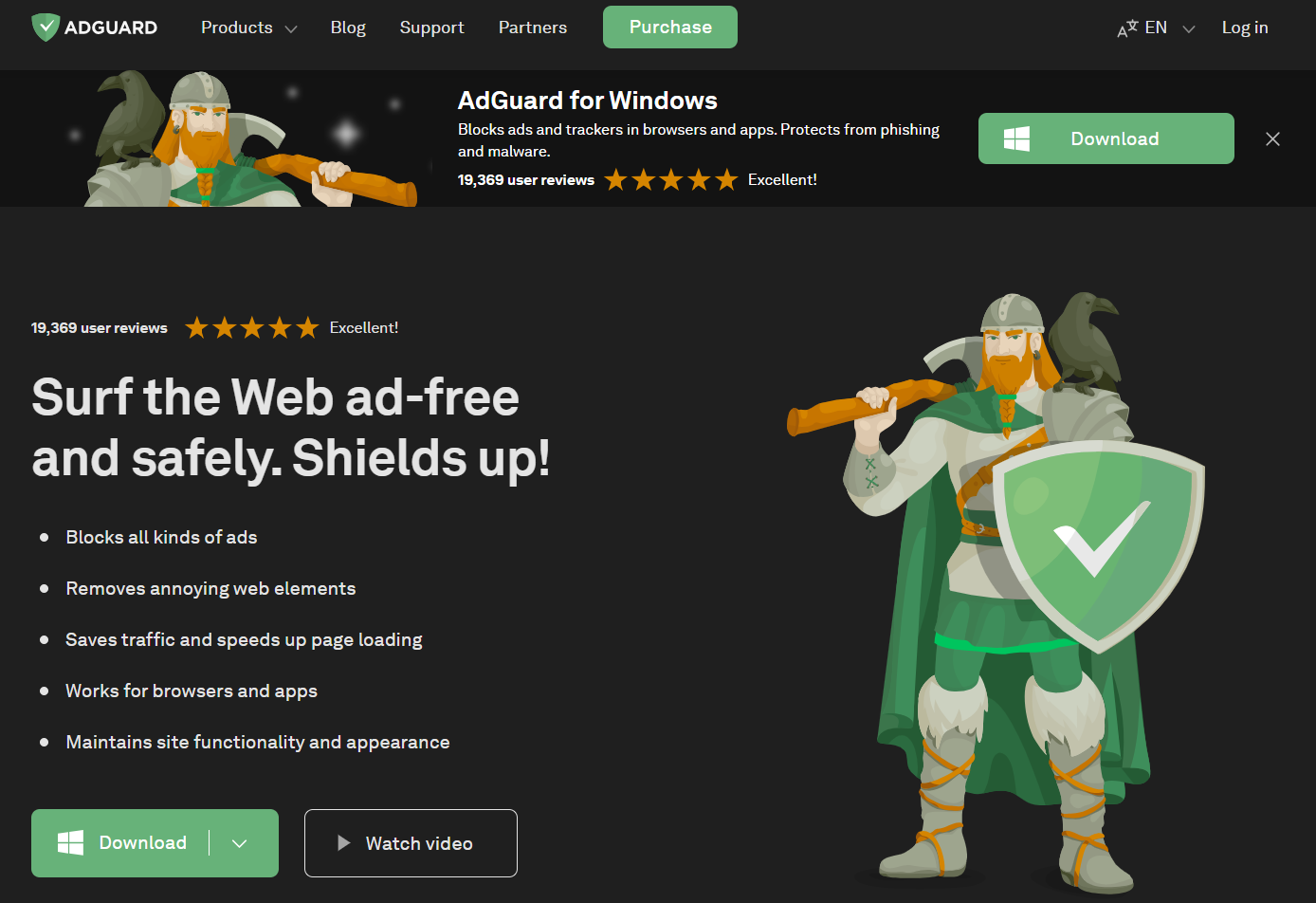
Öffnen Sie die AdGuard-Website und klicken Sie auf Herunterladen. You can also get the installer from the download page — the download will start automatically.
-
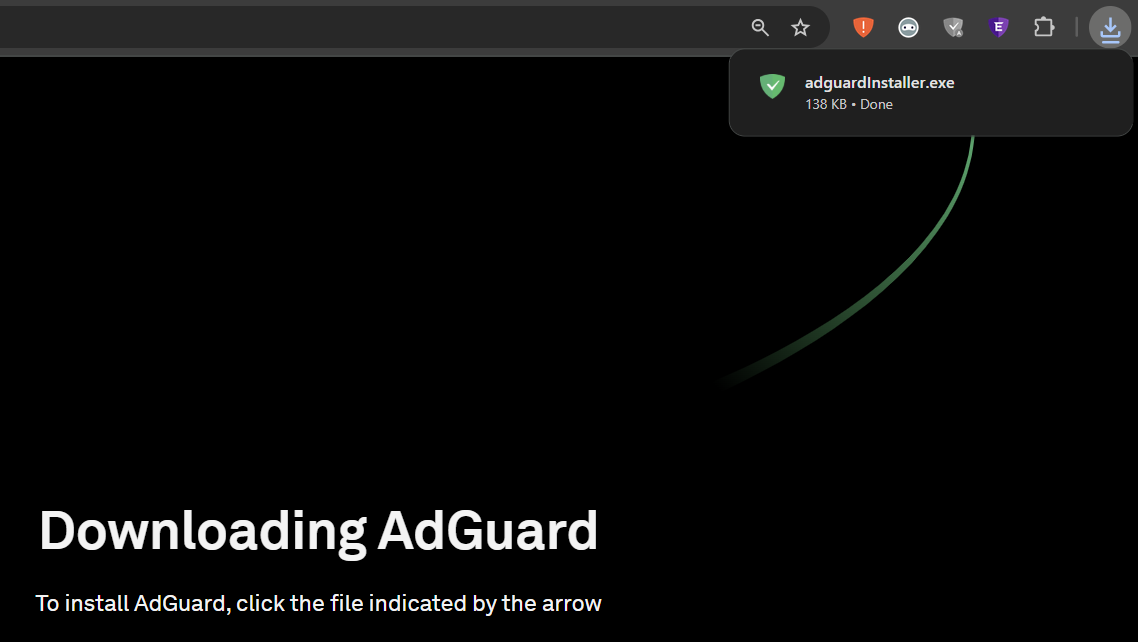
Sobald der Download abgeschlossen ist, öffnen Sie die Datei adguardInstaller.exe.
-
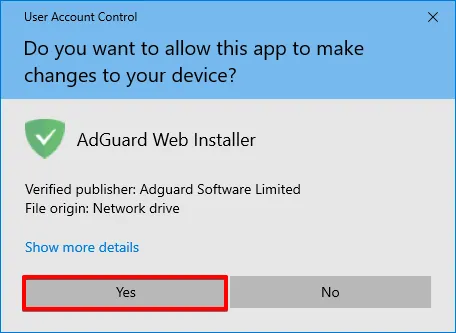
Es wird das Dialogfeld der Benutzerkontensteuerung angezeigt, in dem Sie aufgefordert werden, der App zu erlauben, Änderungen an Ihrem PC vorzunehmen. Klicken Sie auf Ja.
-
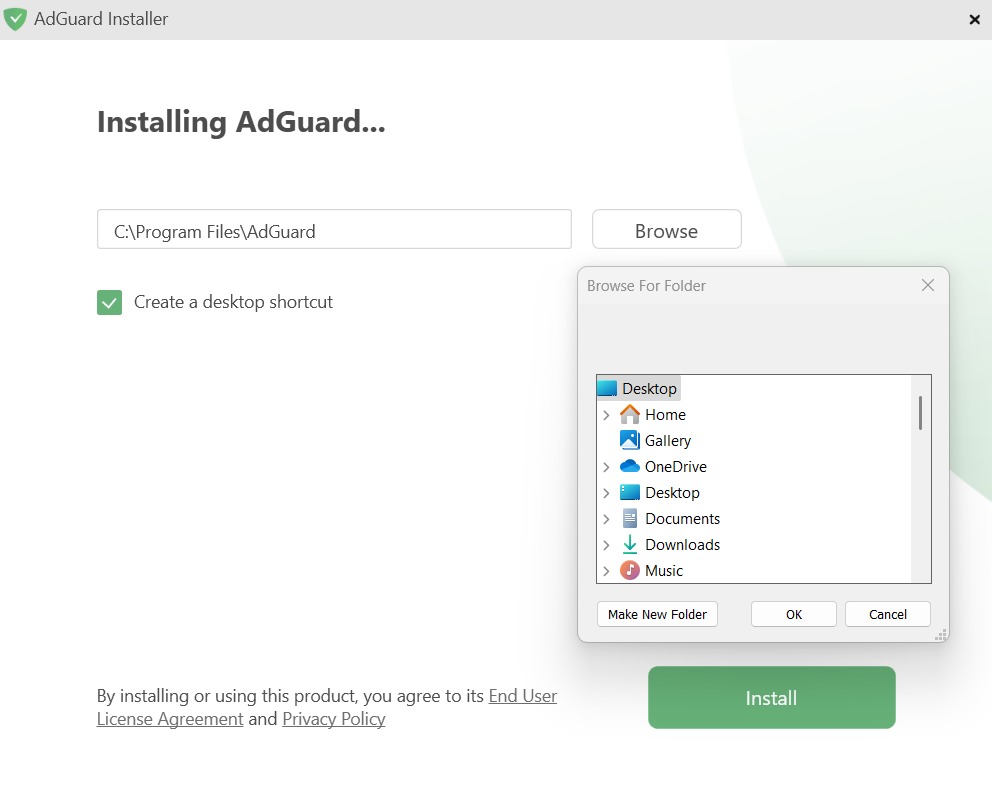
Choose the folder where you want AdGuard to be installed and click Save.
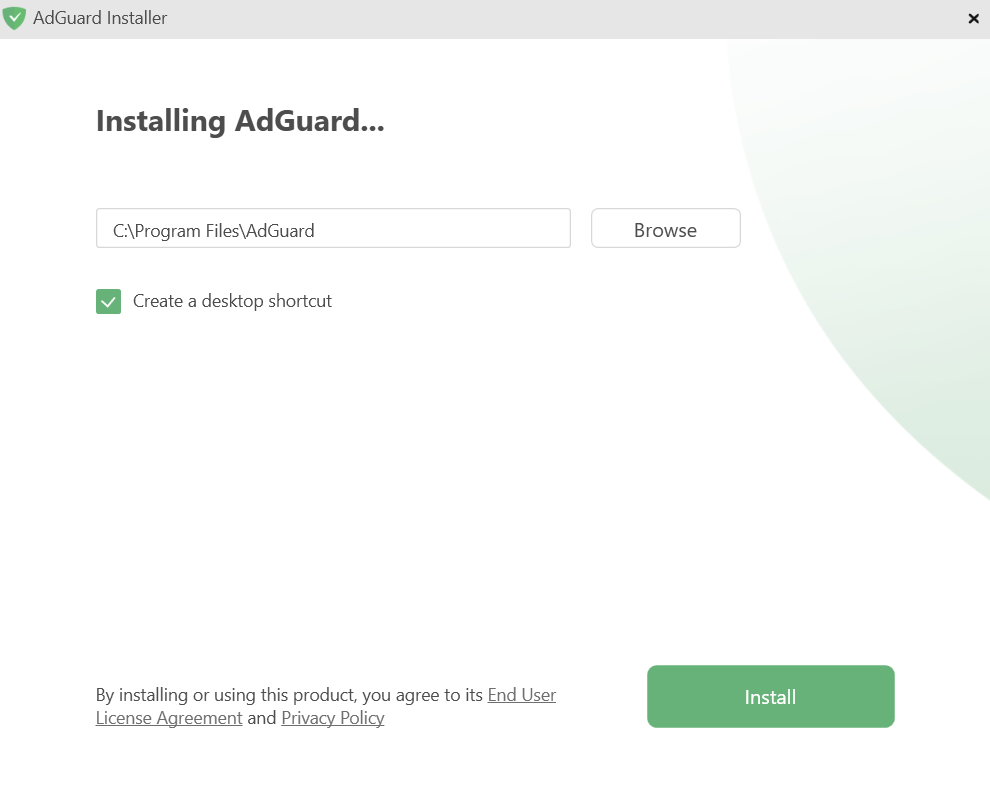
Wenn Sie einen anderen Speicherort auswählen möchten, klicken Sie auf Durchsuchen, wählen Sie den Ordner aus und klicken Sie auf OK. Sie können AdGuard auch in einem neuen Ordner installieren, indem Sie auf Neuen Ordner erstellen klicken und den Namen eingeben. Um eine Desktop-Verknüpfung für AdGuard zu erstellen, markieren Sie das Feld Desktop-Verknüpfung erstellen. Klicken Sie auf Installieren, um mit der Installation fortzufahren.
-
Warten Sie, bis die Installation abgeschlossen ist, und klicken Sie auf Fertigstellen.
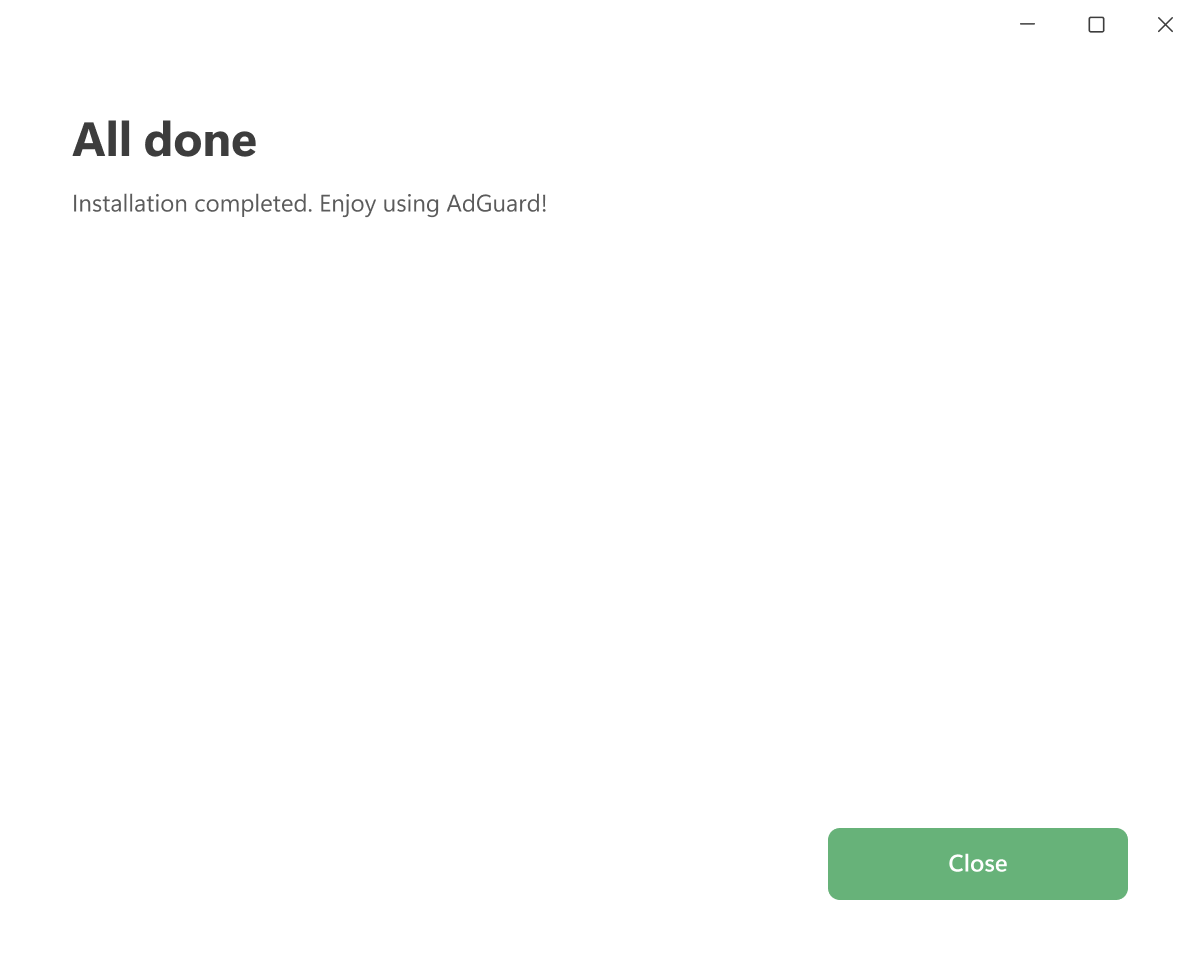
AdGuard has been successfully installed. When you launch the app, you’ll be prompted to accept our privacy documents and set up protection according to your preferences.


So kann AdGuard für Windows deinstalliert werden
Reguläre Methode
If you need to uninstall or reinstall AdGuard, do the following:
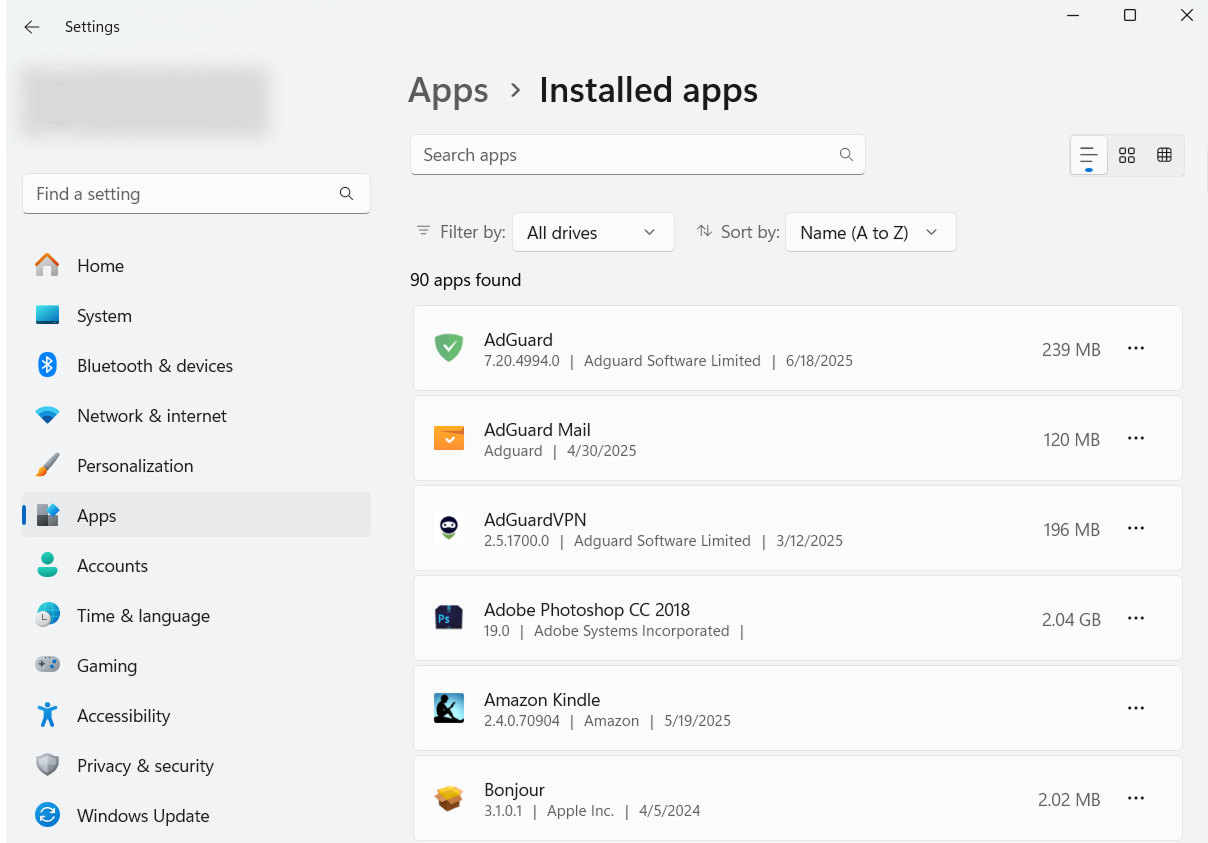
Open the Start Menu, then select Settings. In the window that opens, click Apps → Installed apps. Select AdGuard from the list of your installed apps, click the three-dot menu, and select Uninstall. After the app is uninstalled, restart your computer.
The uninstaller automatically creates a backup of your settings in C:\ProgramData\Adguard\Backups. If you plan to reinstall AdGuard later, you can use this backup to restore your settings. For more information, see How to back up and restore AdGuard settings.
Fortgeschrittene Methode
If the regular uninstall doesn’t work for any reason, you can use the advanced method. First, download the uninstaller tool created by our developers. Extract the archive to any folder on your PC and run Adguard.UninstallUtility.exe, then allow the app to make changes to your device.
-
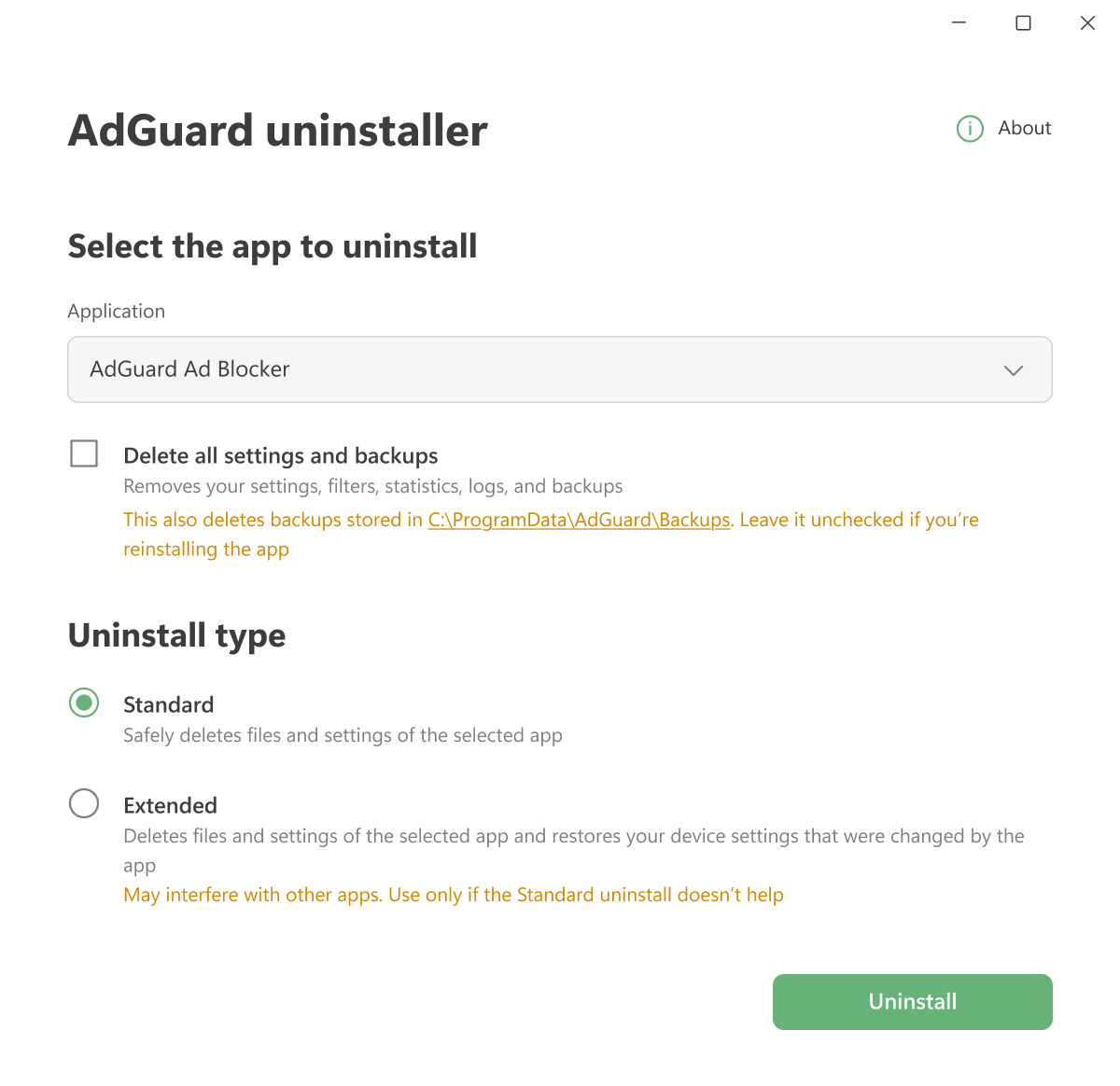
Select AdGuard Ad Blocker and Standard uninstall type, then click Uninstall.
-
Wait until the uninstall is finished and restart your computer.
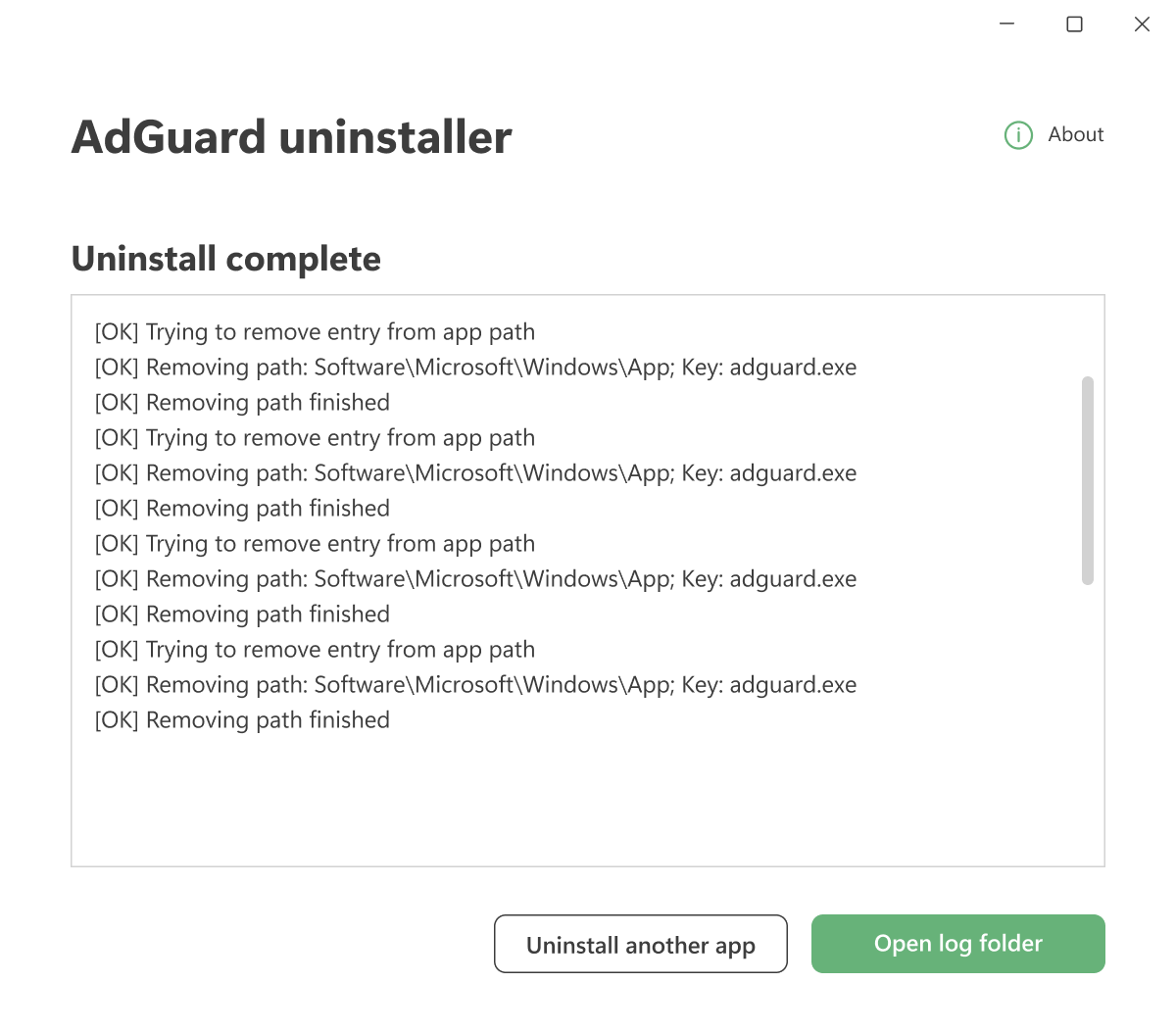
Follow the next steps only if the Standard uninstall didn’t fully remove AdGuard. We strongly suggest contacting our support before using the Extended uninstall.
-
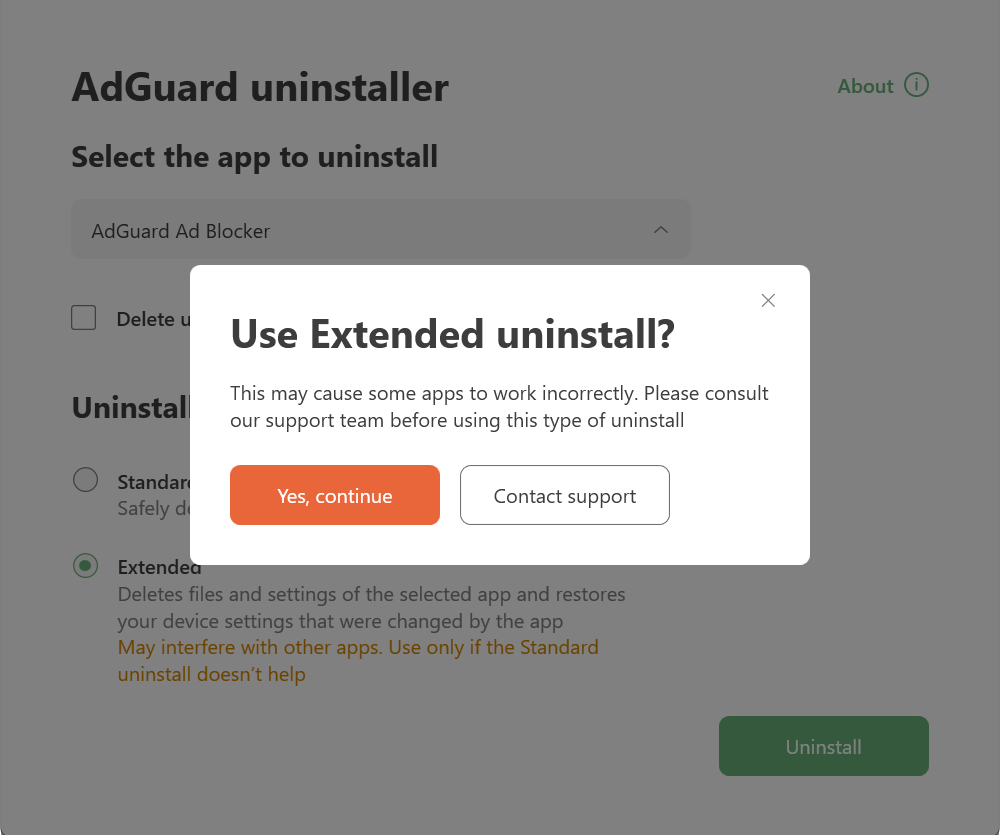
Select AdGuard Ad Blocker and Extended. Click Yes, continue in the prompt and then click Uninstall.
-
Wait until the uninstall is finished and restart your computer.
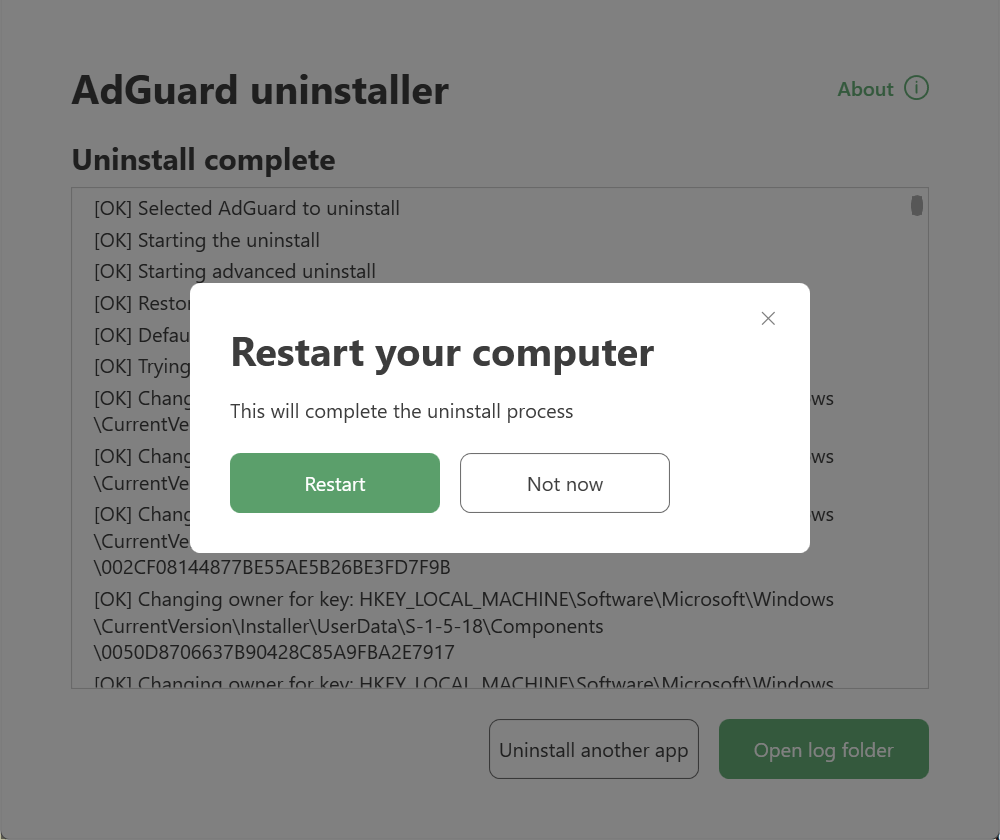
AdGuard wurde erfolgreich deinstalliert!
Running the uninstaller in console mode
You can also use command-line arguments to uninstall AdGuard for Windows.
-
Open Command Prompt by typing
cmdin the Start menu. -
Use
/consoleto run the uninstaller in console mode, without the interactive UI. All the command-line parameters below will be ignored if the/consolemode is not activated. -
Use
/adblockerto uninstall AdGuard for Windows. Es sollte wie folgt aussehen:Adguard.UninstallUtility.exe /console /adblocker -
You can also use
/advancedto force the uninstaller to run in Extended mode and/settingsto force the uninstaller to remove user settings along with the application.
The parameters /console and /adblocker are necessary for a successful uninstall. Die Parameter /advanced und /settings sind optional.