Cyber spies in the bedroom: Is your smart vibrator leaking your private life?
The “smart” revolution has hit every corner of our lives, and in the process, we’ve gotten a little too comfortable. We’ve had smart blinds, lightbulbs, and Roomba robot vacuums for years. But now, we’re letting tech with “eyes and ears” into our most intimate spaces without a second thought.
People choose high-tech sex toys for their simplicity and convenience. But today, along with pleasure, users may unknowingly yield something far more personal — their privacy.
Your device could be secretly harvesting data: tracking the frequency, duration, and intensity of your sessions. In a worst-case scenario, it could gain access to your mic, camera, or camera roll. Think there’s a guarantee your data stays between you and your toy? Think again.
From good vibrations to cloud servers
Most modern gadgets run on a simple loop: Device — Bluetooth — App — Cloud.
It starts with a simple command. Once you register and pair your device with the app, you pick your settings, and the fun begins.
But here’s the catch: the signal doesn’t just go from your phone to the toy. It travels to the cloud first. Manufacturers claim this is necessary for long-distance play — so a partner can take control from the other side of the world.
This is where it gets sketchy. Along with that command, a packet of metadata is sent to the server: your account ID, timestamps, device model, and exactly how long your session lasted.
All of this builds a digital footprint. Random data points “15 minutes on Wednesday,” “Wave mode on Friday” are analyzed and linked to your profile. The manufacturer isn’t just checking for hardware bugs; they’re learning your most private habits.
This data (anonymized or otherwise) is used to “improve the product” or more alarmingly sold to advertisers. The result? Targeted ads for “relaxation aids” might start haunting your feed exactly during the hours you usually use your device.
What’s actually leaking?
Data collection often goes way beyond “operational necessity.” Your intimate file might include:
Personal info: Your email, name, birthday, gender, and even sexual preferences if you filled out your profile
Intimate patterns: The exact time, duration, and frequency of your use
Tech specs: Vibration patterns, intensity levels, device temperature, and battery life
Geolocation: Your phone’s GPS can pinpoint your city, your house, and even which room you’re in
Partner data: Interaction history and IDs for both users during remote sessions
Biometrics: High-end devices (like the Lioness) track muscle contractions and body temp, turning your pleasure into a data visualization
Media files: If the app has a chat feature, your “spicy” photos, videos, and voice notes are all at risk of leaking
Who wants this data, anyway?
We all know apps track us. So what’s the big deal if someone knows which vibrator you use? It might seem like a needle in a haystack of leaked data, but the consequences are very real.
Blackmail and extortion: In the wrong hands, photos or even just the “paper trail” of using specific devices can be weaponized, especially for people in conservative environments
Stalking: By cross-referencing usage times with GPS, someone could reconstruct your daily routine. Plus, very few brands use PIN codes for Bluetooth pairing. A tech-savvy creep within 30 feet could theoretically hijack and activate your device without you knowing
Hyper-targeted ads: Ad platforms use this data to pitch supplements, lingerie, or “wellness courses” with creepy precision
The $3 million wake-up call: We-Vibe
The biggest industry scandal involved We-Vibe. At the Defcon hacker conference, researchers proved the We-Vibe 4 Plus was sending real-time data about temperature and vibration modes to the company’s servers. The brand claimed it was for “analytics,” but they never bothered to tell the users.
The fallout? A class-action lawsuit, payouts of up to $10,000 for affected users, and a massive, frantic update to their privacy policy.
It’s not just one brand
Vibratissimo
A vulnerability exposed an open database containing passwords, chats, and intimate photos.
Lovense
Users caught the app recording audio in the background. The company brushed it off as a “bug.”
The legal shield
In Europe, the GDPR treats data about your sex life as “sensitive,” requiring strict protections, the “right to be forgotten,” and massive fines (up to €20M).
In the U.S., there isn’t one big federal law yet, but California (CCPA/CPRA) is leading the charge. It now categorizes intimate data as “Sensitive Personal Information” (SPI) and requires a “Limit the Use” button so you can opt out of data profiling. Over 10 other states, including Texas and New Jersey, have followed suit.
How to protect yourself
You don’t have to throw your favorite toys in the trash and go back to the Stone Age. Just follow these “digital hygiene” tips:
Check permissions: Ask yourself, “Why does this vibrator need access to my contacts or my microphone?” If it doesn’t make sense, deny it
Cover your tracks: Use a burner email for registration and a fake name for your profile
Update everything: Keep the app and firmware current to patch any security holes
Kill the Bluetooth: Turn the device off when you’re done. No connection = no remote hijacking
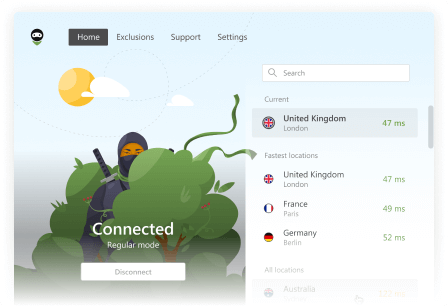
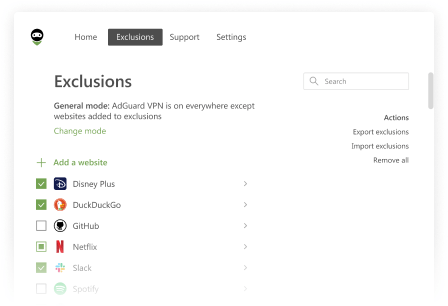
Use ad blocker and VPN: This limits tracking and adds a layer of anonymity to your connection
At the end of the day, smart sex toys aren’t just gadgets — they’re complex data-collection systems. Their convenience comes at a price: your privacy. Stay informed, stay cautious, and take back control of your bedroom.