AdGuard Browser Extension v5.5: You set the rules
We follow so many rules set by other people every day. It feels good to set our own for once. AdGuard Browser Extension v5.5 makes that easier: our new RulesEditor gives you a more structured way to create and manage filter rules. We’ve also added a filter that blocks email trackers, plus some quality-of-life upgrades for MV3.
RulesEditor: Easier rule management
The User rules section used to be little more than a plain text field. Now it’s built on RulesEditor, our own editor that comes with two ways of working: List view and Editor view.
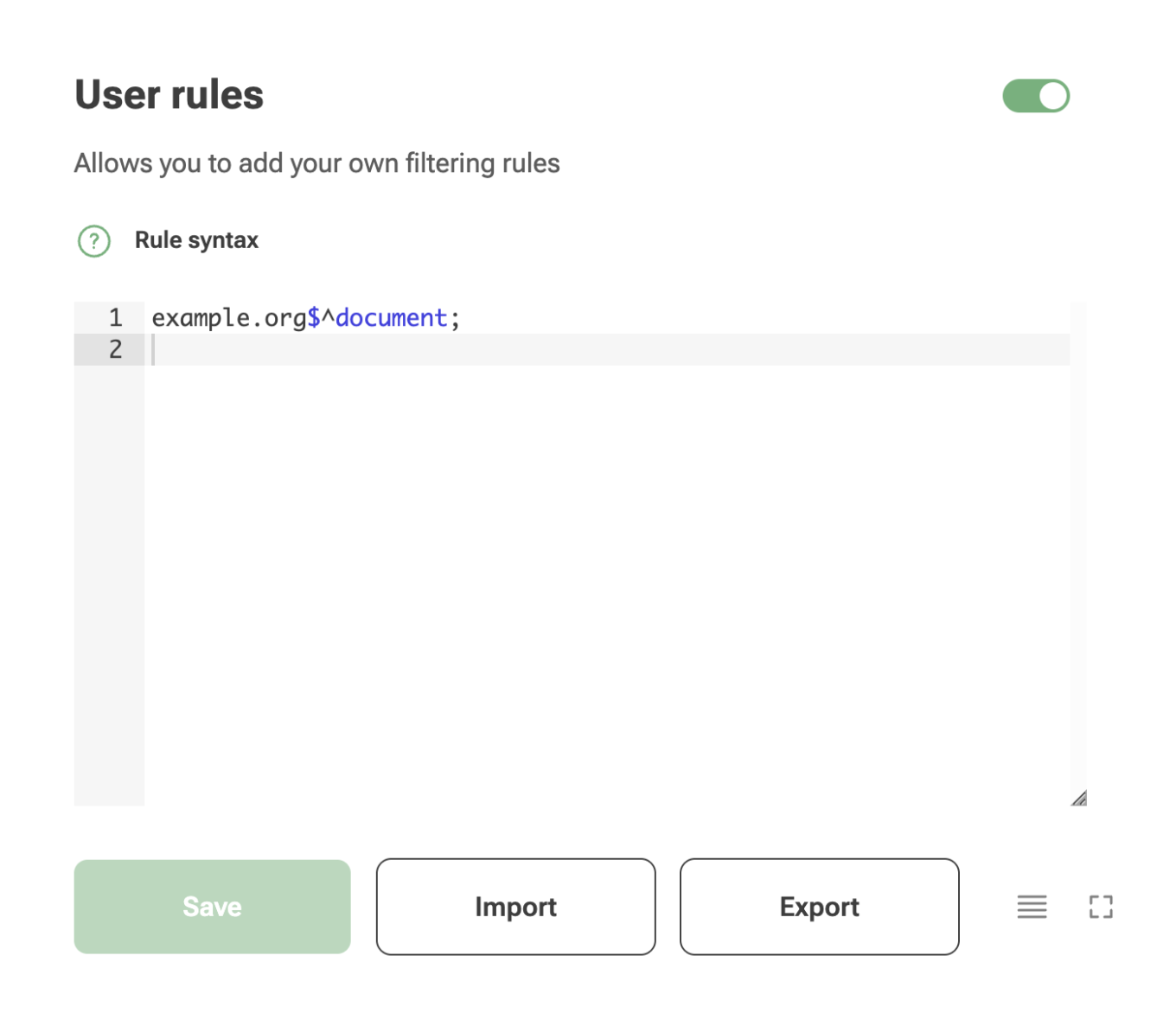
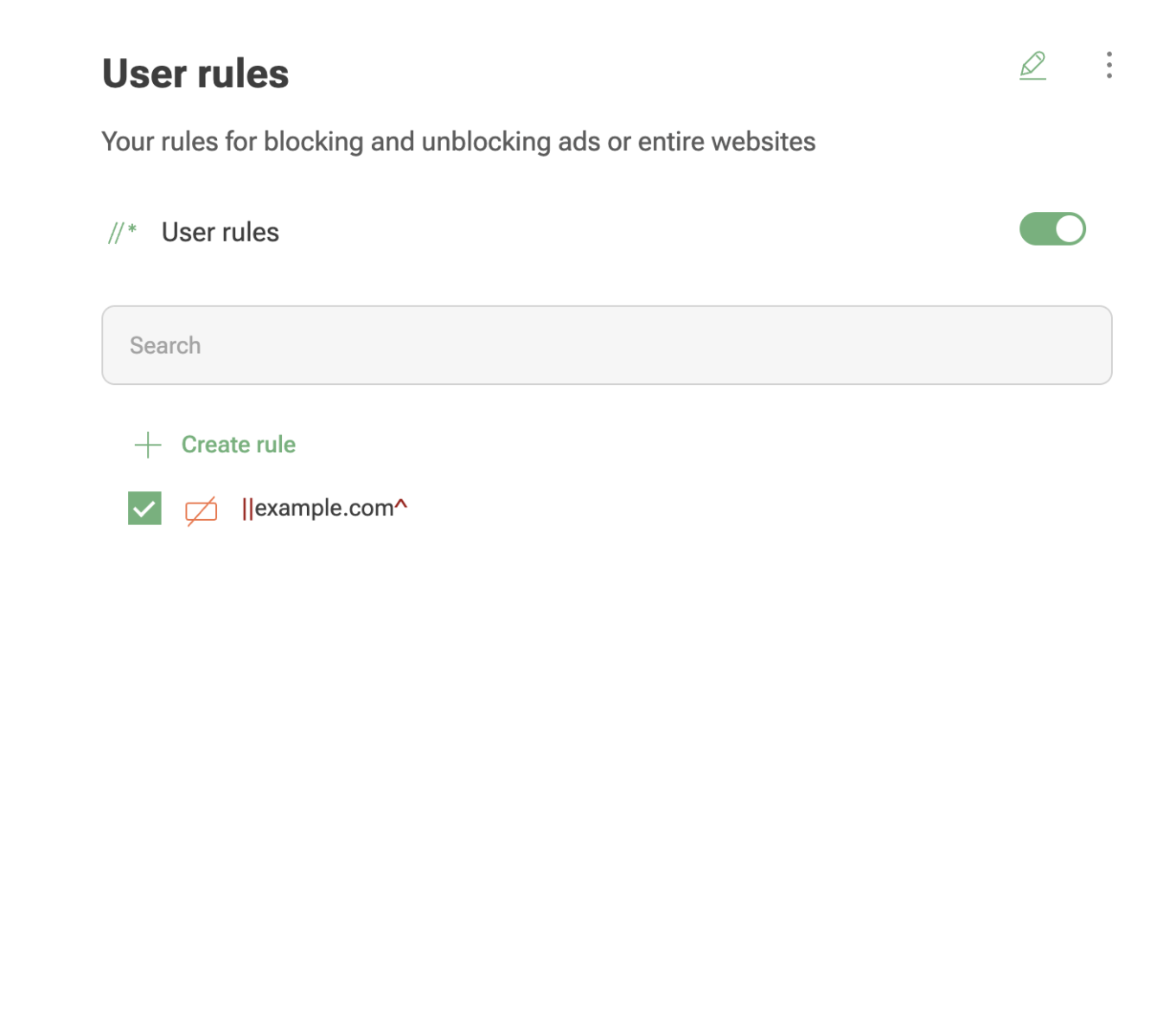
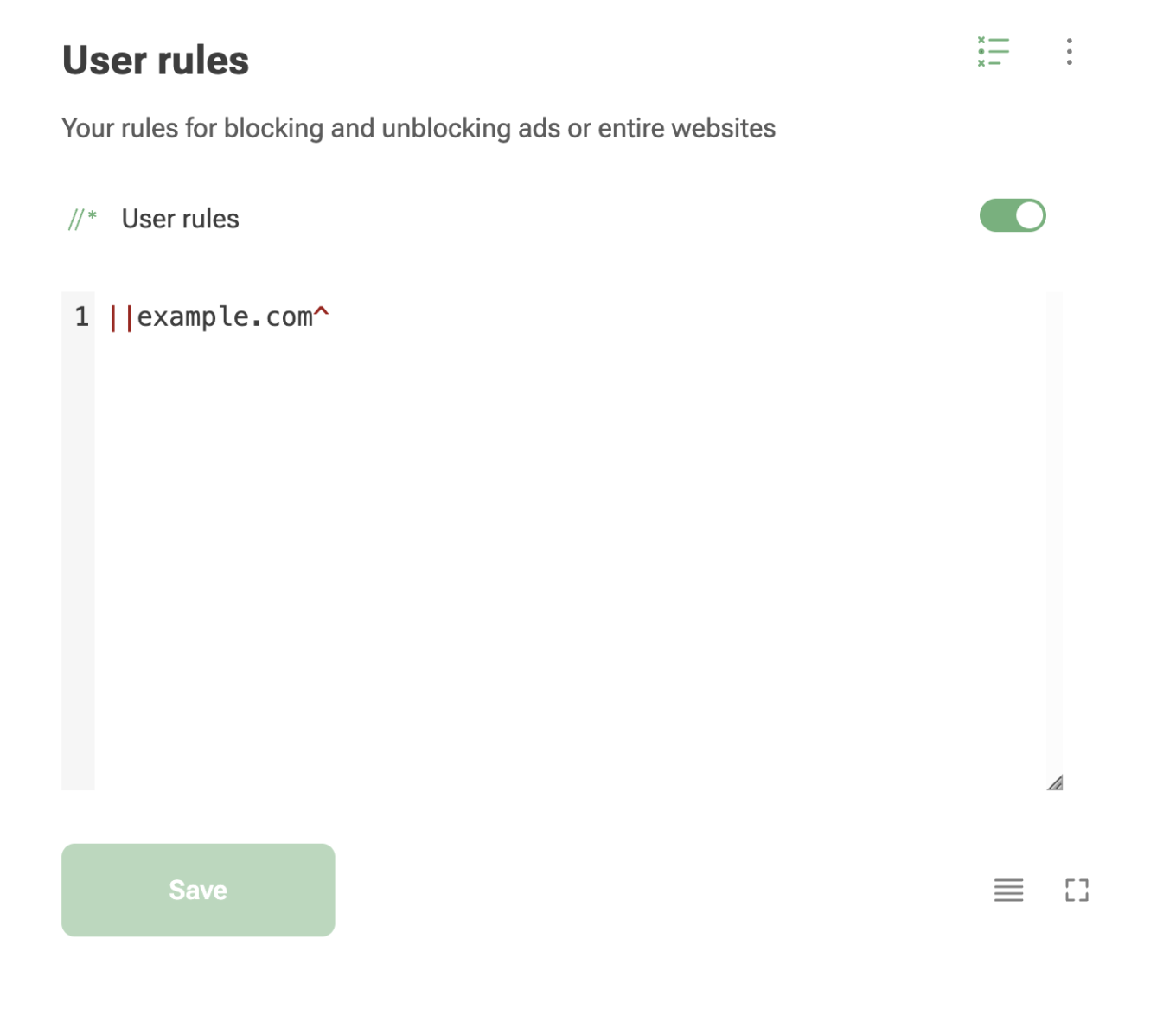
The old rule editor (L), List view (C) and Editor View (R) of the new rule editor.
In List view, you get checkboxes to enable or disable individual rules, a search bar, and an overflow menu with quick access to Rule syntax help, Import, Export, and Delete all options. There is also the Editor view for direct manual editing, and the Allowlist section now also runs on RulesEditor and has an improved overflow menu.
Have you already mastered the old editor? There’s no need to relearn anything. RulesEditor is designed to make editing and reviewing rules easier, without disrupting the workflow you’re used to.
Mail Tracking Protection: Take control of who tracks your emails
Ads and trackers aren’t limited to websites. Many marketing emails contain a tiny, invisible 1x1 image known as a tracking pixel. The moment you open the email, that pixel quietly reports back to the sender, often revealing when, where, and how you read it.
The tricky part is you can’t just block these pixels by their domain. Most major email service providers proxy all images in an email through their own servers before displaying them, so blocking the tracking pixel domain could break your entire inbox.
That’s why we built a Mail Tracking Protection filter, which recognizes and blocks tracking pixels without breaking the images you actually want to see.
Keep track of filter updates
Previously, the Filters tab in MV3 settings showed the extension update date for all filters. That wasn’t always accurate, since filter and extension updates often run on different schedules. We updated the filter metadata handling, so the Last updated field now shows each filter’s actual update date.
New modifier for advanced users
For advanced filter makers, v5.5 adds support for the $urltransform modifier, which lets a rule rewrite parts of a URL — such as its path or query string — before the request goes out, including redirects handled through Chrome’s MV3 declarativeNetRequest API.
This makes it possible to handle tracking parameters and other unwanted bits of a URL with precision, without blocking the request outright. Here’s an example:
||example.com^$urltransform=/regex/replacement/
This tells the extension to transform matching URLs according to the specified pattern rather than simply allowing or blocking them.
Your feedback matters
Your feedback shapes our future improvements and fixes. Update your extension to see what changed and let us know what you think on Github and social media.