Privacy-first Vivaldi browser now supports Chrome extensions on Android — and AdGuard is one of them
Browser extensions on Android are still relatively rare, especially among Chromium-based browsers. Now there is one more option: privacy-first Vivaldi browser has started testing out support for Chrome extensions on Android — we’ve already tested AdGuard Ad Blocker there and can confirm that it works.
On August 26, Vivaldi announced extension support in its latest Android Snapshot — a public, work-in-progress build used to test new features before they reach the stable version. Extensions can be installed from the Chrome Web Store, which Vivaldi automatically opens in desktop mode. However, not every extension will be compatible with the mobile browser, according to Vivaldi.
What is a Vivaldi Snapshot?
As Vivaldi explains, Snapshot users get early access to new features in exchange for testing them while they are still being refined. Extension support therefore remains experimental and may come with bugs. In fact, Vivaldi has already released another Snapshot containing several extension-related fixes and improvements.
How to install AdGuard in Vivaldi for Android
Vivaldi is based on Chromium, so many extensions developed for Chrome can also work in Vivaldi without a separate version. Mobile compatibility is not guaranteed for every extension listed in the store, but AdGuard Ad Blocker is one of the extensions that already works.
The installation process is not particularly mobile-native yet, but it only takes a few steps:
- Install the latest Vivaldi Browser Snapshot on your Android device.
- In Vivaldi, open the AdGuard Ad Blocker page in the Chrome Web Store. Vivaldi should switch the store to desktop mode automatically.
- Tap the extension installation button and confirm that you want to add AdGuard.
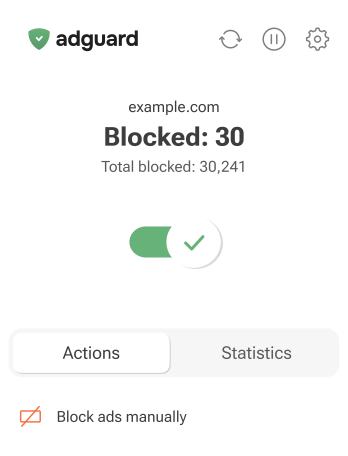
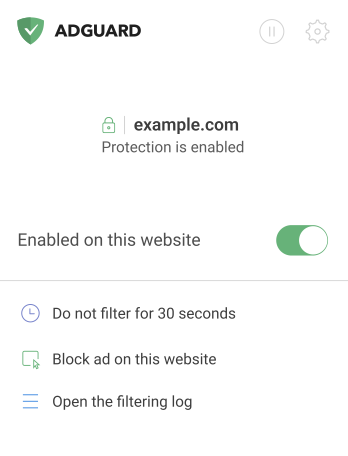
- Once it is installed, tap the puzzle-piece icon to the right of the address bar and select AdGuard Ad Blocker. Its settings will open in a regular Vivaldi tab.
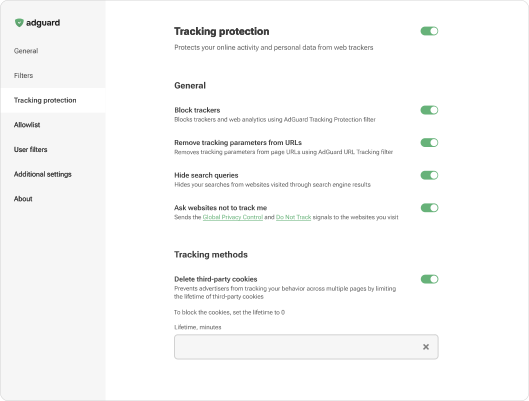
Vivaldi already includes its own ad and tracker blocker, but extension support gives users more choice and lets existing AdGuard users access the filters and controls they are familiar with.
Not the first, but still good news
Vivaldi is not the first Chromium-based browser to support extensions on Android. Microsoft Edge, for example, already offers mobile extensions, including two made by AdGuard: AdGuard VPN and AdGuard Ad Blocker.
Still, Chromium-based browsers that support extensions on Android remain the exception rather than the rule. Vivaldi’s decision gives Android users another privacy-focused, customizable option and brings more of the desktop extension ecosystem to mobile devices.
For now, remember that the feature is experimental and some extensions may not work correctly. But if you are keen to try AdGuard in Vivaldi today, the route is simple: install Vivaldi Browser Snapshot, open the Chrome Web Store, and add AdGuard Ad Blocker.